A recent study analysing two decades of health data suggests rising atmospheric carbon dioxide may be altering human blood chemistry. Researchers found increasing bicarbonate levels and declining calcium and phosphorus levels in blood samples.
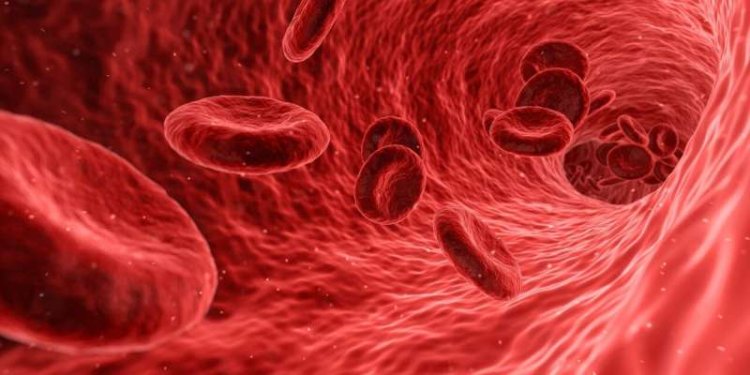
Increasing levels of carbon dioxide in the Earth’s atmosphere might already be affecting the chemical makeup of human blood, at least according to a recent scientific study that analysed health statistics gathered over the last two decades. It has been found that certain chemical properties associated with carbon dioxide in the human body over time have gradually changed in relation to the increasing levels of CO₂ in the Earth’s atmosphere.
Such findings imply that the long-term effects of increasing levels of CO₂ in the Earth’s atmosphere might indeed affect human physiology, especially in children and adolescents who will be exposed to the highest levels of CO₂ in their lifetime. While the changes in the chemical properties of human blood are still within normal limits, certain properties might reach their limits in the coming decades.
Changes observed in blood biomarkers
The study focused on three main biochemical markers. These include the levels of serum bicarbonate, calcium, and phosphorus. These three play a role in the maintenance of the body's acid-base balance.
Over the years from 1999 to 2020, the average level of serum bicarbonate was observed to have increased by 7%. In the same period, the average level of blood calcium and phosphorus was observed to be gradually decreasing.
Bicarbonate is formed when carbon dioxide reacts with blood and water. It plays a critical role as a buffer that maintains the pH of the blood at a stable level. Because of its function, the level of bicarbonate is a good indicator of the management of carbon dioxide in the body.
Although the increase in the level of bicarbonate was observed consistently across the different surveys used in the study, the levels were still observed to be within the normal range.
How carbon dioxide interacts with the human body
Carbon dioxide is constantly being produced in the body as a by-product of cellular metabolism. Carbon dioxide is carried in the blood in three main forms: dissolved in the blood, bound to the protein hemoglobin in red blood cells, and as bicarbonate ions.
About 70 percent of the carbon dioxide in the blood is carried as bicarbonate ions. Carbon dioxide is removed from the body through the lungs during the process of breathing and through the kidneys in the regulation of acid-base balance through the control of bicarbonate ions.
It is vital for the body's physiological functions to maintain the pH in the blood within a narrow range. Any alteration in the metabolism and regulation of carbon dioxide has the potential to affect this.
Relationship with atmospheric carbon dioxide trends
The scientists studied the trends of the blood chemistry and those of the atmospheric carbon dioxide content. The rise in the amount of bicarbonate and the reduction in minerals are similar to the rise in the atmospheric CO2 content.
The study did not establish a direct relationship between the rise in atmospheric carbon dioxide and the blood chemistry results. There are many variables in biochemical markers, and they can be affected in many different ways.
The similarity in trends, however, prompted the scientists to consider whether long-term exposure to increasing atmospheric CO2 could cause small physiological adaptations.
Possible implications for mineral balance
Calcium and phosphorus are essential minerals involved in bone structure, cellular signalling, and metabolic processes. The study recorded modest declines in average levels of these minerals in blood samples during the analysis period.
Mineral balance in the body is influenced by multiple physiological systems, including kidney function, hormonal regulation, and dietary intake. Acid variations–base balance can also influence how minerals are stored and released in the body.
Researchers examined whether the shifts in mineral levels could be related to changes in the body’s carbon dioxide regulation mechanisms. Further research is required to determine the underlying causes of the observed patterns.
Need for additional research
The study shows the importance of monitoring long-term physiological trends in addition to environmental changes. The authors of the study observe that the changes are still within the range of what is considered normal in a clinical setting, but they are significant as they are observed in a large population.
Future studies could possibly look at different populations, time frames, and different physiological markers to determine if similar trends are observed in different populations and time frames. Other studies could possibly look at how indoor air quality and occupational settings affect carbon dioxide exposure.
Long-term studies like NHANES can provide opportunities for scientists to observe long-term physiological changes in the body that might not otherwise be evident in shorter studies. Further monitoring of blood chemistry trends can help scientists determine how environmental factors affect human physiology.
What's Your Reaction?