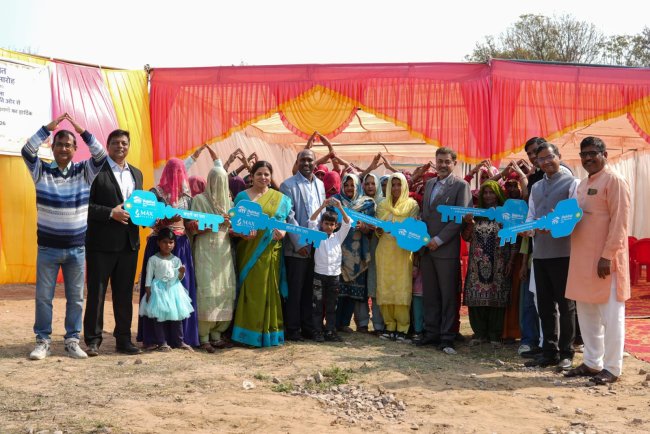
Discussions at the Arthan Annual Conference 2025 focused on who shapes India’s green transition, highlighting the need for people-centred, inclusive approaches to future jobs and climate action.
India’s shift toward a greener and more equitable economy was discussed at the Arthan Annual Conference 2025, where participants from impact investment, climate philanthropy and development practice came together to examine a central question: Who designs and who decides the future of work?
The opening plenary, Who Designs and Who Decides? Capital, Corporates & Communities in Building Green, Equitable Work, brought together Vineet Rai of Aavishkaar Group, Keya Madhvani Singh of India Climate Collaborative, and independent knowledge partner Samar Verma. The session was moderated by Nandita Krishan from Arthan. The discussion focused on how India’s green transition can account for equity, participation and lived experience alongside scale and ambition.
Speakers reflected on institutional gaps and power dynamics in development and finance. Vineet Rai referred to experiences from the microfinance sector, highlighting how internal data revealed large gaps between stated goals and actual representation. He noted that prioritising women’s participation as a key performance measure led to changes in organisational decision-making, pointing to the role of leadership and governance in addressing structural imbalances.
The session also touched on making climate and development interventions people-centric instead of remaining solely driven by technical and carbon-centric criteria. Panelists were discussing taking learnings from various sectors, including the tech sector, which designs solutions based on user feedback and learnings, and applying these learnings to climate and livelihood projects. While discussing ways and means for enhancing action on climate change, there was an emphasis on aligning climate action with economic and societal realities, especially with regards to new green jobs.
Samar Verma emphasised that equitable transitions depend on rethinking what counts as knowledge and who gets to define success. As he noted, “Numbers alone cannot define progress; lived experience is evidence too. Every design choice sits between speed and voice, and too often we choose speed. If we truly want just transitions, we must ask ourselves: who is defining success, and what would a frontline worker change if they were in the room? Unlearning our own certainties is the first step toward shifting power.”
Throughout the session, panellists explored a common vision for a future with active participation from communities in finding solutions, and not just being consulted. It seemed that resilience should be considered as a whole, including climate, economic, and societal factors.
It brought together people from philanthropy, business and social responsibility, ESG, development, and social innovation streams. It was a closed event at a conference, and it sought to discuss ways of readjusting India’s labor market against challenges from climate changes, gender equity, and grassroots innovation. It can be seen that an important learning event from this discussion session would be creating models that are more inclusive and made with participatory community involvement.
What's Your Reaction?