Australia opens its first carbon refinery, converting captured CO2 into materials for industry and construction.
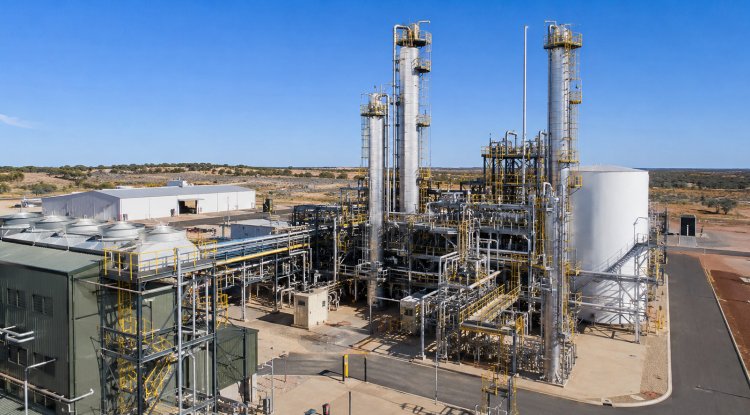
Australia has opened its first carbon refinery. This facility is designed to capture carbon dioxide emissions from industrial activities and turn them into materials used in construction and manufacturing. Located on Kooragang Island in New South Wales, the plant is an important step in the country’s efforts to improve carbon capture, carbon use, industrial decarbonisation, CO2 conversion, and climate technology solutions as industries face pressure to cut emissions.
The refinery, built by Australian technology company MCI Carbon, captures carbon dioxide produced during ammonia production at Orica-operated facilities. Instead of burying the captured emissions underground, the plant converts them into products for concrete, paper, glass, and other industrial uses. This project highlights the rising interest in carbon capture, carbon use, industrial decarbonisation, CO2 conversion, and climate technology as governments and businesses look for practical ways to lower industrial emissions while keeping economic activity going.
Demonstration Plant Begins Operations
The new refinery is based on MCI Carbon’s Myrtle Carbon Capture Utilisation and Storage technology, which the company has developed over 15 years. The demonstration facility can capture up to 2,500 metric tonnes of carbon dioxide each year from Orica’s ammonia production.
This project is seen as a test case for a new approach to carbon management. Instead of treating captured carbon dioxide as waste that requires long-term storage, the facility aims to transform emissions into useful products that can fit into existing industrial supply chains.
The initiative comes at a time when governments and businesses are increasingly looking into technologies to help reduce emissions in sectors that are hard to decarbonise, such as chemicals, cement, mining, and manufacturing.
Mineral Carbonation Technology
At the heart of the refinery is a process called mineral carbonation. This technology mimics a natural geological reaction in which carbon dioxide bonds with minerals and becomes part of solid materials.
According to MCI Carbon CEO and co-founder Marcus Dawe, the technology is based on natural processes that remove carbon dioxide from the atmosphere and store it in rock formations for long periods.
This approach differs from traditional carbon capture and storage (CCS), where carbon dioxide is captured and injected into underground geological formations for permanent storage. MCI Carbon’s method falls under carbon capture, utilisation, and storage (CCUS), which aims to incorporate captured emissions into commercially valuable products.
Supporters of this technology believe that carbon use could provide extra motivation for reducing emissions by creating revenue-generating products from captured carbon. However, experts say that widespread adoption will depend on factors such as product performance, market demand, regulatory standards, and economic feasibility.
Climate Targets Drive Interest
The refinery's opening drew attention from key government officials, including Australia's Minister for Climate Change and Energy, Chris Bowen, along with representatives from Japan and Austria.
Australia emits about 400 million tonnes of carbon dioxide each year and has recently raised its climate ambitions. The government has updated its emissions reduction target to 62% to 70% below 2005 levels by 2035.
These targets increase pressure on high-emission industries to find technologies that can decrease their environmental impact without significantly disrupting production. Sectors like ammonia production, steel manufacturing, cement production, and mining are expected to play a key role in the country's decarbonisation efforts.
Bowen stated that this technology could help industrial emitters cut emissions while creating economic value from captured carbon dioxide.
Commercial and Industrial Potential
This project also highlights a growing interest in developing commercial applications for carbon capture technologies. Traditional CCS projects often need dedicated infrastructure, long-term monitoring, and supportive policies. In contrast, carbon use technologies aim to create markets for products made with captured emissions.
For businesses and investors, this approach offers chances to develop new materials and supply chains while contributing to emissions reduction goals. However, industry watchers warn that the long-term success of these technologies will depend on their ability to compete with traditional materials in terms of cost, performance, and scalability.
While the refinery’s annual capture capacity is relatively small compared to Australia’s total emissions, the facility shows how carbon reuse technologies can work within existing industrial settings.
Expansion Plans Beyond Australia
MCI Carbon is already planning a larger-scale facility in Austria to expand its technology internationally. The proposed refinery would be able to capture up to 50,000 tonnes of carbon dioxide per year, greatly increasing the scale of operations compared to the Australian demonstration plant.
This expansion reflects a global interest in technologies that can support industrial decarbonisation while preserving manufacturing jobs. Governments, investors, and companies are increasingly looking for solutions that combine emissions reduction with economic opportunities.
MCI Carbon joins several companies working on mineral carbonation technologies. Other organizations, including the Canadian firm Arca, are pursuing similar methods that use industrial waste materials, like mining tailings, to store carbon dioxide permanently.
A Test Case for Carbon Reuse
Though the refinery’s immediate effect on Australia’s overall emissions is expected to be limited, the project offers a real-world example of how captured carbon can be incorporated into industrial products rather than merely stored underground.
As climate targets become stricter and industries seek cost-effective ways to reduce emissions, projects like the Kooragang Island refinery are expected to play a vital role in assessing the potential of carbon use technologies.
If scaled successfully, carbon refineries could help develop lower-carbon supply chains by turning industrial emissions into materials used in construction, manufacturing, and other sectors, presenting a new method for managing carbon in a decarbonising economy.
What's Your Reaction?