Frontier secures $915M from tech firms to expand permanent carbon removal solutions and market growth.
Frontier has secured a new $915 million market commitment from technology companies including Google, Anthropic, Stripe, and Salesforce to support the expansion of permanent carbon removal, carbon dioxide removal technologies, direct air capture, climate technology investment, and net zero solutions.
The funding will help buy carbon removal credits from companies working on technologies that capture and store carbon dioxide permanently. This move comes as the carbon removal market faces challenges such as high costs, a limited number of buyers, unclear policy support, and the need to scale solutions for global climate goals.
Frontier Expands Carbon Removal Market Support
This latest commitment builds on Frontier’s original $1 billion market commitment launched in 2022. The initiative aims to provide early-stage carbon removal companies with clearer revenue opportunities by allowing buyers to promise to purchase future credits before the technologies are widely deployed.
Frontier stated that the new funding will focus on technologies that can deliver long-term carbon storage at scale. These technologies include direct air capture, enhanced rock weathering, biomass carbon removal, and ocean alkalinity solutions.
Hannah Bebbington Valori, head of Frontier, mentioned that the main challenge for the sector is ensuring that demand increases alongside technological growth. She stated that the expanded commitment aims to help carbon removal companies continue developing solutions while the market evolves.
Technology Companies Increase Climate Investments
Google, which co-founded Frontier in 2022, said the renewed commitment is part of its larger climate strategy. The company aims to support carbon removal methods that can help with emissions management while offering environmental benefits.
The company highlighted technologies like enhanced rock weathering, which involves spreading crushed rock on land to capture carbon via natural chemical reactions, and biomass carbon removal, which combines biological processes with carbon storage.
The investment reflects a broader shift among companies that focus not just on reducing emissions but also on addressing residual emissions through carbon removal methods.
Carbon Removal Market Faces Buyer Concentration Risks
Demand for carbon removal credits has risen sharply in recent years. Data from CDR.fyi shows that companies have purchased millions of credits worth billions of dollars, but the market still relies on a small number of large buyers.
Microsoft has been one of the biggest purchasers of engineered carbon removal credits, making up a large portion of market activity. Frontier has also bought credits, while Google has made extra purchases outside the initiative.
The concentration of buyers has raised concerns about long-term market stability. Microsoft recently suggested that it might slow down future purchases, while still committing to carbon removal as a priority.
Frontier Targets Scalable Carbon Technologies
Frontier stated that the latest funding round will focus on technologies with strong potential for commercial growth and possible access to government support.
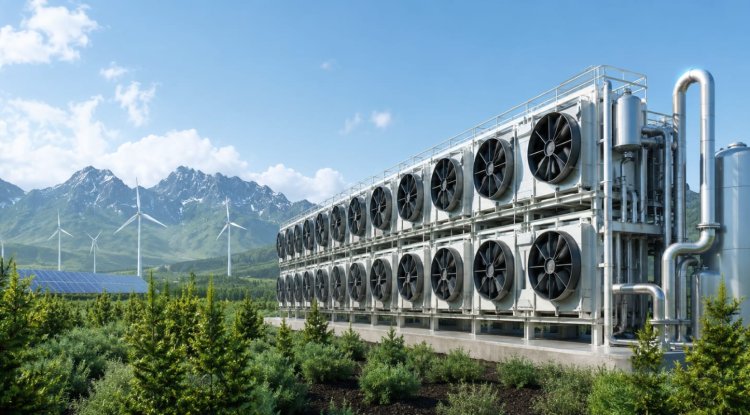
Direct air capture remains a key area of focus, using machines to remove carbon dioxide directly from the air. Enhanced rock weathering is another method being supported, where minerals react with water and carbon dioxide to store carbon.
Ocean alkalinity solutions are also under investigation, involving the addition of alkaline materials to seawater to improve its ability to absorb carbon.
Crew Carbon, a company supported by Frontier, is one of the firms working on carbon removal solutions. The company uses limestone in wastewater treatment to address carbon emissions linked to sewage processing.
Compliance Markets Could Expand Carbon Removal Demand
Frontier anticipates that future demand for carbon removal credits will grow beyond technology companies as governments introduce stricter climate regulations.
Companies operating under new climate frameworks may increasingly turn to carbon removal credits to address emissions that are hard to eliminate. The Science Based Targets initiative has also indicated that companies might use carbon credits to offset hard-to-reduce emissions in future net zero plans.
Industry observers believe that broader involvement from businesses, governments, and investors will be essential for scaling the market.
Public Support and Private Funding Shape Future Growth
Developers of carbon removal technologies say private commitments can help draw in government support by showing market demand. Stockholm Exergi, which is developing carbon capture technology linked to bioenergy production in Sweden, stated that long-term contracts can increase confidence in project financing.
The company noted that government funding might be necessary to close the cost gap between early-stage projects and future large-scale deployment.
The new Frontier commitment boosts financial visibility for carbon removal companies and signals ongoing private sector interest in building carbon removal infrastructure. However, the sector’s long-term growth will depend on technology costs, policy frameworks, and the ability to attract a broader range of buyers.
What's Your Reaction?