A 2026 report finds Brazil–China agricultural trade drives 25% of global deforestation risk, with soy and cattle supply chains at the centre of environmental exposure.
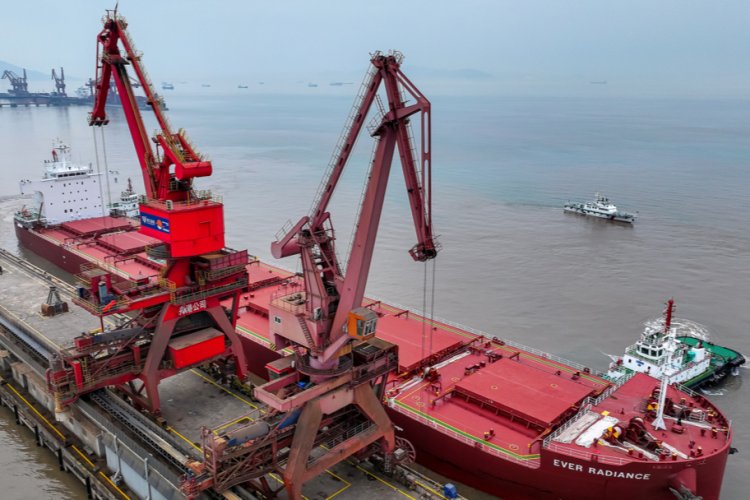
Agricultural trade between Brazil and China makes up a quarter of deforestation risk linked to international commodity supply chains, according to a study released in March 2026 by Trase. This shows how one corridor determines environmental outcomes.
The research indicates that agricultural trade between Brazil and China made up 24.9 percent of global deforestation risk connected with international agricultural trade during the period between 2021 and 2023. The deforestation risk exposure is determined by cattle products and soy exports.
More than half of Brazil's agricultural exports go to China, and about a third of China's agricultural imports come from Brazil. This has led to a rise in environmental risks over two decades due to consumption patterns connected with global food needs.
The study reveals that China's deforestation exposure depends on imports rather than domestic production. Nearly 80 percent of the deforestation exposure of the country in terms of its agricultural imports is linked to Brazil. Brazil makes about 203,000 hectares of annual deforestation risk exposure related to agricultural exports to China per year.
It also highlights that the deforestation risks occur in relatively few geographic locations. In Brazil, for instance, a small percentage of municipalities drive the exposure from exports. Approximately 73 Brazilian municipalities drive around 75% of the deforestation risks associated with soy exports linked to China.
Moreover, there is also a concentration of risk among the supply chains of a select few corporations. Few companies control the majority of the deforestation-linked exports, indicating that measures aimed at addressing exposure can be applied to selected regions and companies rather than impacting exports.
These results come amidst growing concerns regarding the impact on the environment and the climate from deforestation. Deforestation contributes to approximately 10-15% of all greenhouse gas emissions, which have a greater impact in nations with dense forests. Agricultural production drives the process, as there is an increased demand for meat and agricultural products.
It is noted that the concentration of deforestation risks opens possibilities for aligned policy action in relation to supply chains. The report provides recommendations in terms of traceability, sustainability, and financial measures.
This analysis examines the movements of trade in over 160 goods and determines the probability of their origin from recently deforested areas. However, this analysis is not designed to prove a causal relationship; rather, it seeks to determine exposure through global supply chains.
The report refers to the prospect of collaboration between China and Brazil as the “Beijing-Brasilia Effect.”
What's Your Reaction?