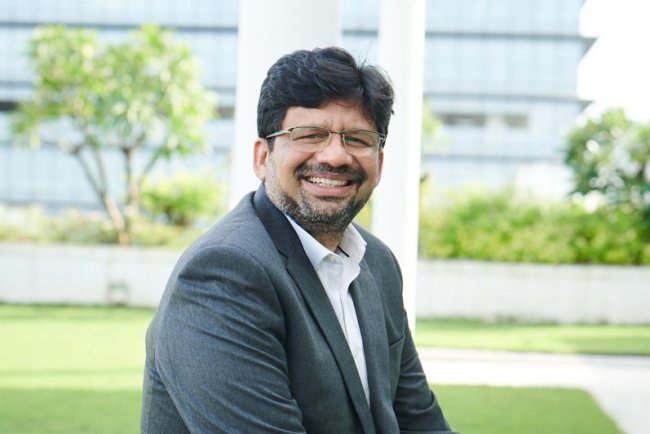
Building India’s Rural Solar Revolution from Bihar: Amod Anand, Co-Founder & Director, Loom Solar
Amod Anand, Co-Founder of Loom Solar, shares how his Bihar-born startup grew into one of India’s fastest-growing solar companies, powering rural homes and businesses with affordable solar solutions.
Building India’s Rural Solar Revolution from Bihar: Amod Anand, Co-Founder & Director, Loom Solar
From the heart of Bihar to the farthest corners of India’s rural landscape, a first-generation entrepreneur has built one of the country’s fastest-growing solar enterprises — bringing affordable solar, inverter, and battery solutions to homes and small businesses nationwide.
Excerpts:
How did your journey in this competitive solar industry begin?
We started from Bihar, we come from Sitamarhi district and gradually moved to Delhi for our livelihood. Since we had no capital, we did jobs in the company like Reliance Retail, and later we realised we must do something of our own and be part of the startup wave that began around 2016–17.
Solar came as an opportunity. Through research, we found great potential, though we weren’t sure it would grow so big. The biggest challenge was capital. So, we chose a product category that needed low investment but had a large future market. At that time, solar was mainly government-driven, not retail. We therefore focused on the online space selling small solar products like emergency lights, where demand was emerging naturally.
How did you identify the right product and market for your solar business?
We focused on identifying the right product, technology, and price point. While solar is generally a commodity, we made it a customised solution for end users.
We started with small panels 10-watt, 20-watt, and 50-watt, for street vendors or households needing basic power for lights or fans. Initially, we had no factory, so we outsourced manufacturing. It picked up quickly because there was no competition in rural areas. That helped us establish a strong identity with unique, affordable technology.
Why did you decide to expand your company in Uttar Pradesh and Bihar?
Since we come from Bihar, our idea was to serve our own community. We started from there only and focused on Bihar and Uttar Pradesh. Even today, almost 50% of our business comes from these two states. We understand their language and culture, and largely we communicate in Hindi and Maithili. This helps us to engage better with our customers, and they accept it very well. This is how it all started.
Many say Bihar is a difficult state to do business in. What’s your view?
Bihar is a large consumer market. Maybe money isn’t physically there, but it flows in from other states, people working elsewhere send money home, which fuels local consumption.
We saw this trend in Uttar Pradesh as well. Bihar still faces power deficits, unlike Gujarat, which has full electricity coverage. Our solar products help such areas — especially farmers and rural families — with small, distributed energy systems of 1–3 kW, providing reliable power at lower costs than thermal electricity.
How has your product and technology evolved over the years?
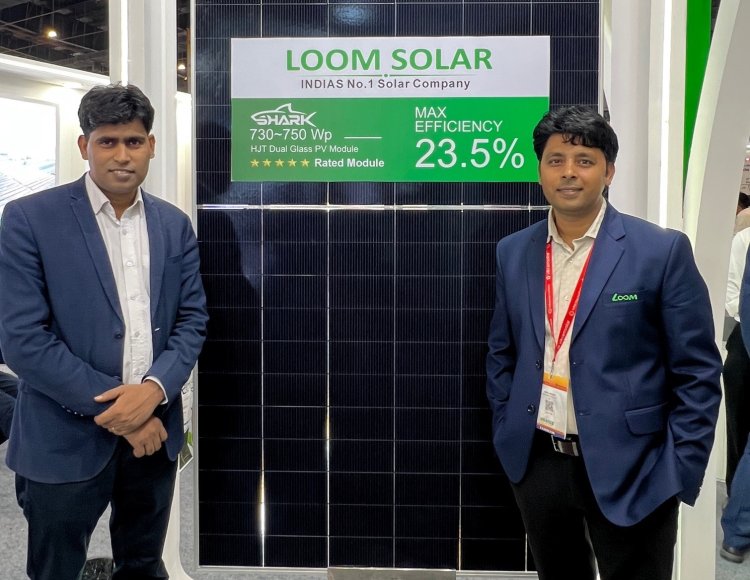
When we started, we used Monopark technology. Over time, we upgraded to Topcon and now to HJT. Initially, we outsourced production due to a lack of capital. Once we got the customer base, we invested in our own manufacturing and got some money. Currently, we have facilities for solar panels and inverters and are expanding capacity to 1.2 gigawatts in Mathura, Uttar Pradesh
Tell us about your recent productivity and plans?
We closed at roughly ₹400 crore for FY 2024 and are aiming at ₹600 crore for FY 2025–2026. Additionally, we intend to launch an IPO for roughly ₹1,000 crore. Last year, our valuation was approximately ₹1,200 crore, and we now wish to pursue a higher scale.
What are your future areas of focus and technological expansion?
Our next big step is cell manufacturing and battery energy storage (BESS). We are going to have a 1 GWh BESS and a 1 GWh cell manufacturing unit. Technology is evolving, and the requirement of India is growing exponentially. To ensure that this exponential growth is maintained, the company must also be ahead of the curve. HJT is next-level technology — though new in India — because the efficiency of the machine is on a higher side, and solar panels are performing better on efficiency. The other thing that we probably have is that our solutions are available on all scales — residential, commercial, industrial, agricultural, and utility. Recently, we completed a 26 MW project, and the scale is across different segments. That’s our next big focus area for expansion.
What's Your Reaction?