Gokhale explains what it takes to make high-security products environmentally credible without diluting performance
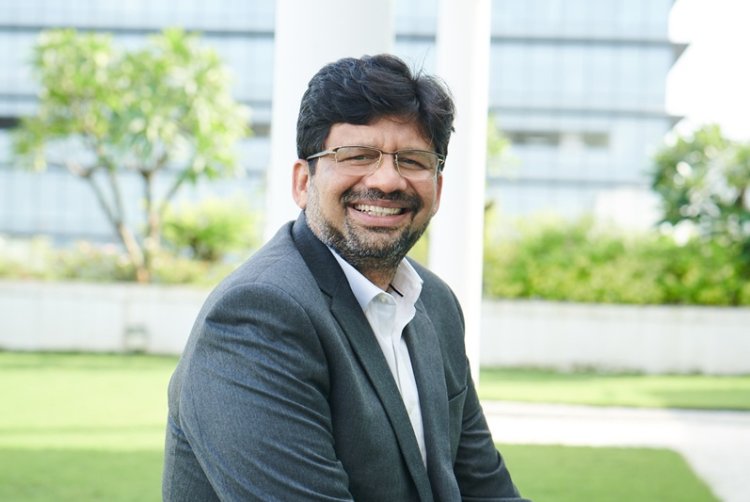
Pushkar Gokhale heads the Security Solutions business at the Godrej Enterprises Group, but his influence stretches far beyond the company. Over the years, he has helped shape India’s physical-security standards as part of the BIS MED 24 committee, earned CII’s Platinum recognition for developing the 5D+3S security framework, and represented India on a European panel on sustainability in security systems. He has also been awarded the OSPAS Lifetime Achievement Award for his contribution to the field of Security. He also serves on the Board of Governors of the International Institute of Security and Safety Management. In an interview with Responsible Us, he explains what it takes to make high-security products environmentally credible without diluting performance.
Excerpts:
How does GreenPro prove that your security products are environmentally better?
I’d answer that in two parts. You raised the compliance angle, but for us, the approach is different. We don’t do this because someone has mandated it. If you look at the ethos and value system of our company, everything starts with the vision of GEG, Godrej Enterprises Group. The very first sentence states we would like to be admired for sustainable practices and obviously innovation, business performance is important. This reflects our commitment to climate action and environmental responsibility.
For us, responsibility comes first; compliance naturally follows. Environmental stewardship is one of our core values. It isn’t about ticking boxes because BRSR is mandatory. That exists at the foundation of our vision and values. I want to set this as a context for our discussion.
Coming to GreenPro certification, these shields & awards behind me aren’t for this interview—these are certifications which we’ve earned. One is the GreenPro certification for products. The other shield is the GreenCo certification, which certifies us as a green company.
These certifications are issued post validation carried out by external assessors who evaluates various critical factors like energy consumption, water reuse, waste management, among others, to determine the company's environmental impact. They analyse our processes, goals and objectives for various parameters and our performance in relation to the targets basis which the certification is granted.
GreenPro is a label for environmentally friendly products. It verifies that our products are in accordance with the criteria for sustainable performance and green products. It has a comprehensive study of the product life-cycle right from the product design, raw materials, including the sourcing of components, production, energy consumption, waste disposal, water use, and recycling. Every stage is thus assessed. All of this is checked and verified by a third party. We may state what we do, but the validation is done independently.
GreenCo is awarded to the company for its processes. GreenPro certification is for products. Although our entire range of products are not GreenPro certified, a significant portion of around 60% of revenues comes from GreenPro-certified products whose life cycles have been evaluated.
Now, how did manufacturing change when you shifted materials? And how did your material choices evolve to maintain product quality?
The use of Aluminium slabs has become a standard practice due to it’s resistance to gas cutting, more so during the use of oxy-acetylene gas-cutters. The metal can dissipate a lot of heat, and therefore, most producers trust it. But smelting, that is, the sequence of heating, melting, further heating, and forming slabs, is an incredibly power-hungry process. It needs a huge electricity supply that not only raises the CO2 emissions of the product but also makes it hard to comply with energy-efficiency standards.
We started innovating with barrier materials. Instead of aluminium, we replaced it with high-strength concrete and added specific steel reinforcements. Now we’re exploring green cement as well. Its formulation is designed to be more environment friendly. By shifting from aluminium to this cement-based mix, we’ve significantly reduced both energy consumption and carbon emissions.
Alongside this, we’ve worked on water recycling, renewable energy integration and greener raw materials. Even something as simple as door handles—earlier chemically treated, releasing harmful chemicals—has been changed. We’ve stopped those coating processes completely.
Has this shift influenced growth or revenue?
No, I don’t see any increase. There’s no decrease either, but I wouldn’t credit any growth to the GreenPro certification at this stage. I’ve even said this at several public forums and conventions where I spoke about the circular economy and GreenPro. Companies don’t earn extra points today for having a GreenPro label.
When customers evaluate us—banks, jewellers, NBFCs on the B2B side—they appreciate that Godrej has taken this initiative and stepped ahead. But I haven’t seen anyone pay a premium for it at this stage. However, I am hopeful that sooner than later, customers would start valuing the importance of environmentally friendly products.
So the task now is to make customers aware of these labels and what they actually mean. We’ve started sharing our best practices with them, and they’re open for it, partly because BRSR pushes them to source responsibly. But the change isn’t deep yet. Most still follow the L1 approach.
Take the Government e-Marketplace. We’ve tried to get our certifications reflected there, but none of these have been made mandatory yet. They also have limitations, I guess, because the GeM platform has been created to bring in fair competition, and right now, we’re the only company with these certifications. So, my reading is if they mandate it, it could lead to a monopolistic situation. That could be one of the reasons.
So yes, there are constraints right now. In B2B, I don’t see much movement yet. But awareness will build. Once that happens, am sure at that point, maybe I can tell you we grew 10–20% because of this certification. That moment isn’t too far, but it’s not here yet.
In B2C—home lockers, home safes, smaller safes—they are GreenPro certified too. But since our market share is already around 75–80%, it’s hard to say our position is because of GreenPro. Awareness in that category is still low. People own home safes, but very few think about their environmental impact. That has to change and I am positive it will.
How do you balance high-security manufacturing with the pressure to reduce environmental impact?
We follow BIS guidelines—the Bureau of Indian Standards. They have clear standards for each product. For safes, the grade of steel, the thickness, performance requirements, resistance to tool attack or burglary—everything is clearly and objectively specified.
All our high-strength products carry the BIS label. There’s no compromise on quality because we choose an environmentally friendly raw material. Alternatives must match the original ones in strength, durability and resistance. And this isn’t just our claim, it’s validated by independent BIS-accredited laboratories
How do you manage supply chain emissions?
This is tough. As a responsible corporate, we can’t transform the entire ecosystem alone, but we must push the change. If we want real impact, the complete supply chain has to be aligned. We work with a wide range of suppliers, many from MSME and SME backgrounds. For them, sustainability is challenging. It requires investment, and costs go up. These concerns are genuine. However, to help them, we have been conducting training programmes. We invited CII experts to speak to our suppliers about what we’re doing and what GreenPro and GreenCo mean. We’re encouraging suppliers to pursue GreenCo certification so they also have third-party validation.
Some have joined. But convincing them isn’t simple. Many don’t have the capacity to invest. We’re guiding them and supporting them where possible. MSMEs and SMEs are a critical part of the ecosystem. If they adopt sustainable practices, their collective impact could exceed that of any large company.
What about packaging?
Packaging was the first area we targeted. We moved away from plastic and shifted to recyclable materials. Most of our packaging today is recyclable. Even the small pouches for keys—earlier plastic are being replaced with alternative materials. We examine every element to ensure it doesn’t end up in a landfill. GreenPro looks at packaging too, so we audit everything.
And finally, what about end-of-life responsibility?
Most of our products, like safe-deposit lockers, are over 90% recyclable because they’re mostly steel. Even after 30–40 years, they’re fully recyclable. From time to time we also roll out a buy-back programme called “Safe to Safer.” Burglary methods have advanced, so older products need upgrades to meet new BIS-mandated barrier technologies. They also need to be brought back from an environmental point of view. We’re offering customers a buyback. Anything purchased before 1990 can be returned at the original purchase price as a discount. In most companies’ books, these old products are valued at ₹1 after decades of depreciation. We still offer the original value so we can take back old units and recycle them.
As a responsible Corporate citizen, we believe it’s our responsibility to take the lead. Hence, these are the kinds of initiatives we’re taking to ensure sustainability is a full cycle, from production to end-of-life.
What's Your Reaction?