China’s green investment surge could slash emissions by 1.6 billion tons by 2030, but a persistent coal rebound and industrial slowdown present headwinds for decarbonisation.
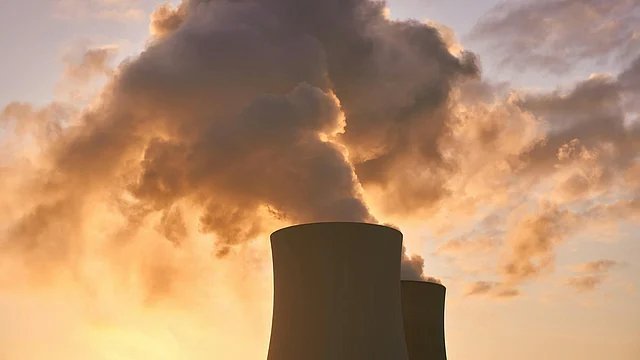
China’s $2.5 Trillion Green Investment Push Key to 2030 Climate Goals
Massive Financing Required to Meet Targets
China, the world’s largest emitter responsible for nearly one-third of global carbon emissions, must increase annual green investment by 40% — to around 3.5 trillion yuan ($480 billion) — in order to meet its 2030 climate goals. The country has pledged to cut carbon intensity by 65% from 2005 levels, but investment remains the critical bottleneck.
According to CICC, one of China’s leading investment banks, up to 1.6 billion tons of emissions could be avoided if $2.5 trillion is mobilised over the next five years.
Renewables and Clean Power Capacity Surge
China’s renewable energy expansion is accelerating at record speed.
-
Wind and solar power capacity is expected to rise from 1,700 GW in 2025 to over 2,800 GW by 2030.
-
Complementary growth in battery-based storage, hydro, and nuclear energy will provide critical balancing power.
-
Reforms in industry and electrification are underway to cut emissions from steel, cement, and heavy manufacturing sectors.
Coal Dependence Remains a Structural Risk
Despite progress, record coal generation — driven by energy security concerns and economic uncertainty — continues to pose a major obstacle. Ongoing trade disputes and sluggish demand in heavy industry further complicate the transition, threatening the pace of decarbonisation.
Global Attention on 2035 Commitments
The world is watching as Beijing prepares to announce its 2035 climate commitments ahead of COP30 in Brazil. Short-term emissions, however, may still peak at a record 11.3 billion tons by 2028, testing the credibility of near-term climate policy.
Path to Global Climate Leadership
If China can maintain its green finance momentum and strengthen policy support, it could not only meet domestic climate goals but also reshape the global carbon trajectory — reinforcing its role as a central player in the world’s energy transition.
What's Your Reaction?