Delta and Shell partner to expand SAF supply and airport infrastructure across major U.S. aviation hubs.
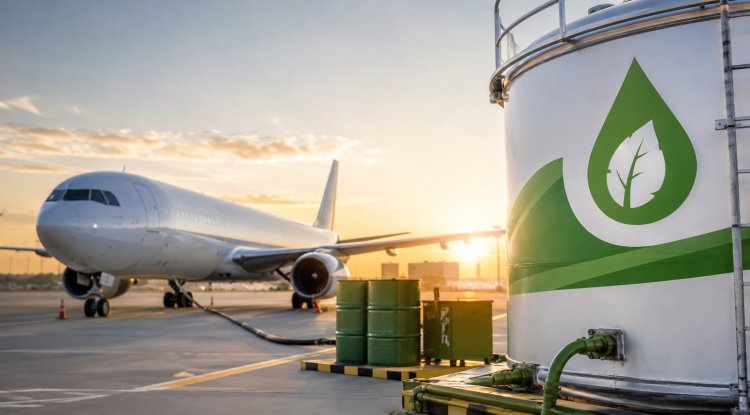
In a 5-year deal, Delta Air Lines will increase the availability of sustainable aviation fuel (SAF) at a number of major airports in the United States as a step toward making lower-emission fuel a commonplace part of airline operations. The agreement will concentrate on boosting the supply of SAF and building up the infrastructure to enable the efficient delivery of the fuel to aircraft, in support of the airline's long-term decarbonisation plan.
The partnership will focus initially on Los Angeles International Airport (LAX), Portland International Airport (PDX), John F. Kennedy International Airport (JFK), Logan International Airport (BOS) and the Minneapolis-St. Paul International Airport (MSP). The project will help to make more reliable supplies available and will help ensure the provision of fuel for aircraft, while also contributing to the aviation decarbonisation process. The agreement follows the aviation sector's efforts to increase the availability of sustainable aviation fuel and build-up of SAF infrastructure to cut emissions from aviation.
Five-Year Agreement concentrates on Fuel Supply and Infrastructure
The five-year agreement is based on their existing commercial cooperation with Delta and Shell on conventional jet fuel, and extends cooperation on sustainable aviation fuels, the parties said. In addition to making more SAF available, the agreement aims to tackle one of the biggest challenges in the industry – how to efficiently transport, blend, store and supply the fuel to aircraft.
The collaboration will enable both blended and neat SAF deliveries at specific airports, the companies said. In addition to fuel supply, they will be engaged in the logistics and distribution systems necessary to help bring sustainable aviation fuel into the routine of airline operations, not just a demonstration fuel.
The experts in the industry have repeatedly emphasized that scaling up SAF production will be inadequate without scaling up supporting infrastructure. The ability to store, blend, and distribute SAF continues to be essential to scaling up SAF use in aviation.
Contribute to the implementation of the Delta's LTCS.Contribute to the implementation of the Delta's LTCS.
The agreement is part of Delta's overall sustainability journey, which was first outlined in 2023 and which aims at realizing net-zero greenhouse gas emissions by 2050. A key part of that approach will be the greater adoption of sustainable aviation fuel, alongside the advancement of more fuel-efficient planes and new technologies in aviation.
Earlier this year, Delta reiterated their goal to use 10% sustainable aviation fuel in their total fuel use by 2030. This is despite improvements in technology and the commercial production of SAF being more gradual than expected, which is hindering the decarbonisation of the sector.
The airline has insisted that scaling SAF is one of the biggest avenues available to date to cut through lifecycle emissions in aviation, especially for long-haul flights where the alternatives like battery electric aircraft are still commercially limited.
Increasing supply of reliable fuels
Recent market conditions have made it more critical than ever to have diversified fuel supply chains, said Delta Chief Sustainability Officer Amelia DeLuca. She pointed out that this partnership proves that increasing supply of sustainable aviation fuel is feasible, provided that aligned investments are made in production, logistics, and airport infrastructure.
DeLuca said the partnership is to not only be an improvement for Delta's own operations, but also a real-world model that could be followed by the broader aviation industry to hasten the adoption of SAF.
Shell also said that the deal would cover their current operations and future innovation. The company said that the availability of both conventional jet fuel and sustainable aviation fuel would be “a positive step towards bolstering energy security” and aid the aviation industry's journey to a more carbon-friendly future.
Developing Next Generation SAF Technologies
The companies will also work to understand new sustainable aviation fuel technologies that will enable much greater future production capacity, as well as diversifying current fuel supply.
There are several technologies being considered, such as alcohol to jet pathways that convert alcohol-based feedstocks into aviation fuel, and power-to-liquid technologies that use renewable electricity and captured carbon dioxide to create synthetic aviation fuel. These technologies are considered relevant medium to long-term technologies that can be used to produce SAF on a larger commercial scale, with lower life cycle greenhouse gas emissions.
While a range of next-generation production routes are still in development, industry participants believe that they will be necessary to help address the rising demand for aviation fuel amid airlines' net-zero commitments.
Industry Continues Pursuing Lower-Emission Aviation
Global connectivity is a growing challenge for the aviation sector in terms of emissions reduction. SAF has become one of the more promising short-term solutions as it can be easily implemented in existing aircraft and current airport infrastructure, with limited changes, and can help reduce lifecycle emissions relative to conventional jet fuel depending on the feedstocks and production methods.
But its adoption is constrained by limited production capacity, cost and infrastructure issues remain. The relationships among airlines, fuel suppliers, and airports are therefore growing in significance in order to be able to build reliable supply chains and to facilitate commercialization.
This new deal between Delta and Shell is just one of the many industry deals that brings together fuel supply, infrastructure development and technology evaluation in a single long-term partnership. These types of partnerships are likely to be a key strategy in further increasing supply of sustainable aviation fuel (SAF) and strengthening the operational systems that enable the use of the fuel in day-to-day commercial air travel as airlines move towards their climate targets.
What's Your Reaction?