Best Buy expands solar projects in New York and California to cut emissions and boost clean energy use.
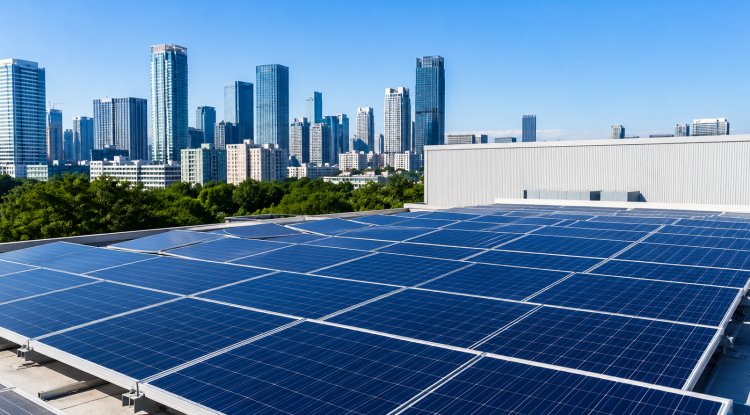
Best Buy has just increased the number of solar projects, renewable energy projects, clean energy projects, carbon emissions, and net zero emissions projects that are deployed on the roof of the store, with two new ones now in New York City and California. The expansion is part of the retailer's comprehensive sustainability efforts to lower emissions, use more renewable electricity, and fulfill its long-term climate goals.
The newest projects involve a rooftop solar system at Best Buy's New York store in Long Island City and a nearby solar field to power its distribution center in Dinuba, California. The projects will not only reduce the company's reliance on traditional electricity but also provide clean energy to nearby communities and aid in achieving its broader environmental goals, the company said.
Rooftop solar project to power up the community in New York.The rooftop solar project to energize community in New York.
The rooftop solar system for the Long Island City store will produce roughly 461,800 kilowatt-hours (kWh) of electricity yearly. Instead of feeding electricity into the retail grid, the electricity produced will be exported to the local electricity grid under a third party community solar programme.
As part of this scheme, those who sign up to the community solar scheme will be eligible for renewable electricity produced by the project. The installation will generate approximately 44 homes and businesses' worth of energy annually, and is expected to help increase the use of clean energy throughout the region, Best Buy said.
California solar field to power distribution operations
Best Buy in California has set up a solar field near its Dinuba distribution centre. The facility is expected to produce about 5.87 gigawatt-hours (GWh) of electricity per year, which will help to reduce dependence on traditional grid electricity for the site and increase its overall energy efficiency.
The firm estimates it will produce enough electricity annually to power the equivalent of an average of 559 households. The solar field also will be an important part of the company's logistics and distribution footprint.
New additions are made to current investments in renewable energy.
The two projects announced join Best Buy's portfolio of renewable energy projects which now includes 5 solar fields and renewable energy projects in South Carolina, Michigan, California and Texas.
As part of its sustainability objectives, the company has been investing in renewable infrastructure, with a particular emphasis on enhancing energy resilience at its facilities while also minimising operational emissions. Best Buy continues its work to increase clean energy production in various areas of the country with the latest projects.
Climate targets: progress towards achieving them
Best Buy has set several climate goals as part of its environmental goals. By 2040, the retailer intends to be a net zero on the whole by its operations. It has also set its goal to decrease Scope 1 and Scope 2 emissions by 75% by 2030 with 2009 as a base year.
The company's Corporate Social Responsibility Report for fiscal year 2025 states that Best Buy has already achieved an 80% reduction in operational carbon emissions from 2009 to make strides toward meeting its interim emissions reduction target.
The company is thrilled with the strides it has already made, and is committed to reducing its emissions even more throughout its operations, according to Tim Dunn, Best Buy's head of Environmental Sustainability.
Focus on efficiency and renewable electricity
In the future, Best Buy will continue its path toward reducing emissions, with the remaining targets focused on implementing energy efficiency measures, increasing its renewable electricity consumption and fostering continued progress toward cleaner electricity grids.
The company will also tackle residual emissions via verified carbon offset projects that bring tangible environmental and social benefits where direct emissions reduction is not currently feasible.
The installation of the solar panel system on the Best Buy roof top is part of a broader trend of companies investing in renewable energy, including rooftop solar systems and utility-scale renewable energy projects, to help their decarbonization efforts and their commitment to long-term sustainability.
What's Your Reaction?