Despite 80 Ramsar Sites, India’s Wetlands Shrink; Birds Disappear
India currently has 80 Ramsar-designated wetlands, the highest number in South Asia
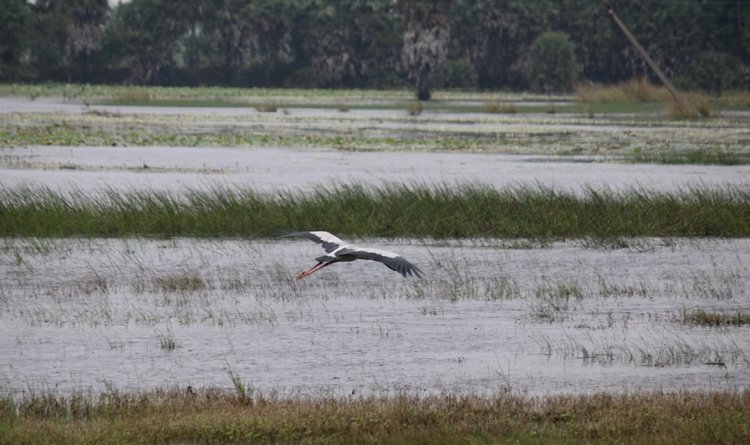
Last month, Ramsar Conservation Secretary General Dr Musonda Mumba, speaking at the Sinhasi Social Impact Conference in Bengaluru, highlighted the global decline of wetlands. While India has surpassed China in the number of Ramsar sites (Wetlands recognised for their international importance under the Ramsar Convention) Dr Mumba stressed the need for more targeted conservation efforts.
India currently has 80 Ramsar-designated wetlands, the highest number in South Asia. Despite this, a study by Wetlands International South Asia (WISA) found that nearly one-third of India’s natural wetlands have disappeared over the past four decades due to urbanisation, agricultural expansion, and pollution.
Wetlands serve several critical ecological functions, including water filtration, groundwater recharge, and flood control. They also support a wide variety of species, especially migratory birds that rely on them for feeding, breeding, and rest during their long journeys.
Unfortunately, bird counts conducted over the past 30 years by researchers and birdwatchers show a steady decline in the arrival of migratory birds across India. Wetland-dependent species are particularly affected, with many losing their traditional stopover and wintering grounds.
This year, as World Migratory Bird Day (May 10) approaches, experts are urging stronger collaboration between conservation organisations, the Ministry of Environment, Forest and Climate Change (MoEFCC) and local environment champions to protect and restore wetlands. These efforts are essential not only for migratory birds but also for local biodiversity.
Meanwhile, one such effort is already underway in Villupuram district in Tamil Nadu, which is home to two major bird sanctuaries and several wetlands. Recognising the ecological value of this region, where 146 species and 9,977 individual birds were spotted in a two-day synchronised bird census recorded last year, the social enterprise Grow-Trees.com has launched a tree plantation initiative -Trees for Migratory Birds™.
“Wetlands in Villupuram are critical habitats for a variety of species, especially migratory birds. Their rapid decline threatens the survival of these birds and adversely impacts the ecological balance of the region. To address this, Grow-Trees.com committed to planting 10,000 trees during 2024–2025 near the Temple Lake in Athikuppam village, Marakkanam block. This will be a part of the Trees for Migratory Birds initiative,” said Pradip Shah, co-founder of Grow-Trees.com.
The aim is to nourish the ecosystem and help maintain it as a natural stopover for migratory birds. The project will include carefully selected native species such as Indian Tulip, Arjun, African Mahogany, Jamun, and Yellow Teak.
Each year, Villupuram’s wetlands attract birds like the Green Bee-eater, Black Drongo, and Paddyfield Pipit, along with migratory visitors including Cranes, Pelicans, Glossy Ibis, Purple Heron, Pond Heron, Little Heron, Black-headed Ibis, and Garganeys.
Shah believes the impact of this initiative will become increasingly visible in future bird censuses. “By tackling habitat loss through tree planting and wetland conservation, we can hope to see more migratory birds returning to Villupuram in the near future,” he said.
What's Your Reaction?