UK Faces Rising Weather Extremes, Report Warns
Met Office report finds UK weather extremes—including record heat, rainfall and sea-level rise—now frequent, urging stronger adaptation and resilience efforts.
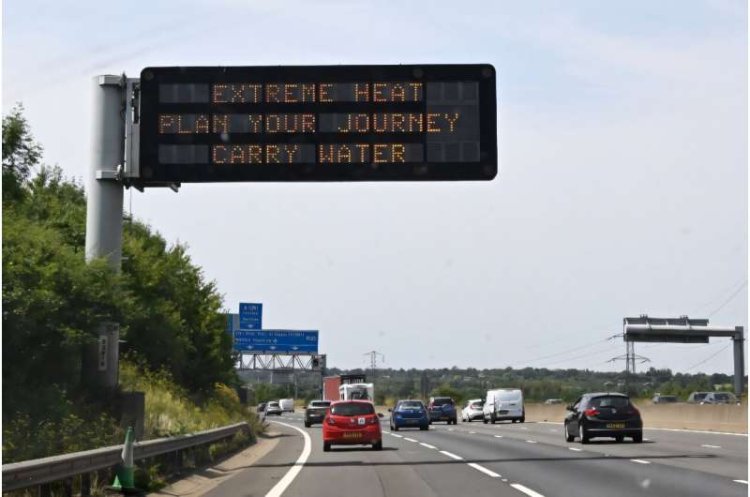
Severe weather events are increasing in the UK, the Met Office's new "State of the UK Climate" report out on 14 July 2025 reports. The study finds an unequivocal rise in the frequency of extremely hot summer periods and record-breaking wet winters, which pose heavy burdens on infrastructure, public health, and environmental resilience.
It is revealed in the report that England and Wales experienced their wettest winter since 250 years ago, from October 2023 to March 2024. Out of the ten wettest winters ever recorded, six of them have occurred in the 21st century. Conversely, the period between 2022 and 2024 was the nation's fourth warmest on record since 1884, with the past three years all in the top five.
Severe precipitation and temperature events are becoming the dominant concern drivers, says Met Office lead scientist Mike Kendon. As he puts it, records are being set very regularly now, and it is extremes in temperature and precipitation that are doing the most changing—something he said is extremely worrying. Current information affirm that days with temperatures of at least 5°C, 8°C, and 10°C higher than the 1961–1990 average have doubled, tripled, and quadrupled in the last decade.
Winter rain has also become more intense. Double-average months of rainfall have increased by 50% since 2015, and October–March of 2023–24 has been wetter than any since the 1770s. The increasing wet winter trend is linked to more atmospheric moisture and changes in weather patterns, research by the Met Office finds.
Sea-level rise is also an escalating issue. The UK coastline has risen by 19 to 19.5 cm from 1901, with two-thirds of the increase in the last 30 years—a rate higher than the global rate. National Oceanography Centre scientist Dr Svetlana Jevrejeva cautions that these trends are contributing to coastal hazards, especially if high water coincides with storm surges.
The social and environmental consequences are already being experienced. The record-breaking highest temperature in England in June 2025 prompted at least three heatwaves and caused approximately 600 deaths. Heat-health warnings were invoked on a regular basis, and hosepipe bans were experienced in Yorkshire, Kent, and Sussex. The UK's spring of 2025 was unusually dry—some of the driest on record—and caused concerns about low river levels, drought, and wild fires.
Health and environmental experts are raising the alarm. The Energy Security Secretary, Ed Miliband, has called the report alarming and a sign of a "climate under threat." The Royal Meteorological Society's chief executive, Liz Bentley, has called the report "not just a record of change, but a call to action.".
There is more and more pressing need for drastic adaptation. Storm surges, flood rivers, heatwaves, and droughts demand co-ordinated action—from stronger infrastructure to better emergency response systems. As sea levels continue to rise and extremes of temperature are likely to get worse, scientists say that record-breaking years like these could be the new normal by 2050 and even decline by 2100.
The acceleration of climate impacts has challenges of a multidimensional character. Flooding and droughts threaten agriculture, and heatwaves have the potential to damage susceptible populations and strain health services. Early springs meanwhile manipulate ecological cycles, as wildlife breed and flora flower weeks before previous norms—a potential indication of interference with natural processes.
Met Office data is based on the longest instrumental record of the world, the Central England Temperature series. Kendon mentioned such depth of records, referencing observations that indicate that the UK climate is now significantly different from only a few decades ago.
Drawing on these observations, experts advise introducing inclusive climate resilience schemes. These would include the upgrading flood defences, upgrading water systems, and public health planning for heat catastrophes.
Climate research institutions remain interested in explanations and regional variations of climate patterns, such as sea-level drives in the Atlantic and the role of increasing atmospheric moisture. Joint research by the Met Office, National Oceanography Centre, and academics will have a bearing on future policymaking.
The new report once again says the UK's climate is undergoing drastic change, with extreme weather becoming the new norm—a trend that is likely to persist unless there is radical mitigation and adaptation. Policymakers, communities, and businesses are all under growing pressure to cope effectively with these emerging realities.
Source:
Originally published by Phys.org
What's Your Reaction?