Old electronics hide valuable metals like gold and palladium, turning e-waste into a profitable and sustainable resource.
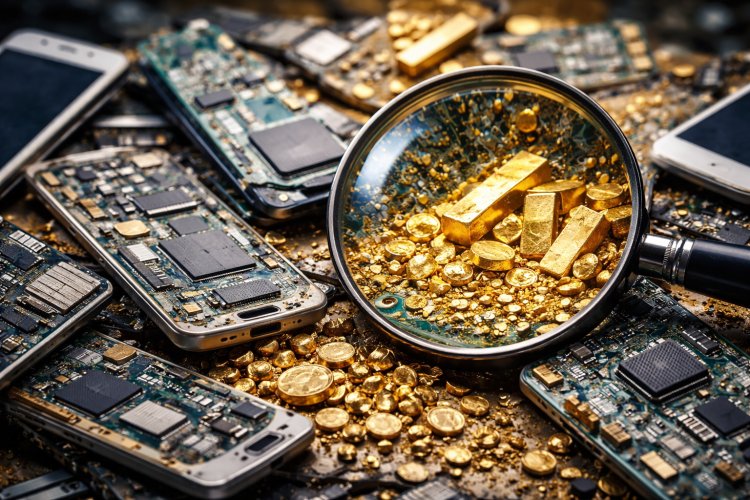
Every year, huge amount of electronic waste such as old phones, laptops, and gadgets are thrown away across the world. Scientists and recyclers believe that what looks like trash to most of the people can be very valuable than junk: gold. The small amounts of these metals used in electronics add up to billions of dollars in "e-waste gold." Getting these metals from old devices isn't just about money but it’s also better for the environment because mining gold from the earth requires lots of energy, water and chemicals which causes a lot of pollution. However, extracting the same metals from discarded electronics can reduce pollution and helps to manage the growing mountain of e-waste.
Recent developments in the Chinese market show just how profitable and viable the recycling of e-waste really is. In a report published by the South China Morning Post, Chinese researchers have found a way to extract gold from electronic waste for less than a third of the price that the precious material sells for on the market today. This gold and other precious materials are obtained from the CPUs of disused mobile phones and personal computers, as well as the PCBs of disused appliances, through chemical rinses that take less than 20 minutes.
With a leaching efficiency of more than 98.2% for gold in CPUs and PCBs at room temperature and an extraction rate of 93.4% for palladium, the technology causes much less pollution than the existing procedures. Only 10 kilograms of PCBs are needed to produce 1.4 grams of gold with a total cost of $72. With the global price of gold more than $4,472 an ounce in early January and considering that China alone disposes of millions of tons of e-waste every year, this technology is a “game-changer” in addressing both resource depletion and pollution. “Urban mining” will “be the future of precious metals extraction,” according to the lead researcher.
For instance, in India, recycling one ton of mobile phones can provide as much as 300 grams of gold, valued at $18 million per ton in today’s market trends. However, this resource lies largely untapped since e-waste is dumped alongside general rubbish and smuggled across international borders even though recycling a single ton of mobile phones can provide 300 grams of gold, valued at $18 million per ton in current market trends.
Gold, platinum, palladium, and other precious materials are required in the manufacture of electronics, catalysts, and jewellery owing to their properties of stability and conductivity and catalytic capabilities. They also tend to be scarce in nature and, when mined, result in the destruction of habitats and pollution of soil and water sources. Extraction of these metals from e-waste can be economically and environmentally sustainable and plays an integral role in making electronics more environmentally friendly.
What's Your Reaction?