Reduction in air pollution across East Asia, particularly China, has unintentionally accelerated global warming by eliminating reflective aerosols that previously masked greenhouse gas effects.
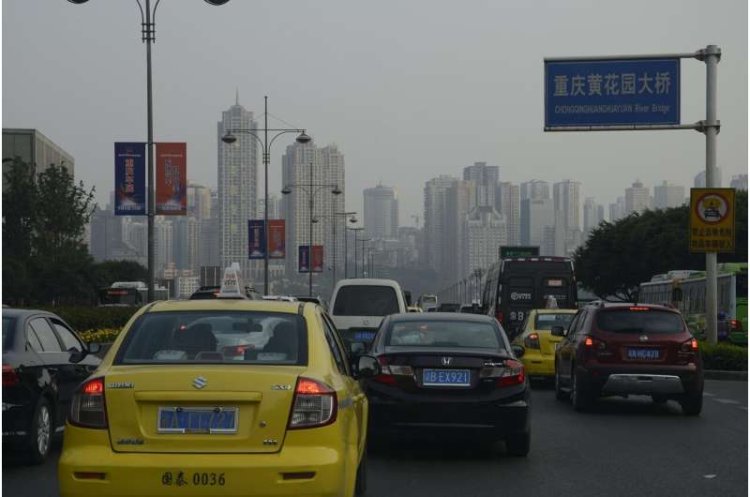
A study discovered recently that a sudden drop in air pollution in the China-dominated East Asia is causing global warming due to stripping away reflector particles that once cooled the Earth. As much as the project cleaned up the air and saved lives, the unintended byproduct is an increased rate of global warming.
The research, reported in Communications Earth & Environment, was conducted through a robust analysis with eight top-of-the-line climate models and new emissions estimates. Scientists at the CICERO Center for International Climate Research, the University of Reading, and other global institutions worked on the study.
The research concentrated on sulphate aerosols—sunlight-relecting particles from the Earth's surface that create a direct cooling effect. The aerosols are normally emitted when fossil fuels are burned and industrial processes take place. East Asia had been a significant source of such aerosols but tough pollution controls put in place in the past 15 years have reduced them significantly, especially in China.
Lead author of CICERO Dr Bjørn Samset further said that these aerosol reductions have "unmasked" greenhouse gas warming previously partially covered up. He further stated that a 75% reduction in East Asian sulphate emissions has played a major role in recent global and Pacific region warming increases.
Dr Laura Wilcox, co-author from Reading University, added that aerosol pollution also has a short atmospheric lifetime of just a few days to weeks, compared with decades for carbon dioxide and other greenhouse gases. This would imply the temporary aerosol cooling is rapidly lost as soon as emissions cease but the underlying warming from the greenhouse gases continues to accumulate.
Though this trend is imparting long-term climate costs, it is a product of policies that have yielded impressive health benefits. China's air pollution reduction has been estimated to have avoided almost one million premature deaths each year. The health benefits come at a climate cost, which policymakers at the global level now must deal with.
The research also brings to the fore the importance of how reducing air pollution in a region of the world can make a great difference. The researchers clarified that the Pacific Ocean heats faster, and it would most likely be because of the decreased aerosol in East Asia. Such changes on a regional level are significant in creating more refined global climate models.
The findings create a dilemma for climate policy. Policymakers now face the twin mandate of enhancing air quality and controlling the rate of global warming. That is, while the air needs to be cleaned for human health, it strips away a "mask" which had been partially counteracting the impact of greenhouse gas emissions.
This twin effect indicates that further greenhouse gas emission reductions are more important than ever. Mitigation cannot be based on aerosol-induced transient cooling impacts and needs to address ongoing CO₂ and methane reductions. This is indicated by experts as also implying the worthiness of investing in climate adaptation in addition to mitigation.
The research finds that the planet would have to expect the likelihood of even faster future warming as aerosol contamination keeps decreasing. The speeding up of warming will level off once aerosols come to equilibrium but the greenhouse-driven temperature increase baseline will persist unless substantial emissions are cut back.
This study is appended to increasing evidence that global warming trends are not only driven by carbon emissions but also by the decrease in some pollutants. Climate stability and environmental protection continue to be a delicate and intricate balance that demands concerted international action.
Source:
Originally published by Phys.org
What's Your Reaction?