Embraer Targets Indian Aviation Market Expansion with IndiGo and Air India Talks
Brazilian aerospace company Embraer is expanding in India, engaging with IndiGo and Air India to sell E-2 jets and establishing a New Delhi subsidiary to tap into commercial, defense, and urban air mobility opportunities.Embraer aims to expand in India’s aviation market, discussing E-2 jet sales with IndiGo and Air India and establishing a subsidiary to support commercial, defense, and eVTOL sectors.
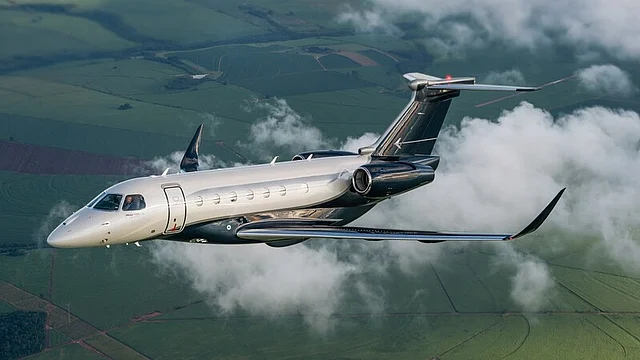
Brazilian aerospace company Embraer is pursuing growth in India’s aviation sector by engaging in discussions with major airlines IndiGo and Air India to sell its E-2 jets. With a new subsidiary in New Delhi, Embraer aims to strengthen its presence in commercial, defense, and urban air mobility segments, capitalizing on India’s position as the third-largest aviation market globally.
India’s aviation sector is experiencing rapid growth, driven by increasing air passenger traffic and government initiatives to enhance regional connectivity. Embraer, a leading manufacturer of commercial jets with up to 150 seats, sees significant opportunities in this market. The company is in talks with IndiGo and Air India to supply its E-2 aircraft, which have a seating capacity of 120 to 146 passengers, ideal for regional routes connecting tier-2 and tier-3 cities. These jets are designed to serve routes too long for turboprops but not viable for larger narrow-body aircraft like those from Airbus and Boeing, which face delivery backlogs until 2030.
Currently, Embraer’s presence in India includes nearly 50 aircraft across 11 types, operated in commercial, defense, and business aviation sectors. Regional carrier Star Air, the company’s primary commercial client, operates nine Embraer jets, including ERJ145s and E175s, under the government’s UDAN scheme for regional connectivity. In the defense sector, the Indian Air Force and Border Security Force use Embraer’s Legacy 600 for VIP transport, while the Netra Airborne Early Warning and Control aircraft, based on the ERJ145 platform, supports military operations. Embraer’s collaboration with Mahindra Defence Systems, formalized in 2024, targets the Indian Air Force’s Medium Transport Aircraft program with the C-390 Millennium, a multi-mission aircraft capable of cargo transport, medical evacuation, and aerial refueling.
The company has established a fully owned subsidiary in New Delhi’s AeroCity to deepen its engagement with India’s aerospace ecosystem. This subsidiary focuses on procurement, supply chain development, engineering, and sales, aligning with the Make in India initiative. Embraer is also exploring opportunities in urban air mobility, particularly electric Vertical Take-Off and Landing (eVTOL) aircraft, which could address congestion in India’s growing cities. The company estimates that India will require 500 small narrow-body jets over the next 20 years to meet rising demand, driven by infrastructure development and increasing air travel in non-metro areas.
Embraer’s expansion strategy includes potentially setting up a final assembly line in India if it secures orders for around 200 aircraft, which would enhance local manufacturing and job creation. The company is leveraging India’s skilled workforce and growing industrial base, with plans to hire for roles in government relations, communications, and engineering. This move could reduce reliance on imported components and strengthen India’s position as a regional aerospace hub. However, challenges include navigating regulatory complexities and competing with established players like Airbus and Boeing, which dominate India’s commercial aviation market.
The Indian aviation market’s growth is supported by government policies promoting regional connectivity and infrastructure investment. The UDAN scheme has expanded air travel to underserved areas, creating demand for smaller jets like Embraer’s E-2 series. Additionally, India’s defense modernization efforts provide opportunities for Embraer’s military aircraft, particularly the C-390, which offers versatility and lower lifecycle costs compared to competitors. The company’s focus on eVTOL technology aligns with global trends toward sustainable urban mobility, though regulatory changes will be needed to facilitate adoption in India.
Embraer’s discussions with IndiGo and Air India are critical, as these airlines operate large fleets and have ambitious expansion plans. IndiGo, India’s largest carrier, recently ordered 30 Airbus A350-900 wide-body aircraft to expand international routes, indicating a focus on growth. Air India, under Tata Group ownership, is also modernizing its fleet. Embraer’s ability to offer aircraft with shorter delivery timelines—potentially by 2028—gives it an edge over competitors with longer backlogs. The company’s regional jets are well-suited for India’s diverse geography, where smaller airports require efficient, smaller-capacity aircraft.
The broader India-Brazil trade relationship, though currently modest, has potential for growth, particularly within the BRICS framework. Embraer’s investment in India reflects a commitment to long-term collaboration, leveraging bilateral ties to expand its footprint. The company’s record revenues in 2024 and its global leadership in regional jets position it to capitalize on India’s aviation boom, though success will depend on securing significant orders and navigating local market dynamics.
Conclusion
Embraer’s strategic push into India, through talks with IndiGo and Air India and the establishment of a New Delhi subsidiary, positions it to tap into one of the world’s fastest-growing aviation markets. By focusing on regional jets, defense, and urban air mobility, the company aligns with India’s connectivity and sustainability goals. While challenges remain, Embraer’s investment signals strong potential for growth and collaboration in India’s aerospace sector.
Source: Outlook Business
What's Your Reaction?