A European Commission-backed study estimates the EU will need to train between 150,000 and 500,000 workers annually through 2050 to meet green transition labor demands, with electric vehicles and renewable energy driving the largest skills gap.
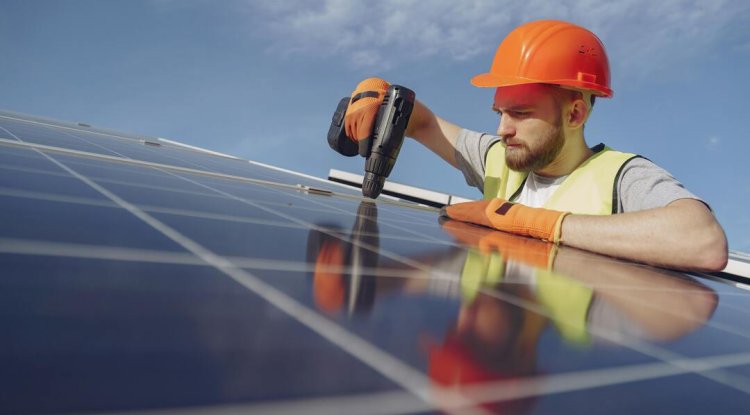
The EU may have to train 150,000 to 500,000 people annually until 2050 in order to facilitate its transition to a low-carbon economy, as per an analysis supported by the European Commission.
The findings indicated that skill requirements will increase in those sectors where there is demand for electric cars, solar power, and wind energy. These industries are growing rapidly, and employers are looking for more engineers, technicians, electricians, and other skilled personnel.
Annual training cost was estimated at €350 million to €1.4 billion. Training costs, along with loss of productivity due to absence during training and certification, were counted in these estimates.
It was discovered that not more than 1% of the total workforce of the EU may be involved in retraining programs. There were no economic disruptions foreseen in this respect.
Under one assessment, the impact on the EU economy would remain below 0.05% of gross domestic product. A separate modelling exercise projected that GDP could be 0.053% lower between 2026 and 2030 and 0.082% lower after 2030, reflecting time spent in training rather than productive work.
Employment impacts were also projected to be small. The study estimated employment levels could be 0.03% to 0.07% below baseline forecasts during periods of intensive retraining. The reductions were linked to temporary labour shortages while workers participated in training programs.
The report identified existing labour shortages as a challenge for the transition. Demand for workers in manufacturing, construction, transport and energy has risen in recent years, with shortages reported across several EU member states.
Occupations including electricians, plumbers, metal workers and heavy truck drivers are already in short supply in parts of the bloc. The study said these shortages could become more significant as investment in clean energy infrastructure and low-carbon technologies increases.
These results show how much effort is needed to prepare a sufficient number of workers to meet the EU’s climate objectives. Additional training courses and skills in technology will be essential to satisfy labour demands in newly developed branches of the economy.
The study was prepared as part of broader efforts to assess the labour market implications of the EU’s transition toward net-zero emissions and greater reliance on clean energy technologies.
What's Your Reaction?