India presented updates on its carbon market framework, renewable energy expansion and emissions reduction progress during WTO Trade and Environment Week 2026 in Geneva.
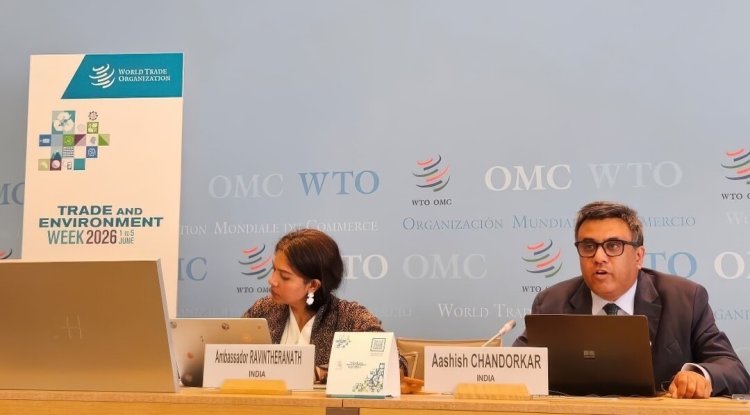
India updated the world regarding their carbon trading program and progress made towards clean energy during the 2026 edition of WTO Trade and Environment Week that took place in Geneva.
The Ministry of Environment, Forests and Climate Change, Bureau of Energy Efficiency, among others, provided an update regarding progress made regarding the Indian Carbon Market and Carbon Credit Trading Scheme on World Environment Day.
The Carbon Credit Trading Scheme is expected to serve as the foundation of India's national carbon market. Officials said work is underway to establish an electronic platform for carbon credit trading and develop market mechanisms intended to support greenhouse gas emission reductions.
India also reported progress on targets submitted under its Nationally Determined Contributions to the Paris Agreement.
According to the presentation, non-fossil-fuel sources accounted for 53.21% of India's installed electricity generation capacity as of March 2026. The figure exceeds the country's target of 50% by 2030.
Officials said the emissions intensity of India's gross domestic product declined by 37.38% between 2005 and 2022. India had previously committed to reducing emissions intensity by 33% to 35% by 2030.
The presentation also referenced the principle of Common but Differentiated Responsibilities and Respective Capabilities (CBDR-RC), which remains a key element of India's position in international climate discussions.
Officials provided updates on the National Green Hydrogen Mission, including emission thresholds and technical criteria used to classify hydrogen as green hydrogen. The standards are intended to guide certification and market development within the sector.
Trade and climate policies were also discussed during WTO meetings held earlier in the week. India and Japan examined concerns related to trade-related environmental measures and their potential impact on international commerce.
Delegates discussed transparency requirements and compliance challenges faced by countries and stakeholders with limited resources. The discussions formed part of broader WTO Trade and Environment Week sessions focused on the interaction between trade, climate policy and sustainability regulations.
The Geneva event provided an opportunity for India to present recent regulatory developments related to renewable energy, carbon trading, and emissions reduction policies to WTO members and other participants involved in trade and environmental policy discussions.
What's Your Reaction?