An AI-based G-SPIDER robotic system has been introduced in Thiruvananthapuram to clean canals in difficult and high-risk areas without human entry.
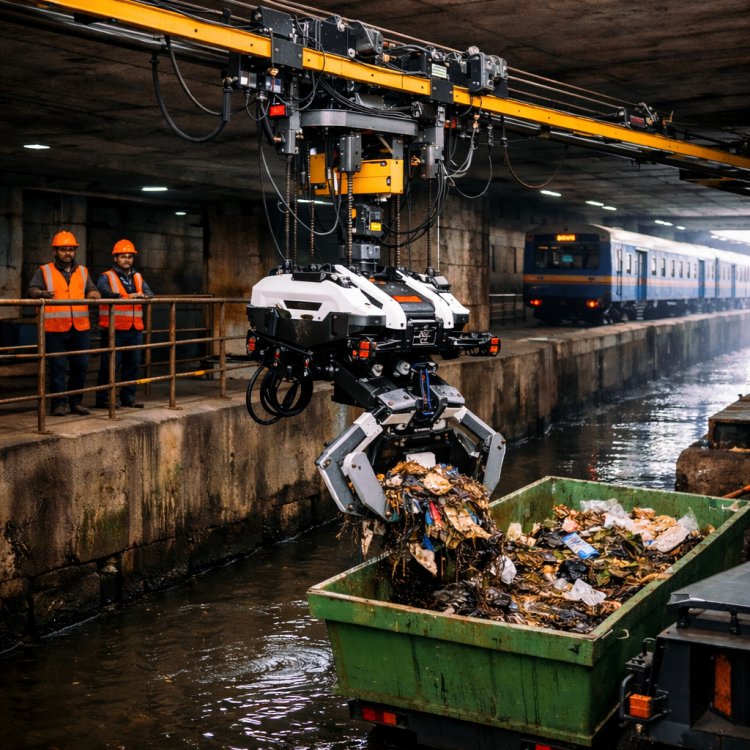
Thiruvananthapuram Municipal Corporation has deployed an AI-powered G-SPIDER robot for canal cleaning in high-risk areas. The robotic system has been introduced at the Amayizhanchan canal near the railway station premises at Thampanoor Railway Station to reduce the need for manual entry into hazardous spaces during waste removal operations.
The Amayizhanchan Canal, particularly the covered stretch beneath the railway station, presents operational challenges due to restricted vertical clearance, continuous water flow, confined working conditions, and the absence of safe entry points for workers. These conditions have made routine cleaning and maintenance difficult using conventional methods.
To address these constraints, an AI-powered robotic canal-cleaning system was commissioned by M. B. Rajesh. The initiative involves collaboration between the municipal corporation and Genrobotic Innovations, a Technopark-based company known for developing the robotic scavenger Bandicoot.
According to officials, the system is intended to reduce the need for sanitation workers to enter confined and potentially hazardous environments. The G-SPIDER automated canal-cleaning robot is designed to operate in complex canal conditions without direct human involvement. Built on a Cable-Driven Parallel Robotics architecture and equipped with AI-based vision and sensor systems, the robot can detect and remove accumulated waste. The system uses machine vision to identify different types of debris and adapt to flow conditions and structural constraints.
The robot includes a five-degrees-of-freedom mechanism with a claw-type grabber designed to collect mixed and irregular waste materials. Extracted waste is transferred into designated collection vehicles, enabling a largely automated canal-cleaning process from detection to disposal.
Municipal officials state that the robotic system may help reduce worker exposure to toxic gases, contaminated water, and hazardous waste. The system is designed to operate during high water levels and continuous flow conditions, allowing regular maintenance of urban drainage channels. It can remove various forms of waste, including plastics and sharp debris, which can obstruct water flow.
Authorities say that systematic cleaning of canals could also help improve drainage efficiency and reduce the risk of urban flooding. The deployment of the G-SPIDER system represents an effort to introduce mechanised methods for canal maintenance in locations where manual cleaning is difficult or unsafe.
Officials noted that similar technology could potentially be used in other canals and drainage networks facing comparable operational challenges. The initiative aligns with broader efforts under Swachh Bharat Mission to adopt technology-based approaches in urban sanitation while addressing safety concerns for sanitation workers.
What's Your Reaction?