Carbon Capture Industry Faces Uncertainty Amid Political and Technical Setbacks
The carbon capture sector faces political and technological setbacks, with cancelled U.S. grants, permit declines, and project underperformance. Despite tax credits and surviving projects, uncertainty clouds the industry’s role in global emissions targets.
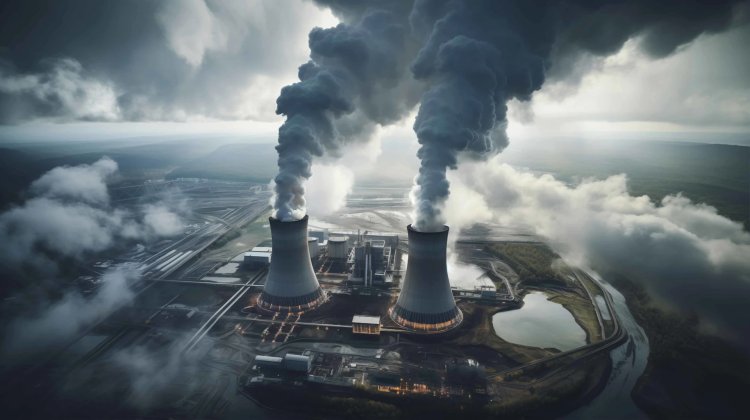
The carbon capture business, once viewed as high-value and rapidly growing in the fight against climate change, now is under significant setbacks. Following a wave of optimism with billion-dollar financing and market estimates soaring to $1.2 trillion by 2050, the industry is now experiencing an age of prudence. Alterations in the U.S. political environment, especially since the start of President Donald Trump's second term, have created unexpected federal funding cuts and growing concerns about the long-term viability of the industry.
The United States Department of Energy (DOE) was one of the largest disruptors, rescinding 24 already-approved grants worth $3.7 billion. They were mostly for carbon capture and storage (CCS) projects. This action has already influenced the industry giants like Climeworks, which recently announced a 22% employee cutback. Other companies like Heirloom and Pachama have started cutting jobs to manage lower funding and volatile market conditions. New permit applications for CCS projects declined by 55% in the initial quarter of the year, showing the increased hesitation in the industry.
Apart from political considerations, there have also been operational and technological challenges. Climeworks' initial direct air capture plant in Iceland has underperformed, capturing fewer carbon dioxide molecules than initially anticipated in its first ten months of operation. The business has since moved away from a strategy of fast expansion into optimizing its current carbon removal tech to be as effective and cheap as possible. The implementation reality has been tougher and longer than initial estimates had predicted.
Though not all has been gloomy in the world of carbon capture, though. Some of the projects approved under the Biden administration, for instance, Project Cypress in Louisiana with Climeworks's participation, have been exempted from the DOE's recent reductions. Additionally, while significant policy shifts have occurred, carbon capture tax credits were not outright removed. While they are less transferable now, these credits still offer some form of funding support to incipient projects.
In April, the federal government approved Occidental Petroleum to start sequestering carbon dioxide at a new Texas facility. The plan is meant to enhance energy security while cutting industrial greenhouse gas emissions. But its use of enhanced oil recovery—injecting stored-up CO₂ into oil reservoirs in an effort to extract more petroleum—is being criticized by environmentalists as going against the transition away from fossil fuels.
The carbon credit market itself is volatile. Much of the industry relies on voluntary company pledges to buy carbon removal credits. Microsoft, JPMorgan, and Bain & Company continue to invest in such schemes but in a weak market. CDR.fyi, an industry tracker, reports that there remains accelerating carbon credit sales growth, but also growing risk of firm failure.
Coalitions such as the Carbon Capture Coalition have criticized the DOE's funding cut as a step backward for national carbon management. The terminations will take the brakes off innovation and deployment within an industry previously deemed crucial to achieving global emissions goals. Industry experts are demanding a do-over of policy choices that have slowed the development of climate technologies.
Although the climate is still tough currently, firms are changing their strategy in an attempt to keep up with the moving landscape. Firms such as Climeworks are reducing their growth targets and concentrating on maximizing current systems rather. This is reflective of a wider wave of consolidation and risk management, with firms attempting to remain afloat in an industry no longer subsidized by the same amount of political and financial support as in the past.
Carbon capture sector is an intersection point now. While on one hand demand for certain-shot carbon elimination is high, particularly as nations struggle to achieve reduction goals in global agreements, on the other hand unless commercial activity is given standardized policy promises and technological leaps, it will fall short of delivering on its own promises. Future expansion will also rely on a mix of supportive government encouragement, market stimulus, and ongoing innovation to maintain costs under control and enhance performance dependability.
The coming years will be instructive about whether carbon capture technology is set to become a standard of international climate policy or continue to be a specialized product with limited penetration. As investors, firms, and governments reassess their climate ambitions, the industry's future will largely depend on how quickly it can respond to new challenges and regain trust in its potential.
Source
Republished from "From Boom to Caution: Carbon Capture's Shifting Fortunes"
What's Your Reaction?