EU to Drop Greenwashing Rules Following Political Pushback
The European Commission plans to scrap its Green Claims Directive, which would have required companies to verify environmental claims, after political pushback from conservative lawmakers. The move reflects a shift in EU priorities toward reducing regulatory burden on businesses.
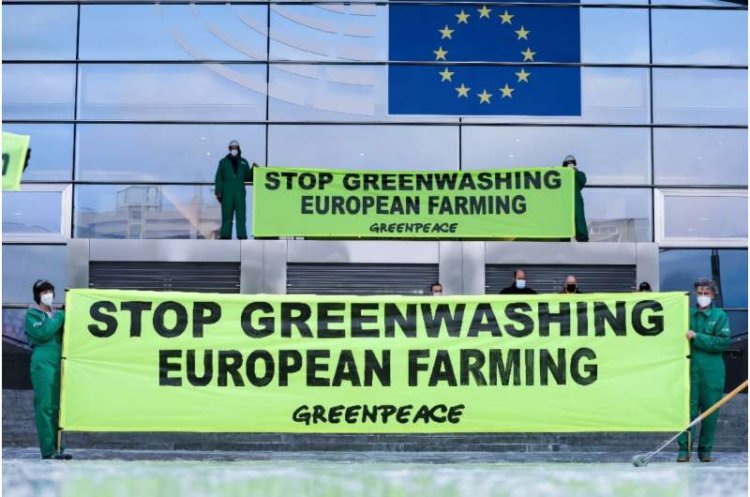
The European Commission said it would pull its proposed "Green Claims Directive," a rule that would have governed green marketing assertions by businesses. The move is made under pressure from right-wing politicians who complain the bill is too business-burdened. Businesses would have been obligated under the directive to submit credible proof backing their green assertions—i.e., "carbon neutral," "biodegradable," or "less polluting"—before advertising such data in the European Union.
Originally presented as an integral part of the EU's overall strategy in the fight against greenwashing, the directive would have suppressed deceptive eco-labels through third-party verification of such claims. Non-compliant companies would have faced penalties and fines. Increasing opposition in the late stages of negotiations risked sending the bill crashing to the ground from becoming law, with the main opposition coming from the European People's Party (EPP), the largest group in the EU Parliament. The EPP warned that the measures would generate unnecessary bureaucracy and hinder economic growth, particularly for micro-enterprises which are the majority of the EU enterprises.
The commission recognized that almost 30 million micro-enterprises, or around 96% of all enterprises in the EU, would fall under the directive. Commission and EU legislative critics complained the new legislation had no blanket-style impact assessment to warrant the administration and financial cost it would place on businesses. The commission opted to proceed with the Green Claims proposal as incoherent with its overall agenda to do away with red tape and make things competitive.
The pending legislation had been in its final stages of negotiation, with a concluding session set between the European Commission, the European Parliament, and EU nations. But following EPP calls for withdrawal of the directive, the commission ensured that it would suspend its legislative process. The action is consistent with new trends in EU policymaking, where focus has been placed into unbundling regulation in a bid to spur economic recovery.
Ever since the previous EU elections, in which there was a rightward drift in the Parliament, Commission has moved more and more in the direction of cutting perceived overregulation. The shift had reached various pillars of the EU's environmental policy, such as delays to other green legislation. An example is the delay of a law requiring companies to ensure their worldwide supply chains are ethically and environmentally abuse-free. Originally intended for deployment beforehand, the implementation of the law is currently being delayed until 2028.
The Green Claims Directive was just one among a line of legislative attempts to tighten up rules on environmental claims that companies make. Although one law prohibiting woolly terminology like "eco-friendly" or "natural" is already in place, the larger package that was supposed to make accountability kick into environmental labelling activities now awaits. The draft directive was supposed to enhance consumer protection by preventing companies from making sustainability claims without data.
The proponents of the directive have opposed its abolishment on the grounds that it will undermine the EU's capability to safeguard consumers from greenwashing. They contend that without strict checks, firms would continue making misleading statements, undermining consumers' confidence in sincere efforts towards sustainability. The opponents of abolishing the law, however, maintain that more evidence-based and less intrusive regulation is more conducive to the needs of upholding business competitiveness in the current economic era.
The move has revealed political tensions within the EU regarding balancing environmental aspiration with economic growth. The European Commission reiterated its climate ambitions in the long term, but signaled that it will give up on regulatory push on businesses. The plan indicates an attempt to reconcile the EU Green Deal objectives with post-pandemic economic recovery imperatives and geopolitical uncertainty.
The withdrawal of the Green Claims Directive by the commission is a high-spending moment of EU policy-making, perhaps an indicator of a realignment of priorities that can influence future climate and consumer protection legislation. It is uncertain whether new tactics would be implemented to close the rule gap.
Source: © 2025 AFP | Edited by Andrew Zinin
What's Your Reaction?