Extreme Weather's New Normal: Why Predictions Are Getting Harder
Climate change is making weather forecasting more difficult in India, with rising extreme weather events and unpredictability. The IMD is using AI and high-resolution models to improve accuracy, enhance disaster preparedness, and support agriculture.

The India Meteorological Department (IMD) says that climate change is reducing the predictability of weather patterns, hence making accurate prediction more difficult. Rising global temperatures and extreme weather events including heat waves and hurricanes complicate traditional forecasting approaches. To improve accuracy, the IMD is employing state-of-the-art technologies including artificial intelligence (AI). Better forecasting is absolutely crucial for disaster preparedness as well as for minimizing economic losses in India, a nation where infrastructure and agriculture are quite sensitive to weather. Even while there are differences in tiny-scale forecasts, among the most critical activities to address these challenges is the fusion of artificial intelligence with global collaboration.
In addition to increasing the frequency and severity of extreme weather events including heatwaves, cyclones, and heavy rains, climate change has changed historical patterns of weather. India recorded 280 heatwave days from March to May, the most in 12 years, with Rajasthan and Madhya Pradesh among the hardest affected. These events question prediction models because climate change introduces ambiguity. While conventional IMDs rely on historical data, changing climate dynamics reduce their reliability. For instance, a low-pressure system in Madhya Pradesh halted the monsoon trough and hampered projections for smaller regions, thereby delaying the Delhi monsoon in 2025.
The IMD has advanced far in improving the accuracy of forecasts. The day one heatwave forecast accuracy has grown from 60% ten years ago to 90%; day-five predictions reach 60%. Adopting the Bharat Forecast System in May 2025 enables weather projections at a 6 km by 6 km resolution, therefore allowing thorough forecasts down to the panchayat level. This system enhances local-level readiness by means of one of the first natively produced high-resolution models. The association of IMDs with more than 100 universities, including IITs and the Indian National Centre for Ocean Information Services, promotes research and data-sharing, therefore boosting forecasting ability.
Artificial intelligence is the main focus at the IMD since it is used to predict heatwaves at smaller scales and measure cyclone intensity. Over the next five years, integration of artificial intelligence with physical models is expected to improve accuracy and efficiency. To better predictions, the IMD also uses global models including those from the European Centre for Medium-Range Weather Forecasts. Because correct warnings are required for Arabian Sea and Bay of Bengal cyclones, extreme weather events, these advancements are crucial. Acting as a regional center, the IMD supports South Asia's disaster preparedness by providing daily alerts to nine nations.
Although there has been advancement, difficulties still exist especially in projecting small spatial areas. Narrow places such Delhi or Meerut have more accuracy problems as complex meteorological interactions cause problems. The 2025 monsoons highlighted these issues as more general regional predictions proved to be correct but city-level ones were less reliable and delayed Delhi's arrival. With rising carbon dioxide levels (425 ppm in 2024) driving temperature increases of 0.15C per decade since 1950, climate change exacerbates these problems. The patterns of rainfall are altered by warming, therefore making monsoons less predictable and hence increasing the hazard of drought and flash floods.
India's vulnerability to weather-related events emphasizes the need of accurate forecasts. Accounting for 18.2% of GDP, the monsoon is vital for 42.3% of India's population depending on agriculture. Higher than average monsoon rainfall, predicted by the IMD in 2025 at 105% of the long-term average, boosted agricultural output yet also heightened flood risks in states like Madhya Pradesh. Better estimates help farmers to schedule planting and so minimize losses, yet poor small-scale forecasts limit their utility. The IMDs' efforts to teach people from nearby countries and provide long-range meteorological predictions assist to build regional resilience.
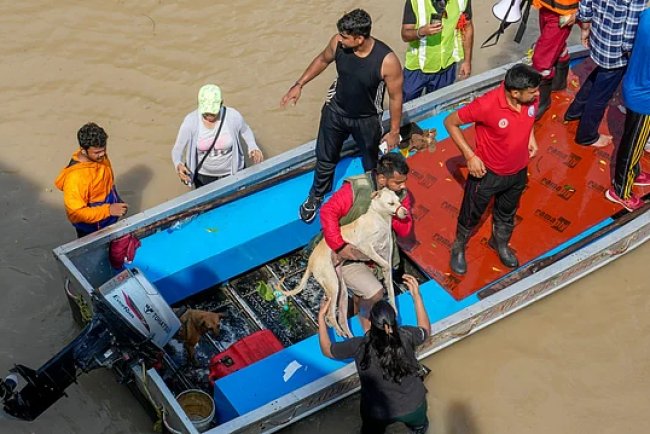
Unstable weather has major social and economic effects. In 2024, heatwaves caused 360 reported heatstroke deaths; independent estimates indicated greater figures. Early warnings are shown to be rather important as floods and landslides in Wayanad, Kerala killed 300 people and wrecked 1,200 crore.
Resolving problems generated by climate change calls for worldwide collaboration. The IMDs' position as a World Meteorological Organization (WMO) regional hub helps to enhance South Asia's disaster readiness.
Great progress in addressing climate-driven unpredictability is seen in the efforts of the IMDs to combine artificial intelligence with high-resolution prediction systems. Technology and collaborative developments provide hope even if challenges in little-scale predictions and data limitations persist.
Source : Outlook Business
What's Your Reaction?