Five-Year Forecast Predicts More Extreme Heat, Fires, and Temperature Records
A five-year climate forecast predicts more record-breaking heat, wildfires, and extreme weather events, with rising chances of surpassing key Paris Agreement temperature thresholds.
The world can anticipate a few years of new record highs with high likelihood of wildfires, deadly heatwaves, and other extreme weather conditions, the World Meteorological Organization (WMO) and UK Met Office stated in a five-year climate prediction. There are 80% chances that one of the next five years will register a new world temperature record, and it is likely that the world will break the ten-year-old global warming record.
The forecast is an indication towards rising global warming fueled by anthropogenic climate change, and that will be born in the form of more intense and frequent cases of extreme weather events such as hurricanes, droughts, floods, and heatwaves. Warming leads to rising evaporation of land surfaces, which produces wildfires intensification and enhanced likelihood. The Arctic is warming at more than three times the rate of the entire world, and that carries an acceleration of melting ice and rise in sea level.
The agencies pointed out there is a 86% chance one of the next five years will surpass the Paris Agreement level of 1.5 degrees Celsius of warming over pre-industrial levels. There is a 70% chance that the five-year average of the temperature over the next five years will be higher than this limit. It is theoretically possible, but very unlikely, that for the first time, the global annual temperature will be at or over 2 degrees warmer than pre-industrial levels in the next decade. The second indicator, also set under the Paris accord, is more perilous and less prone to infringement, hence the forecast is even grimmer.
Although 2024 was 1.5 degrees Celsius above pre-industrial, agreed-upon targets are within a 20-year deadline that hasn't yet run out. Leaving aside the last decade and considering the following decade, the expected global average warming would be about 1.4 degrees Celsius above mid-19th-century values.
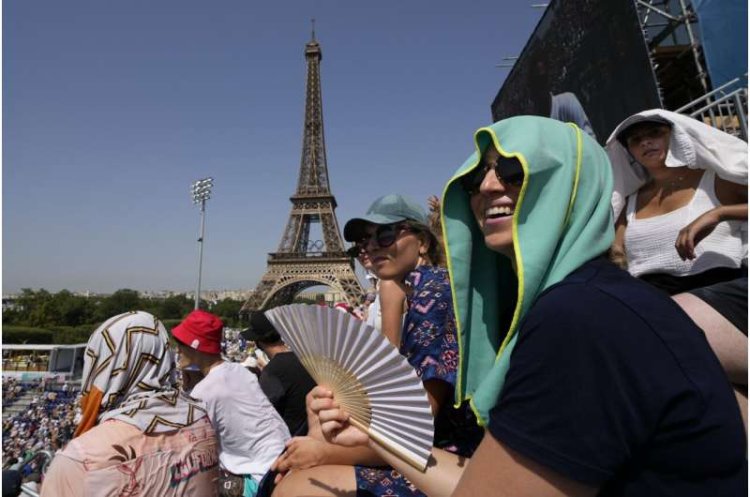
The increasing temperatures across the globe are not only breaking new records but also altering the mean base. Heatwaves and their effects — heat illness and death — will become the norm unless preventive measures to sustain people and health are initiated. The warmer climate also results in wildland fires of larger intensity due to drying out of plants and soils.
Natural climatic fluctuations, such as the El Niño cycle, provide periodic spikes in global temperatures, but these peaks now arise from an already elevated base level due to long-term warming trends. Each new record year establishes a new base level, with increasingly lower and shorter declines to lower levels. This raises the risks exponentially for already stressed populations, and stressed ecosystems due to rising climatic regimes.
The acceleration rate in the trend of warming in the Arctic region is responsible for the increase in the level of the sea, threatening the world's coastal areas. Overall, the tone of the five-year prognosis emphasizes the imperative of bolder climate action for undoing such trends as well as safeguarding vulnerable populations.
This forecast is from over 200 computer runs at a dozen international science centers and is a definite forecast of future climate path. The outlook is dire, but the numbers provide a vital road map for governments, planners, and emergency managers to anticipate increased near-term climate threats.
Source: The Associated Press (AP)
What's Your Reaction?