The article argues that Northeast India can build a stronger and more climate-resilient economy by protecting forests, using indigenous knowledge and creating businesses linked to nature instead of exploiting natural resources.
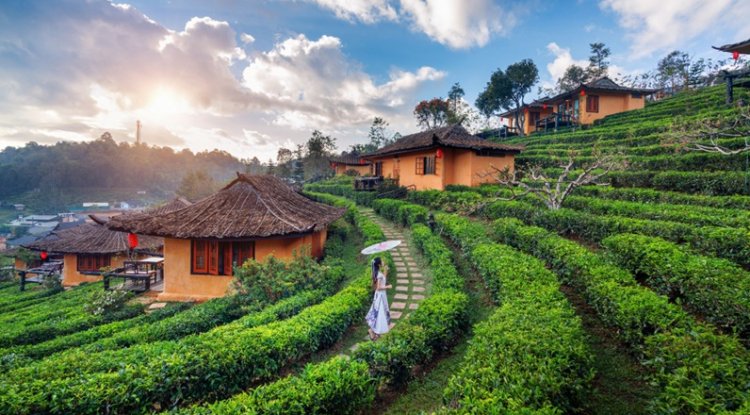
The Landscape of Opportunity
The Northeast of India faces a strange contradiction – it's geographically on the periphery yet economically uncharted. For years, the region has been considered at a "margin", defined by what it lacks and not by what it possesses. But that understanding is flawed to the core as it undermines the richness of the Eastern Himalayas, which is home to some of Earth's most biodiverse ecosystems and indigenous knowledge systems that have sustained the lives and livelihoods of the communities in the region for thousands of years.
Traditional development models have struggled here because they start from the wrong premise, wherein nature is seen as a barrier to development and not a foundation. Infrastructure development is powered by timber and minerals extraction, stripping away natural wealth while leaving almost nothing for local people. The logic is skewed to treat forest land as having a significant opportunity cost, while bringing it down becomes a pathway to development.
Nature-Linked Enterprises (NLEs) challenge this idea. Operating within the framework of Naturenomics – an approach that treats natural ecosystems, biodiversity and community knowledge as the foundation of prosperity, NLEs are designed to turn Natural Capital that entails biodiversity, ecosystem services and biological abundance of the forest into socio-economic capital, i.e. jobs, income, education, healthcare and resilience for communities. This model recognises that real economic value comes from regenerating and managing natural assets and not converting them. This way, communities thrive because the ecosystem thrives.
The Naturenomics Framework
The Naturenomics model sits at the core of this idea. It takes a systems approach to tie ecology to the economy. The key premise of Naturenomics is that it integrates ecological sustainability with economic development by valuing natural ecosystems, biodiversity and community knowledge as central to long-term prosperity and resilience. By doing this, it treats natural capital as the necessary resilient infrastructure that delivers both material and non-material services for community and regional well-being.
In the traditional model, infrastructure is built first, i.e. roads, factories, power plants, and it comes at the cost of the natural assets. But Naturenomics™ changes that. Reforestation, rewilding and ecosystem recovery are considered actual infrastructure, since they have
economic opportunities associated. It focuses on enhancing the productivity of degraded lands, expansion of forest edges, stabilisation of water cycles and revitalisation of soil health – all of them paying off instantly.
Naturenomics™ operates on three critical value streams - (1) Immediate work in restoration, sustainable harvesting and processing; (2) Ecosystem services that generate income, i.e. carbon credits, water security, soil health; (3) Long-term forest productivity and biodiversity that compound over generations, and this integration matters. For instance, carbon sequestration gets monetised through carbon markets, with money going straight to communities doing the work. Similarly, as ecosystems recover their water function, water security becomes a tradable asset in regional markets. Better soil means sustained productivity without chemicals. Each ecosystem service gets measured and linked to community payments. That transforms biodiversity from something the whole world benefits from into a local benefit that also anchors economic security.
Nature-Linked Value Chain
Understanding how this works means following a value chain from forest floor to global market, which is fundamentally different from how extraction normally works.
Sourcing - Traditional forestry takes things out. Regenerative enterprises grow things. The shift from harvesting wild plants to "wild-simulated" or agroforestry cultivation is both technical and philosophical. Wild-simulated farming respects the forest's natural structure – layered, diverse, durable while introducing valuable species like honey, spices, medicinal plants, and forest vegetables that thrive in that ecosystem. The forest becomes more productive because it stays ecologically complex. Similarly, agroforestry pushes further by mixing trees with seasonal crops in ways that mirror a natural forest. It leads to an increase in carbon capture, promoting soil regeneration within years; consequently, crop failure becomes less catastrophic because the forest structure soaks up climate shocks.
Processing - Industrial supply chains suck raw materials out and concentrate processing in distant urban factories. A bamboo-based product from the Northeast forests is purchased at INR 100 per piece in bulk quantity and is sold at a markup of INR 500-7001 across India with most of its value trapped outside the source community. NLEs reverse this. Community clusters build local processing capacities - small distilleries for essential oils, fermentation units for plant products, packaging and certification. This leads to higher margins on the produce and that way profits stay local, putting money in people’s pockets, leading to better education and health outcomes and even increased restoration activities.
Market Access - Global consumers want to know where things come from and what impact they have. "Radical Traceability" which documents every step from forest to consumer, is not a constraint for NLEs, but it's a selling mechanism. Blockchain tracks exactly which forest was restored, which family benefited, and what species recovered. Consumers pay more (10-30% above standard prices) knowing that the purchase funds regeneration not depleted. Forest-linked products are then no longer treated as "sustainable substitutes for mainstream goods." They're impact investments that happen to be products. A jar of honey from a regenerated forest costs more because regenerating is more valuable than degrading.
Systemic Resilience vs. Industrial Vulnerability
The 2024 monsoon failure wrecked conventional farms across South Asia. Some forest-linked communities barely noticed but that difference matters as monoculture fragility is a real cost that industrial agriculture doesn't pay. Conventional agriculture has a very high risk profile. Dependence on one crop creates catastrophe if it fails, reliance on chemical inputs locks farmers into global commodity volatility, erratic seasons render old farming calendars useless. A failed monsoon leads to bankruptcy and the cycle begins.
On the other hand, a natural capital portfolio of diverse forest-linked products and services absorbs what would cripple monoculture regions. Honey yields drop, medicinal plant sales rise. One market softens, another strengthens. Carbon income keeps flowing. Water security services still pay. This portfolio hedges systemic risk.
Indigenous communities hold 3,000+ years of refined ecological knowledge. At the tips of their fingertips, they know which plants thrive in specific microclimates, how fire shapes forest health, and which species combinations maximise output while controlling pests. It's operational intelligence that can be leveraged for regenerative economies. Communities with this knowledge have an advantage no imported technology can match. This repositioning shifts power in supply chains as communities stop being passive recipients of development and become the architects of their own resilience.
Scaling the Vision: The Northeast as a Global Test Case
We all would agree that the ecological crisis is urgent. As technology advances and markets ready themselves, the Northeast, with its natural wealth, indigenous systems, and demographic conditions, can show what a Nature-Positive Economy actually looks like at scale. It can be an economic transition as big as industrialisation, but using natural capital regeneration as the tool for increased human resilience. The investment is modest. Restoration costs $200-300 (INR 8,945-28,417) per hectare far cheaper than building dams or industrial zones. Returns hit 8-12% annually through carbon credits, ecosystem
services, sustainable products and avoided climate costs. That competes with any infrastructure investment while delivering layered social and ecological benefits.
The evidence is very concrete, and the choice is whether we create wealth by moving carbon from forest to atmosphere (extraction) or from atmosphere to forest (regeneration). More than $40 trillion in impact capital is rotating toward regenerative returns. Serious investors recognise that a recovering forest is more reliable in the long term than a degrading one. Carbon markets exist. Certification systems work. Impact reporting is established. What’s missing is the will and the decision to value a standing forest more than a fallen one.
The Future Belongs to Those Who Regenerate
The Northeast doesn't have to repeat the industrial destruction that happened elsewhere. It can pioneer something different. Naturenomics provides that blueprint of an economy where livelihoods flow from ecosystems, not against them. Nature-Linked Enterprises aren't a compromise between conservation and development. They're the recognition that real development is nature-based and it will only build prosperity. Indigenous communities in the Eastern Himalayas have kept these forests intact for centuries and harnessed the power of nature to live their lives sustainably. The 21st-century economy finally has a structure where that stewardship can pay off and where standing forests need to be valued at worth more than their aesthetic appeal, making what was once marginal, central.
The opportunity is here, and it waits for institutions and capital to recognise that the highest returns, most reliable assets and deepest impact all point in the same direction - an economy that treats ecology as synchronous to itself following the Naturenomics philosophy.
Views are personal
What's Your Reaction?