Airloom Energy, funded by Bill Gates’ Breakthrough Energy Ventures, has developed a compact and modular wind turbine design in Wyoming aimed at producing more energy at lower costs. With commercial demonstrations planned for 2027, the turbines are designed for rapid deployment, wider location suitability, and mass manufacturing within the U.S. This innovation could mark a shift in utility-scale wind energy and offer flexible applications in defence, disaster relief, and offshore installations.
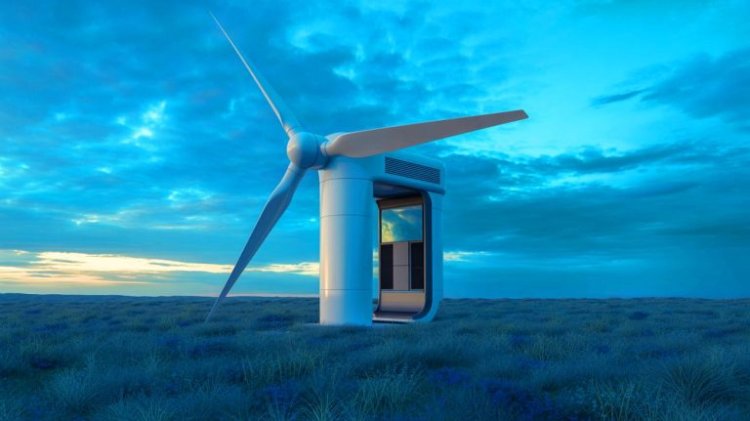
Airloom Energy, a Wyoming-based startup backed by Breakthrough Energy Ventures, is developing revolutionary wind power technology capable of lowering the cost of energy production, making it more efficient, and easier to install. The startup, which was backed by $13.75 million, has been building a pilot facility in Rock River, Wyoming, where it is installing its new turbine design—one that breaks sharply from the conventional models utilized in utility-scale wind power.
Airloom's turbine is compact and modular in design, in contrast to the conventional horizontal-axis wind turbine (HAWT) design. Airloom seeks to address increasing energy needs and existing energy infrastructure deficits by providing turbines that are easier and quicker to produce, set up, and service. In contrast to conventional turbines, which take five years to deploy, Airloom's system is in deployment readiness in under one year.
The beginning-of-life wind power solution comes at a time when there are constant alerts from the North American Electric Reliability Corporation (NERC) of impending electricity supply shortages in the U.S. through 2035. In addition, international data centre expansion and breakneck growth in AI infrastructure will also have the tendency to stretch energy supplies even more. Airloom turbines provide an alternative route through the prospect of a reduced levelised cost of energy (LCOE) due to enhanced material efficiency and less logistical problems.
Made to be produced in large numbers in the United States, the turbines can easily fit into a vast range of locations such as locations with limited wind available, island countries, mountain states, military bases, and airports—locations where traditional wind infrastructure is uneconomical. Light enough to be transported and deployed as modules, they can potentially speed up the deployment of wind power into new geographies.
The firm is now concentrating on demonstrating the power curve of the turbine, cost drivers, and optimizing operating procedures at its test facility. Commercial demonstration of the technology is planned for 2027. They will be important in quantifying scalability, operational life, and efficiency in real operations of the turbine systems.
Aside from ground deployment, Airloom Energy seeks to use it in wider applications like offshore wind farms, military installations, and disaster relief missions. Such flexibility in deployment has promising applications in mitigating decentralized or response-to-spikes energy requirements, particularly in countries with weak or unreliable energy infrastructure.
Conventional wind turbines have struggled to scale up owing to physical size restrictions, increased costs, and policy limitations. Airloom's small, adaptable modules can potentially be able to slice around such challenges using modular construction of energy projects. The strategy of the company is also consistent with the worldwide momentum for growing renewable use while reducing reliance on fossil fuels.
With the energy industry seeking solutions which facilitate growing demand without sacrificing sustainability, Airloom Energy technology has the capacity to reengineer tomorrow's wind energy installation. Through cost reduction, accelerated deployment timelines, and opening up previously unsuitable sites for new development, Airloom's system can become a critical contributor to next-generation energy planning.
The project, in its pilot phase currently, will be closely watched in the next few years, particularly with the 2027 commercial demonstrations set to come. If all goes as planned, Airloom Energy's design may be scaled up to address national and global renewable energy targets.
Source & Credits:
This article utilizes data released by Avi Cohen, reported on June 30, 2025, and research conducted by Breakthrough Energy Ventures and Airloom Energy.
What's Your Reaction?