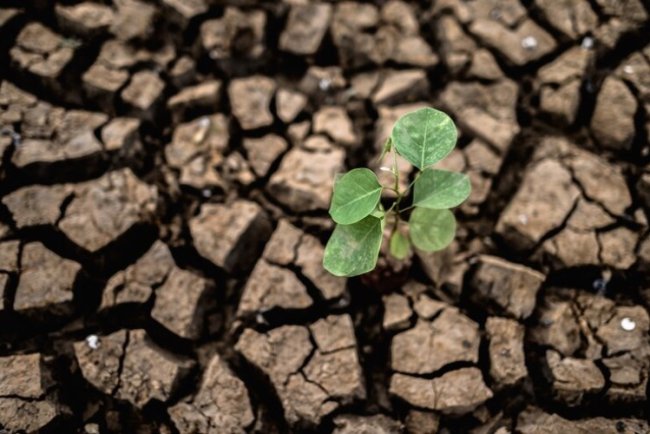
Global investment in critical minerals declined in 2025 despite rising demand, highlighting challenges for clean energy growth, EV expansion, and the need for secure and sustainable mineral supply chains.

Global investment in critical minerals declined by 9% in 2025, marking the first major drop after several years of continuous growth, even as demand for minerals required for clean energy technologies, electric vehicles (EVs), batteries, and advanced industries continued to increase, according to the International Energy Agency (IEA).
The fall is worrisome as there are worries about the availability of critical minerals in times where countries around the world are pushing hard to transition into renewable energy. Lithium, copper, nickel, cobalt, graphite, and rare earth minerals are just some of the minerals which are now required for producing EV batteries, solar power generation systems, wind turbines, and many other renewable sources of energy.
Investment slowdown amid market uncertainty
According to the IEA’s Global Critical Minerals Outlook 2026, increasing geopolitical tensions, fluctuating commodity prices, and uncertainty over future market conditions made investors more cautious in 2025.
This slowdown marked the end of a number of years where there had been considerable investment growth in the critical minerals sector. The battery metals industry was most affected, with investments down by more than 20%, while the lithium companies cut their investments by almost 40%.
On the other hand, investments for the copper miners grew by about 8%, due to anticipated growth in demand from power grids, renewable energy, and electrification.
Why investment is declining despite growing demand
The decrease in investment raises another issue for the energy transition, namely that the demand for minerals grows at a faster rate than the supply capacity.
One of the major causes of reduced investment lies in falling mineral prices following the rapid rise of prices during the first wave of EVs popularity. Reduced profit margins have made mining companies less attractive for investors who would be more careful with their money.
Finally, another issue is linked to the lengthy period of development of mining projects, which can last for several years before the commencement of the commercial exploitation of a new mine.
Growing environmental concerns around mining activities, including land degradation, water consumption, and biodiversity impact, have also increased pressure on companies to adopt more sustainable mining practices.
Exploration spending also declines
According to the IEA report, it was clear that there was an over 10% reduction in the exploration expenditures in 2025.
There was a marked decrease in lithium and nickel exploration investments by about 45%, although there was relative stability in copper exploration owing to the anticipated rise in demands.
Asia-Pacific was one of the few regions that experienced increases in exploration expenditures by about 20%.
Supply chain risks remain a major concern
The supply chain of critical minerals on a global scale is still very concentrated even with rising demand.
According to the IEA, the mining, refining, and processing capacities are developing at different rates. Although there are mining projects that are currently underway, there is a lack of development in the processing facilities.
This creates a strategic challenge due to having access to the raw minerals alone is not sufficient since processing facilities are also required.
India’s critical mineral challenge
For India, the global slowdown in critical mineral investment comes at a crucial time. The country is rapidly expanding its renewable energy capacity, electric vehicle ecosystem, battery storage projects, and clean technology manufacturing.
However, India remains heavily dependent on imports for several important minerals, including lithium, cobalt, nickel, and rare earth elements.
The need for critical minerals is rapidly growing in India, as they play a very crucial role in several important sectors that are associated with India’s aspirations of developing clean energy and technologies. Critical minerals have become essential for the manufacturing of batteries for electric vehicles, development of renewable energy projects, solar panels, battery energy storage systems (BESS), and advanced technology industry such as semiconductors. As India is increasingly investing in clean energy, electrification, and manufacturing of its own products, there will be a rising need for critical minerals.
To reduce import dependence, India has launched initiatives focused on domestic exploration and overseas acquisition of mineral resources. The government has also identified a list of critical minerals and is encouraging investment in exploration, mining, and processing capabilities.
However, experts believe that securing mineral supply will require more than mining. India will need investments in refining, recycling, research, and technology development to build a complete critical mineral ecosystem.
Technology impact: Clean energy transition depends on minerals
There might be a direct effect on the development of clean energy technologies due to the decrease in critical mineral investments. For example, electric cars use lithium-ion batteries that need lithium, nickel, cobalt, and graphite. Therefore, the problem of availability of these minerals will make the cost of batteries grow and hinder the development of electric transportation.
Critical minerals are necessary for renewable energy systems. Thus, solar panels need such minerals as silicon and silver, while wind energy requires rare earth minerals to produce efficient magnets. The energy storage facilities also require minerals used to produce batteries for electricity storage.
This highlights a key challenge of the global energy transition: while clean technologies help reduce dependence on fossil fuels, they create a growing demand for critical mineral resources. Ensuring a stable and sustainable supply of these minerals will be essential for expanding renewable energy, electric mobility, and future energy systems.
Recycling and alternative technologies as solutions
The IEA has highlighted the importance of recycling, diversification, and innovation to reduce future supply risks.
Adoption of a circular economy model can assist in easing the pressure on mining initiatives and increase efficiency.
Government support increases but implementation remains key
Whereas the private sector decreased investments, there were increased government funds for critical minerals projects.
In advanced countries, the level of financing stood at about $65 billion in 2025 compared to about $15 billion in 2023 as countries sought ways to diversify their sources and become less dependent on suppliers.
According to the International Energy Agency (IEA), there is no guarantee that these announced funds are going to result in the formation of supply of minerals as there will be need for faster approvals, good infrastructure, and international cooperation among others.
Why Securing Critical Minerals Is Important for the Clean Energy Future
Critical minerals will continue to be key in the energy transition in the world. The fall in investment brings out a widening gap between the increasing demand and capacity to create a secure supply chain.
For countries like India, requires a combination of both internal exploration efforts, international collaborations, recycling, technological advancements, and mining of critical minerals.
For the transition into a cleaner and greener world of energy, not only will it be required to develop clean energy but also acquire the raw materials for its production.
What's Your Reaction?