Google has agreed to purchase carbon removal credits from AMP through 2030 under a project that aims to reduce landfill methane emissions by converting organic waste into biochar.
Google has signed an agreement with AMP affiliate Commonwealth Sortation LLC to purchase carbon removal credits associated with a waste-processing project that aims to avoid and remove an estimated 200,000 metric tons of carbon dioxide equivalent (CO2e) by 2030.
The agreement centres on recovering organic waste before it reaches landfills, where decomposition releases methane, a greenhouse gas with a higher short-term warming effect than carbon dioxide. The recovered material will instead be converted into biochar, a carbon-rich material that stores carbon for long periods.
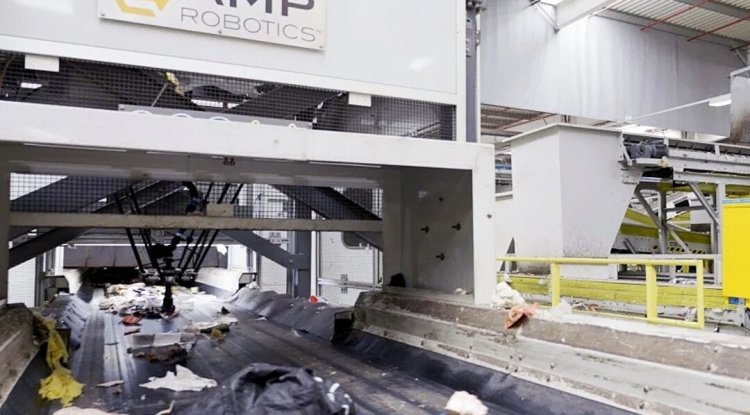
According to the companies, the project combines artificial intelligence-based waste sorting with biochar production to reduce emissions from municipal solid waste. The carbon credits purchased by Google will be generated through this process.
Municipal solid waste is the third-largest source of human-caused methane emissions in the United States, according to the U.S. Environmental Protection Agency. Diverting organic waste from landfills is one approach being used to reduce these emissions.
The project is based on a 20-year agreement between Commonwealth Sortation and the Southeastern Public Service Authority of Virginia, which provides waste management services to eight communities with a combined population of about 1.2 million people.
The Virginia facility is designed to process around 540,000 tons of municipal solid waste each year. According to AMP, at least half of that material is expected to be recovered or diverted through automated sorting systems rather than sent directly to landfill.
The company estimates the project could process up to 5 million tons of organic waste over two decades. The recovered material will be converted into biochar, while recyclable materials separated during the process will be returned to manufacturing supply chains.
AMP said its artificial intelligence systems identify and separate recyclable and organic materials from mixed waste streams. The company stated that its technology has processed more than 2.9 million tons of recyclable material and identified over 200 billion individual items.
The agreement also includes work on developing methods to measure emissions reductions from both avoided landfill methane and carbon stored in biochar. These methods will be used to verify the carbon removal credits generated by the project.
Google said the purchase forms part of its broader carbon removal strategy, while AMP said the project is intended to expand waste processing capacity and increase biochar production. The companies did not disclose the financial value of the agreement.
The project reflects growing interest in combining waste management infrastructure with carbon removal initiatives as companies seek to reduce emissions associated with landfill disposal and organic waste.
What's Your Reaction?