Government brings Major Reform in Environmental Compliance in the form of Environment Audit Rules, 2025
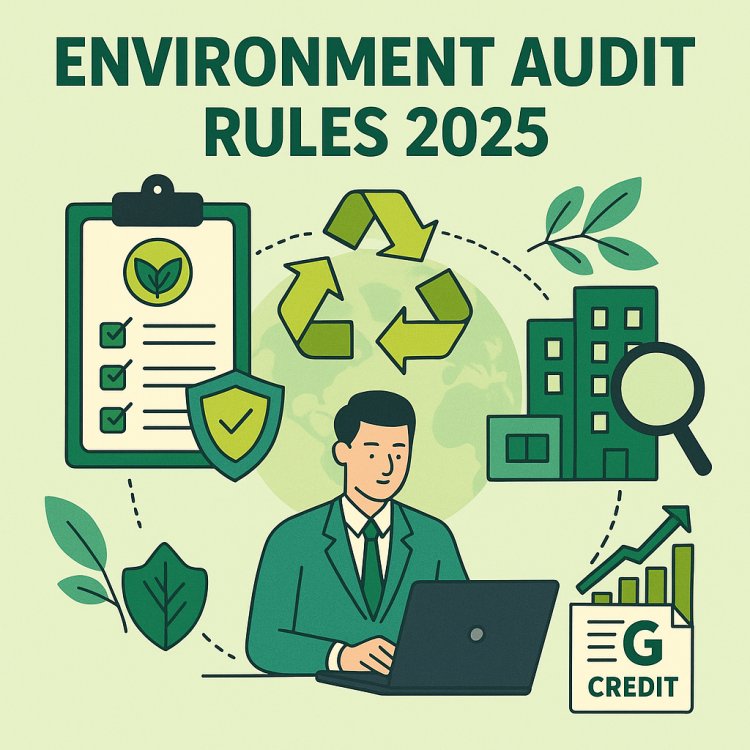
In accordance with the Ease of Doing Business philosophy and governance by trust of the government, the Ministry of Environment, Forest and Climate Change (MoEFCC) has notified the Environment Audit Rules, 2025 on 29th August 2025. Based on international best practices, the rules are aimed at filling gaps in environmental compliance monitoring and empowering implementation mechanisms.
The framework will supplement current monitoring conducted by the Central Pollution Control Board (CPCB), the Ministry's Regional Offices, and State Pollution Control Boards/Committees, which have manpower and infrastructure deficiencies. The scheme aims to promote greater transparency, accountability, and credibility in compliance monitoring.
Key Features of the Rules
The major stakeholders under the Environment Audit Rules, 2025 are Certified and Registered Environment Auditors, Environment Audit Designated Agency (EADA) who will be responsible for certification, registration, and monitoring, the Ministry of Environment, Forest and Climate Change (MoEFCC) and CPCB/SPCBs who will monitor implementation and carry out inspection and verification.
Expected Outcomes
What's Your Reaction?