Green Fields, Global Goals: India Leads G20 on Sustainable Agriculture
India champions sustainable agriculture at G20, blending tradition, tech, and climate-smart practices for food security.
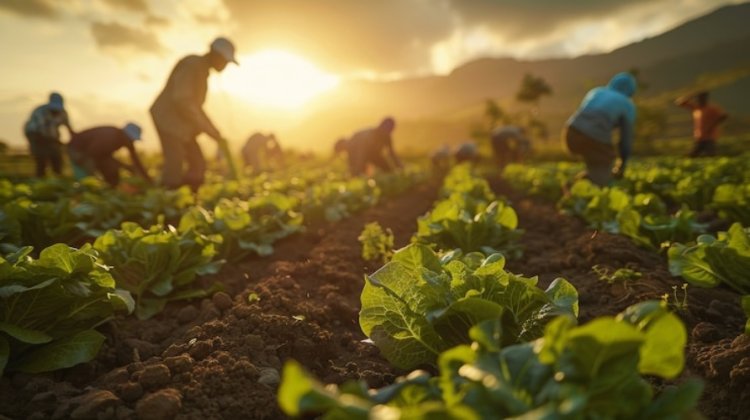
The intersection of climate change and agriculture may be one of the most urgent issues facing global leaders today. Not only is agriculture one of the premier sources of greenhouse gas emissions, but it is also demonstrably one of the most vulnerable sectors to the disruption caused by climate change. Realizing the imperative to act in the face of this challenge, India developed strong messaging during its G20 Presidency on the international agenda promoting sustainable agriculture and actively engaged in discussions on innovative, inclusive and climate-resilient food systems.
India's approach to sustainable agriculture in the G20 context combines traditional knowledge and modern agriculture. The Indian Government has strongly supported international collaboration on sustainable approaches to agriculture including low-emission agriculture, natural farming or regenerative farming. As India is committed to bringing soil health, biodiversity, conservation of water, and farmer empowerment to the forefront, we can see that India aspires to be a leader in sustainable food systems.
At the G20 summit, held in 2023 in India, Indian representatives cited programs including the National Mission on Sustainable Agriculture (NMSA) and PM-PRANAM to report reduced usage of chemical fertilisers, increased organic farming in India, and a push for a shared vision for the world that includes digital technology for precision farming, climate-smart irrigation, and alignment of policy frameworks that support agroecological character.
India has repeatedly highlighted the need to support smallholder farmers, who are typically the most vulnerable to climate volatility. At the forum of G20, India forcefully advocated for augmenting traditional ecological knowledge with contemporary scientific methods. This does more than simply protect indigenous agricultural systems; it makes them adaptable to climate extremes like droughts, floods and temperature fluctuation.
India's advancement of sustainable agriculture is coupled with its vision for Digital Agriculture - using data, AI, and remote sensing technologies to increase productivity while minimizing waste and optimizing on-farm resources. Initiatives like Soil Health Cards, ongoing agro-meteorological updates, or precision agriculture apps are just a few examples of how digital innovation can encourage sustainability in agricultural development.
India has also suggested that countries work more collaboratively at the G20 in areas such as climate-resilient or stress-tolerant crop research, biofertilizers, and green mechanization, and that these initiatives leverage the expertise of public institutions, private businesses, and cooperative farmers to create a productive yet environmentally sustainable global agricultural ecosystem.
India's engagement in the global climate conversation involves more than agriculture. Prime Minister Narendra Modi positioned LiFE (Lifestyle for Environment) as both an ethical and actionable framework for everyday sustainability. In agriculture, this includes promoting bioregional, seasonal consumption, reducing post-harvest waste, and promoting respect for nature's rhythms via community farming initiatives.India invited G20 members to incorporate LiFE principles in domestic food policies, stitching dietary consumption, food production and environmental health together into one coherent approach.
Conclusion
Agriculture is both a victim and contributor to climate change. Therefore, India's leadership confirmed that we need to take collective action and shift agriculture from being one of the most carbon-intensive energy sectors to a source for climate change solutions. India's support for natural farming, digital agriculture, and traditional knowledge, is a game-changer to define what progress looks like in agriculture in the 21st century. India's leadership reminds the world that sustainability is more than a technological pursuit; it is a human-centred mission that requires grassroots-level movement. India's advocacy for farmers' perspectives in sustainable farming practices, climate finance equitably for those in need, and a new focus on consumption patterns as part of the global movement, LiFE, demonstrates a more rounded and connected vision of sustainability that equally addresses environmental, social, and economic objectives.
What's Your Reaction?