India Begins Urgent Marine Survey After Hazardous Spill Near Kochi
India has initiated an emergency marine study after a hazardous cargo spill near Kochi, focusing on environmental damage and long-term ecological impacts. The 10-day expedition aims to guide future marine policies and disaster response strategies.
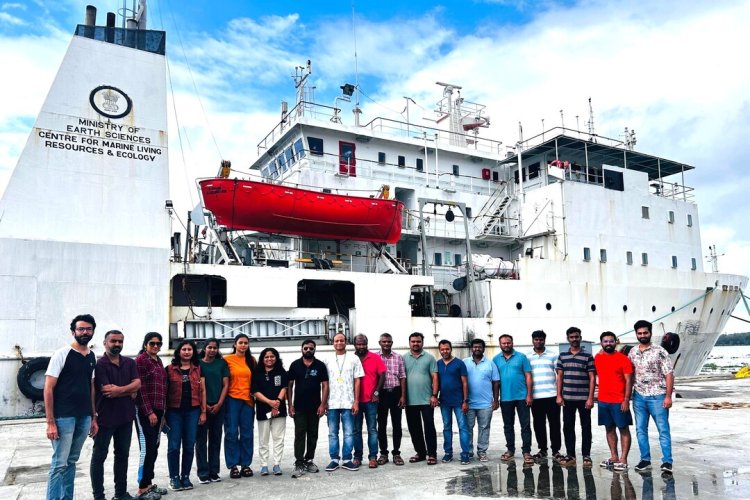
India has ordered an emergency oceanography survey of the Arabian Sea to evaluate environmental harm caused by a vessel that sank near Kochi last month. The ship carried 643 containers, of which 13 were found to be carrying dangerous goods, and this triggered immediate fears regarding ecological and marine security.
The Ministry of Earth Sciences Centre of Marine Living Resources and Ecology (CMLRE) is conducting the 10-day research cruise. The journey commenced on 3 June 2025 with an aim to establish biogeochemical changes, pollution scenarios, and marine ecosystem disturbances in the region. The event occurred at coordinates 09°18.76'N and 076°08.12'E, an ecologically affluent region which can possibly offer shelter to a considerable amount of marine fauna.
The sunken cargo and closeness to key spawning grounds have necessitated speedy deployment of science and equipment. FORV Sagar Sampada, the research vessel, sailed from Kochi and is following a looped survey track across the southeastern Arabian Sea. Sixteen observation stations are positioned on two transects, 10 nautical miles apart, to allow frequent sampling and intensive survey of the afflicted marine area.
Advanced instruments, including distant SONAR and split-beam echo sounders, are sweeping the wreckage site for damage to structure, detecting probable oil leakage, and monitoring sea life alteration. Equipment also allows scientists to quantify current direction and speed alterations, potentially utilized in spreading pollutants into adjacent bodies of water.
Scientists also take huge water and sediment samples to determine the chemical and biological state of the region. Some of the critical tests are dissolved oxygen, chlorophyll, heavy metals, polyaromatic hydrocarbons, microplastics, and trace minerals analysis. All these tests are conducted to determine the effect on marine life in short-term and long-term exposures, like fish larvae and benthic organisms, who live on or close to the ocean bottom.
To get a better perspective and precision in surveying the damage of the submerged vessel, an underwater high-definition imaging system called the "Big Eye" scans the site. This will be used in taking evidence for environmental stress and defining channels of pollution inside and outside the wreck.
The operation is undertaken in the pre-monsoon season, coinciding with spawning for the majority of economically important fish stocks such as mackerel, sardines, and anchovies. One of the most important spawning grounds for these species occurs along the seacoast from Kochi to Kanyakumari. Habitat loss in this region has the possibility of long-term effects on fish stock and livelihood issues to the coastal population depending on sea resources.
Earth Sciences Ministry has reported that the location and time of the shipwreck are resulting in catastrophic critical risks to the fisheries and biodiversity of the region. Physical oceanography experts, marine chemistry, marine biology, and environmental toxicology scientists are working together to present an integrated portrayal of the environmental effects.
Results of the research mission will be used in future marine policy formulation, disaster prevention planning, and ecological restoration work. The mission will also serve as a baseline for future monitoring of this high-sensitivity portion of India's oceanic domain.
It is the intention of the government to use this expedition not only for the present appraisal of the damage but also to lay the groundwork for the development of sustainable management practices for marine ecosystems that are increasingly coming under threat through industrial and environmental accidents. The research will be used in the role of informing policy responses to marine conservation, fishery management, and contingency planning for spillage of toxic matter.
India's swift response to this ocean catastrophe is a witness to the country's growing ability for collective ocean science and highlights scientific knowledge as an asset for knowledge-based environmental decision-making. The results of this expedition are made available to regulatory bodies and stakeholders in a bid to assist relief measures as well as long-term conservation planning.
Source: Centre for Marine Living Resources and Ecology, Ministry of Earth Sciences
What's Your Reaction?