India Finally Has The Demand To Unlock Flow Battery Scale: VflowTech's Avishek Kumar
Dr Avishek Kumar, Co-founder of Singapore-based VflowTech, speaks about how his company is developing energy storage solutions to contribute to India’s solar energy goals
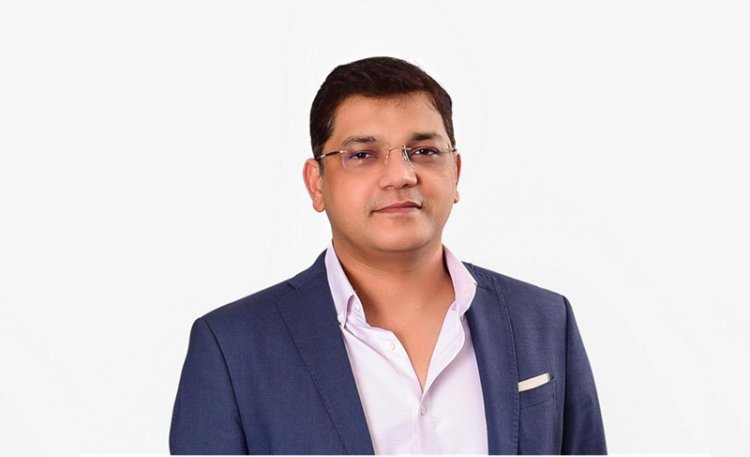
India’s clean-energy push is picking up speed, but one major hurdle remains — storing power at scale. In an interview with ResponsibleUs, Dr Avishek Kumar, Co-founder of Singapore-based VflowTech, spoke about how his company is developing energy storage solutions to contribute to India’s solar energy goals.
VflowTech has announced a plan to scale its 100 MW plant into a gigafactory. Why this expansion?
The energy storage demand for the country is about 900 GWh. The BESS requirement is expected to be around 25 to 30 GWh by the year 2027. At the moment, there are very few options available.. When you talk about BESS, we are solely dependent on lithium-ion chemistry, mainly LFP. These 25–30 GWh will also require 4 to 8 hours of energy storage.
So, there is a need for alternate energy storage technologies besides lithium-ion BESS, which is currently 99%, or rather 100%, imported from China. Apart from that, we have pumped hydro. So, there is a clear need for alternative energy storage technology.
We feel that this need can be met through our flow battery technology, which is very suitable for long-duration applications. We hope to target at least 10% of this requirement — say 30 to 40 GWh in the next 3 to 5 years — which will be allocated and utilised. Even if you talk about 10%, that’s around 3 GWh. Ramping from 100 MWh to 1 GWh will still only meet 4–5% of India’s total requirement.
How is VRFB technology different from lithium batteries? Is it a better option for the energy requirements of India?
The name of the technology is Vanadium Redox Flow Battery technology. It is a chemical energy storage system. It first gets energy through oxidation, and then it releases it through reduction. The metal vanadium is used, which we have been trying to make available locally through recycling petroleum waste and local mining.
Vanadium is the kind of metal that remains stable in four different oxidation states — V2, V3, V4, and V5 — and energy is given off when it oscillates through these states. It’s highly circular because it doesn’t get consumed in the process.
Now, whether it’s better than lithium-ion is debatable, but what we are targeting is to complement the renewable energy industry — solar and wind — which have a lifetime of about 25 years. Lithium-ion has a limitation; in 3–5 years, you have to replace it. It works well only under specific temperature and environmental conditions. These BESS systems are exposed to all kinds of harsh environments, and lithium batteries can catch fire.
From that perspective, vanadium redox flow battery technology offers a lifetime of 25–30 years without degradation. The energy storage capacity remains intact over its life. There’s no fire risk, and the technology is highly circular. With longer life and higher efficiency, the cost of ownership becomes very low. The only thing is, it hasn’t yet reached scale — that’s the missing part. But otherwise, it offers all the right use cases for renewable energy producers and users.
Can we get a comparison of prices? Because lithium batteries last 4–5 years, and this VRFB technology lasts longer, is it more expensive right now?
Cost is a tricky aspect. Fifteen years ago, lithium-ion batteries cost roughly $1,400 per kWh, whereas vanadium batteries cost about $1,300. To put things in perspective, China currently possesses about 1,500 GWh of lithium battery capacity.. The supply chain has evolved, EV demand has increased, and the cost of lithium-ion batteries has dropped — LFP cells now cost around $40–65 per kWh. Prices came down 20 times in a decade.
If you look at stationary technologies like vanadium batteries, they haven’t reached that scale. So, comparing them directly isn’t fair. But to give you an idea, right now, we are around 2x the cost of lithium-ion batteries. However, the lifetime is 4x longer than lithium-ion. So, the cost of ownership, if you look at it over the project life, becomes comparable.
If you see tenders where the power cost is ₹4–₹5 per unit, we are already competitive. At ₹4, we get the same payback as lithium-ion but with a safer and longer life.
Why is vanadium technology still behind lithium-ion batteries? Why hasn’t it reached the same stage?
There are two main reasons, according to me. First, in India, until recently, we didn’t have a big requirement for stationary energy storage. Most tenders have only started coming now. Three years ago, India had installed only 100 MWh of lithium-ion-based BESS.
That demand wasn’t there earlier. Secondly, lithium-ion batteries are a huge part of the EV market. The gradual electrification of the passenger car fleet has determined the rapid increase of battery manufacturers’ production capacities. In contrast, flow batteries are mainly utilized in the stationary sector. Hence, the market was not there, but it is slowly coming up. China, for instance, has set up 5 GWh of flow batteries during the last three years. Now this demand is pulling the supply, which was not the case earlier.
You have mentioned it as a circular economy support. As it is a product that comes from petroleum waste, would you mind providing more information?
Indeed, this is where the point of differentiation comes in. The mineral lithium is very rare and difficult to locate. The extraction process for lithium and cobalt is energy-intensive, and more often than not it is accompanied by environmental and labour problems, particularly in Africa and China. Moreover, the CO2 emissions are quite high compared to other energy sources.
Recycling the metal is not easy either—it uses up a lot of energy. You need to get the metal out, make sure it’s pure, and then it can be made into lithium again. The process is expensive and at the present time, lithium from recycling is costlier than lithium from mining.
But in the case of vanadium redox flow batteries, the electrolyte is in liquid form, and it lasts forever. It can be reused with minimal energy, unlike lithium. The vanadium we use comes from petroleum waste — crude oil that contains heavy metals like vanadium and nickel, which can’t be used as fuel. Through refining, this waste is recovered and used in our batteries. So, we’re reusing industrial waste with a much lower carbon footprint. That’s why it’s more circular and sustainable.
How do you see vanadium fitting into India’s long-term decarbonisation goals?
We need to develop a full ecosystem for this battery technology. We’ve already found enough sources in India. Our gigafactory requires about 1 GWh of vanadium, but we have already secured 2–3 GWh worth of supply from aluminium bauxite recycling and petroleum waste. Combined, these sources can give us up to 5–6 GWh.
And since the electrolyte can be reused for up to 25 years, we can recycle and repurpose it multiple times. So, circularity is high, and the carbon footprint is much lower.
What is your plan to establish a domestic supply chain for vanadium membranes in India?
Yes, that’s a good question. We are one of the few primary innovators in this space. The biggest challenge has been the volume. You have to develop polypropylene (PP) membranes that can be easily available locally.
We are working with local suppliers and startups, including some from IITs, to develop battery-grade membranes. Interestingly, similar membranes are used in hydrogen fuel cells and electrolysers too. So, we are collaborating with hydrogen ecosystem startups as well.
It will take four to five years to develop fully, but we are using machine learning and data analytics to optimise the process. We hope to solve this within two years. Vendor development only happens when there’s scale, so we are trying to build both the technology and the ecosystem.
What sectors and regions in India are showing the strongest demand for your modular vanadium battery systems?
Utilities are showing the strongest interest. India has now reached over 100 GW of renewable energy and is targeting 500 GW. These renewables feed directly into the grid and create intermittency issues. Utilities like Gujarat, Uttar Pradesh, and Uttarakhand Power Corporations are tendering for multi-GWh energy storage.
NTPC and other public sector companies also need batteries. Steel manufacturers looking for net-zero steel, and port operators working on green ports, are also interested. The market is evolving fast. While the installed base is currently only 500 MWh, India has tendered roughly 25 GWh of storage capacity in the last 18 to 24 months. To close that gap, a lot more work needs to be done.
Can you provide any information regarding the planned projects, given that DISCOMs have a pipeline of roughly 5 GWh in advanced stages?
Most discussions are confidential at this point, but yes, these are mostly utility-based projects. The demand is there, and we are in talks with several state utilities.
Any partnerships or collaborations with the government?
Indeed, we are at the stage of negotiating with government bodies for the inclusion of our technology in national storage programs.
And finally, what is your projection regarding the role of long-duration energy storage in the energy transition of India during the coming 10 to 20 years? India, in 10 years, will have the technology of long-duration energy storage as the only one that can deal with a high proportion of renewables. This has been supported by the Prime Minister’s positive attitude toward it. States are targeting 500 GWh of renewables. For that, we’ll need at least a terawatt-hour of storage.
Around 20–30% of that must come from long-duration storage. Short-duration systems alone can’t handle it. As renewable penetration increases, you need longer backup — from 4 hours to 18 hours eventually.
What's Your Reaction?