India and Japan are set to strengthen cooperation in AI, semiconductors, clean energy and critical minerals at the 16th India-Japan Annual Summit.
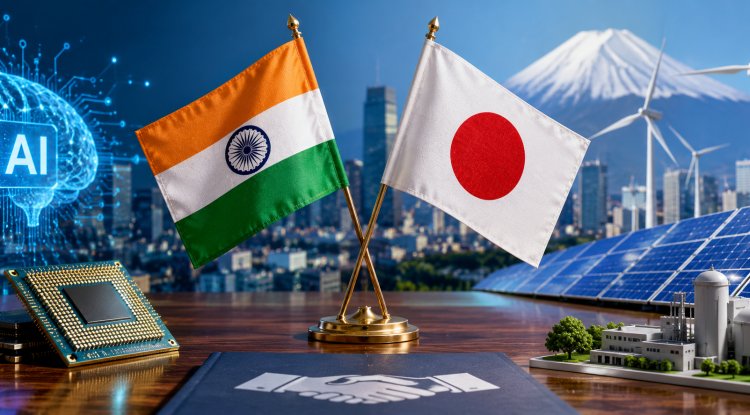
India and Japan are expected to strengthen their strategic partnership at the 16th India-Japan Annual Summit, with discussions focusing on artificial intelligence (AI), semiconductors, clean energy, critical minerals, pharmaceuticals and information and communication technology (ICT). The summit reflects the growing importance of economic security and resilient supply chains as both countries seek to reduce dependence on limited global suppliers.
These sectors have been determined as priority areas by the two countries as they look forward to cooperating with each other in the future and focus on developing technological innovation, manufacturing capability, and energy security. The government officials believe that this summit will help increase cooperation between India and Japan.
Economic security has become an important pillar of India-Japan collaboration in recent years. Before the summit, both sides conducted their second India-Japan Economic Security Dialogue in May this year during which the issues of cooperation in strategic technologies and industrial resilience were discussed. Business organizations of both sides are also holding private dialogues for promoting investments and technology collaboration.
Collaboration in semiconductors will continue to remain among the most significant aspects of the summit. Although an MoU had been signed between India and Japan in 2023 for cooperation in semiconductor supply chains, another MoU in relation to mineral resources was signed in 2025 which made sure that India received raw materials essential for high technology products, batteries, and renewable energy technologies. The initial meeting of the joint working group set up through this MoU took place in this year.
Clean energy is another critical topic to be discussed as both nations make efforts to meet their climate commitments and boost their energy security. Cooperation is anticipated to focus on renewable energy solutions, hydrogen, batteries, and critical materials that will be needed globally in the transition to clean energy. Another emerging technology to be emphasised during the discussions will be artificial intelligence, where cooperation in the field of AI will be expanded by both parties.
Japan remains one of the largest investors from overseas in India. During the period from April 2000 through March 2026, Japanese investments in India have amounted to over $48 billion, with about 1,500 Japanese firms having business presence throughout the country. It is worth noting that according to JETRO, over 81 per cent of the Japanese-affiliated companies in India intend to grow in the next one or two years.
Another important area where collaboration exists between India and Japan is that of infrastructure development. Some of the important projects include the Mumbai-Ahmedabad High Speed Rail Corridor Project, the Delhi Metro project and other metro rail projects in India along with the Western Dedicated Freight Corridor Project. These projects are a testament to the solid relations that exist between these two countries.
The upcoming summit is going to enhance India-Japan relations through collaborations in advanced technology, sustainable energy, investments and resilient supply chains.
What's Your Reaction?