


India is moving forward with the ₹91,000-crore Great Nicobar Island Development Project to strengthen trade, connectivity and strategic infrastructure, while debates continue over its environmental and social impact.
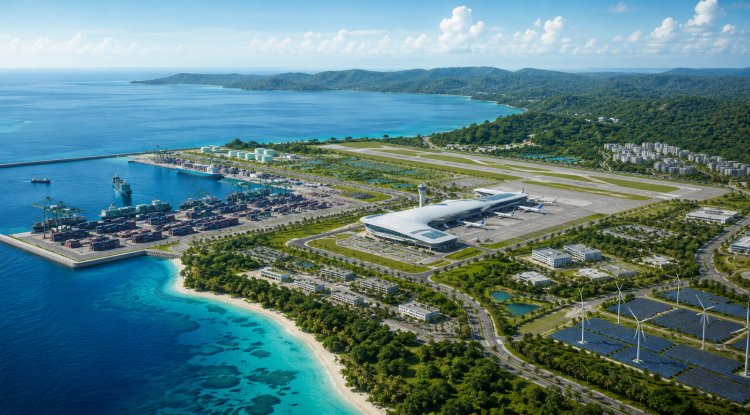
India is pushing ahead with one of its most ambitious infrastructure projects – the Great Nicobar Island Development Project, which involves an investment of around ₹91,000 crore, to turn the strategically positioned southern tip of the Andaman and Nicobar Islands into a trade, connectivity and climate-resilient growth hub.
The initial plan was for a deep-sea transshipment port, but it has been scaled up to become a multi-sector project comprising of an international container transshipment terminal, a dual-use airport, power plants, and a township that will support economic and regional infrastructure.
The project is being positioned as a strategic investment by the government to strengthen India's presence in the Indian Ocean region, enhance supply chain resilience, expand trade logistics and reduce dependence on foreign transshipment hubs located along major shipping routes such as the Strait of Malacca.
The location of Great Nicobar is of strategic significance as it lies along the important shipping lanes connecting Asia, Africa and Europe.
In addition to the strategic significance, planners have also emphasised on its importance in bringing about local economic development and creating job opportunities through sustainable development in an area where large scale infrastructural developments have been less seen until now.
The scale of investment almost ₹91,000 crore, and the ambitious construction phases, it involves decades of plans – have been a matter of much debate. Environmentalists and community groups have raised concern that the project could harm the island's delicate ecosystems and rare wildlife habitat and the effects of development on indigenous communities that have lived there for generations.
India's push to develop Great Nicobar is part of its broader efforts to harmonise economic strategy, national security and climate-informed infrastructure but it also highlights how to undertake development on a large scale in an ecologically sensitive place.
What's Your Reaction?

















