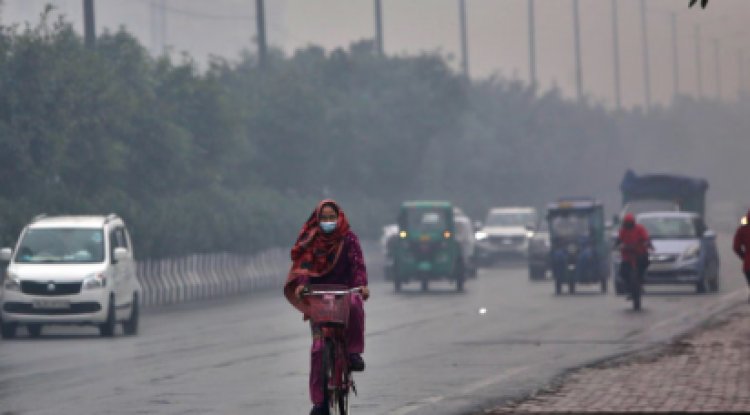
The only solution to make sure that the premises of the future economy will not falter under the pressure of an unpredictable climate is to invest in resilience, presently

The report published in April 2026, by the Coalition of Disaster Resilient Infrastructure (CDRI), in liaison with the Department of Economic Affairs, India, indicates a critical turning point in the development strategy of the country. With the frequency and intensity of the climate-associated disasters changing the status of resilience as a second-order economic issue into the first category, India is rapidly expanding its infrastructure across power, railways, and roads. The facts given in the report represent a grim reminder of what is at risk: disasters are nowadays focusing on the annual loss of about 2% of the GDP of India and can contribute to a decrease of government revenue up to 12%. These statistics are evidence of the fact that it is not only an environmental problem but also a significant challenge to the financial stability of the state. The fundamental philosophy embraced in this paper is resilience by design. Throughout the past, infrastructure planning could easily concentrate on the immediate cost efficiency, and disaster recovery was treated as a reactionary measure.
Nevertheless, the insights presented by the BCI affirm that implementing protective measures at the initial phase of a project is more cost-efficient than responding to and fixing damages to assets (in the aftermath of a catastrophe). This proactive approach will make sure that key services will not be affected and lost in case of extreme weather conditions because power grids are still operational and long-term investments are not lost in the cascading social effects, which happen when both power grids fail, and transport networks are cut. By centring the argument around the design phase, India is expected to develop resources that are at least equipped to withstand the climatic conditions that are projected for the coming few decades.
Such a localised consideration of India is in line with corresponding global trends noted in the BCI Horizon Scan Report 2025. Now, extreme weather has overtaken all the other causes of business disruption and become the number one cause of business disruption all over the world. Just like the challenge of handling isolated incidents has developed in the past to an extent of dealing with a threat multiplier landscape, wherein climate change has contributed to the intensification of food and water insecurity, along with straining global supply chains. Over forty per cent of the experts now consider climate risk to be their number one long-term issue, indicating that the work that is being piloted in the infrastructure sector of India will probably come to represent the global roadmap of surviving in an ever increasingly volatile environment.
As a means to fill the policy-practice gap, there is an increasing demand to conduct comprehensive audits of climate risk, not just based on the immediate physical footprint of a company, but taking into consideration its entire global supply network. It is the sole advice to the industry leaders to engage themselves in the collaborative forums and continuous education programs to keep pace with these changing threats.
After all, the experiences in India indicate that the future of the infrastructure is not all about expanding it, but also about how long-lasting the expansion of the infrastructure is going to be. The only solution to make sure that the premises of the future economy will not falter under the pressure of an unpredictable climate is to invest in resilience, presently.
What's Your Reaction?