NITI Aayog Vice Chairman Ashok Kumar Lahiri said the recent West Asia crisis underscores the need for India to diversify its energy sources, import channels and export markets to strengthen economic and energy security.
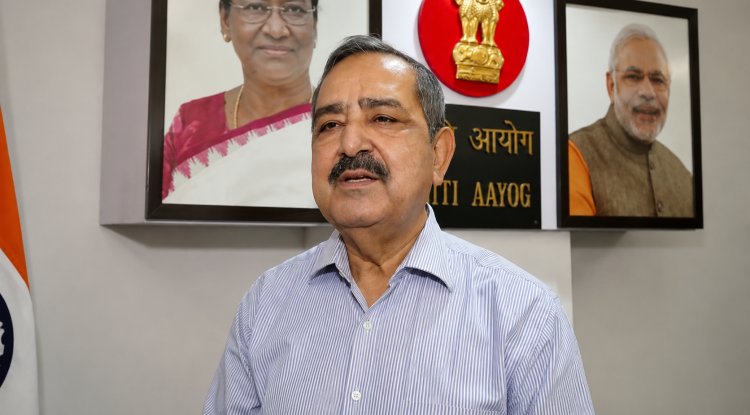
India needs to diversify its sources of energy and reduce dependence on any single region or supply route to strengthen long-term energy security, NITI Aayog Vice Chairman Ashok Kumar Lahiri said while discussing the implications of recent developments in West Asia. He noted that although the disruption caused by the regional crisis was temporary, it highlighted the importance of building a more resilient energy supply chain.
Speaking at the release of the eighth edition of Trade Watch Quarterly, NITI Aayog Vice Chairman Ashok Kumar Lahiri said the recent West Asia crisis served as a reminder of the importance of diversification in trade and energy sourcing. Referring to the disruption as temporary, he remarked, "So, it is like you have fever, but if it is influenza, you will not be very worried. In three days, it will get all right, but if you hear that it's typhoid or jaundice, you will be very worried. So, the West Asia crisis has turned out to be influenza."
Emphasising the lessons from the crisis, Lahiri added, "It was a short-term problem ... but it has taught us a few lessons. You do not put all your eggs in one basket, so we need to diversify our sources of imports, as well as our exports."
It was very clear in Lahiri’s assertion that nations like India should not depend too much on a few energy providers. Diversity in energy supply and sources, transport routes, and business partners could serve to protect the economy from geopolitical risks and price fluctuation in international energy markets.
Being one of the biggest energy consuming countries, India has to import considerable amounts of oil. Incidents that occur along major sea routes, like the Strait of Hormuz, may affect fuel availability and cost. In the current circumstances, attention is being paid once again to issues related to energy security and alternative energy sources.
Moreover, the requirement for diversification is consistent with the wider transition strategy of India towards energy sources. India is making rapid progress with renewable sources of energy like solar, wind, green hydrogen, batteries along with the ongoing efforts to increase the energy supply chain through conventional sources. NITI Aayog has previously pointed out the necessity of investing large sums of money in clean energy infrastructure.
Lahiri was also hopeful about the prospects of India’s trade and expected to see progress in its ongoing economic engagements, including negotiations on a trade agreement between India and the US. He also highlighted the need for establishing strong trade arrangements that can help boost economic growth while safeguarding against vulnerabilities due to global disruptions.
The experts are of the opinion that it is essential to have a blend of different sources of energy such as fossil fuels, renewable energy, nuclear energy, and other advanced forms of energy which will ensure cost-effective, reliable, and sustainable sources of energy in line with the growing economy of India. The recent geopolitics have further emphasized this aspect of energy policy.
What's Your Reaction?