India introduces simplified tree-felling rules on farms to promote agroforestry, enhance farmer incomes, reduce timber imports, and support climate goals. Under the new model rules, landowners can register on the NTMS portal for digital felling permits. The policy aims to boost carbon sinks and green cover by 2030.

Indian government has published a new model of set rules that aim to ease falling of trees on agricultural farms with a goal of increasing agroforestry, enhancing rural incomes, enhancing the tree cover, and furthering national climate objectives. The Union Ministry of Environment, Forest and Climate Change (MoEFCC) issued "Model Rules for Felling of Trees in Agricultural Lands" on June 19, 2025, to states for implementation and adoption.
The model rules aim to do away with procedure hurdles that thus far have discouraged farmers from planting trees in their farming systems. Relaxing the rules, the Centre aims to increase the convenience of doing business in agroforestry and render it economically competitive for farmers to plant and harvest wood on farms. This move also aligns with India's commitment under the Paris Agreement and other international climate commitments.
In the new system, State Level Committees (SLCs) constituted under the 2016 Wood-Based Industries Guidelines will be entrusted with implementing and enforcing these rules. These will include representatives from revenue and agricultural departments of the state as well as forest officials. Their tasks include recommending implementation at the level of the state government, empanelling verification agencies to conduct inspection in the field, and regulating transit of timber from farm lands.
The farmers have to register their farm lands under the National Timber Management System (NTMS) portal to begin the process. Registration involves preliminary details such as proof of land possession documents, plantation data in the form of species, number of saplings, date of planting, and seedling average height. After verification, the farmers can fill up online applications for tree-felling permission through the portal for legal and transparent felling and selling of timber.
The NTMS system provides real-time update and traceability of timber activity. Plantation records also need to be updated from time to time as specified by the SLC. The electronic system is meant to enhance transparency, eliminate delays, and improve legal timber trade.
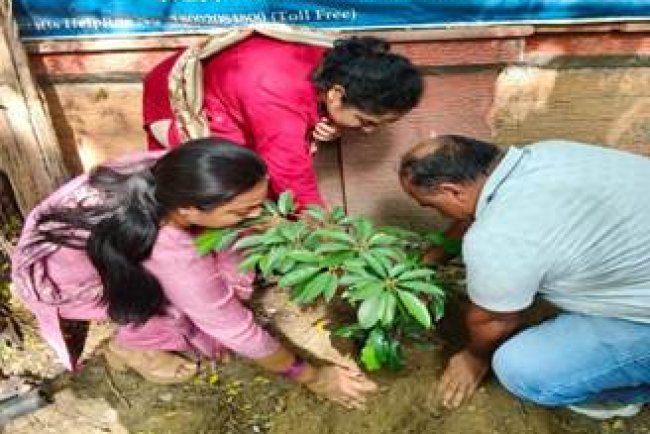
The reforms are part of the government's wider effort to encourage agroforestry, or crop and animal husbandry system production involving trees and shrubs. Agroforestry is good for the environment through enhanced soil quality, biodiversity conservation, and water holding capacity and good for the economy through timber and non-timber forest products.
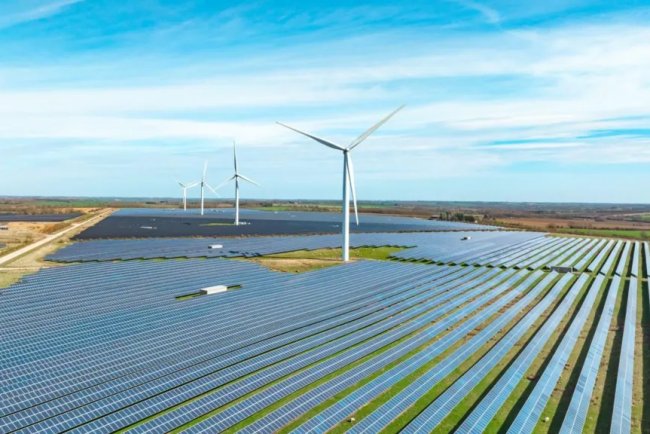
India's national climate commitments are to build a supplemental carbon sink of 2.5 to 3 billion tonnes of CO₂ equivalent in the area of forest and tree cover by 2030. The transition to agroforestry will contribute significantly toward this. The country has also committed to restoring 21 million hectares of degraded and deforested lands as part of the Bonn Challenge, the international effort to combat land degradation and deforestation.
National programs such as the National Mission for a Green India (GIM), and the National Afforestation Programme (NAP) currently, are also joining the agroforestry drive. The key programmes are being provided with increased funding to assist in accelerating afforestation and reforestation efforts by the states. Scaling up agroforestry in India will likely create a favorable measurable effect towards climate mitigation and sustainable development, as per a 2024 ScienceDirect report.
It is government's hope that encouraging agroforestry and relaxing rules for reducing acreage cuts will ease pressure on natural forests, slow the demand for timber imports, and keep domestic wood-based industries afloat. For decades, these industries have suffered from shortages of raw material, which can be addressed by the new policy through subsidizing farm-borne timber supply.
By promoting farmers to cultivate forest crops of high economic value on their properties, the government hopes to give rural communities an alternative source of income. Agroforestry systems have the potential to optimize production and resilience by multiple land use, microclimate improvement, and climate vulnerability reduction.
However, the success of the program will rest on the speed at which state governments embrace and enforce the model rules. While the Centre has indicated the direction, operational details are left to the discretion of the state governments. States need to offer trained cadres for verification, build digital capabilities for convergence with NTMS, and make necessary guidance available to farmers concerning agroforestry models appropriate to their agro-climatic zones.
Environmental safeguards are also encompassed by the policy. Not all trees will be subject to cutting permits, particularly those of environmental value or of wildlife habitat value. These must be weighed against commercial activities and conservation objectives.
The new regulations herald a shift in policy from forestyle rigid regulation to promoting tree farming outside of classical forest lands. The Centre's strategy is thus now centered around harmonization of land use, livelihood creation, and resilience to climate change through cooperative governance among forestry, agriculture, and revenue departments.
As momentum for adoption of the model rules grows, it is poised to boost farm-based forest cover, develop legal timber value chains, and aid India's low-carbon development aspirations. With increased success at scale, this agroforestry policy change can transform rural land management and set an example for other Global South nations facing similar issues.
Source & Credits:
Outlook Planet Desk
What's Your Reaction?