India’s Manufacturing Sector Growth Slows to Three-Month Low
India’s manufacturing sector slowed to a three-month low in May 2025 due to supply chain disruptions and rising costs, but government initiatives support continued growth. India’s manufacturing sector growth slowed in May 2025 due to supply chain issues and costs, with policies like Make in India supporting recovery and long-term growth.
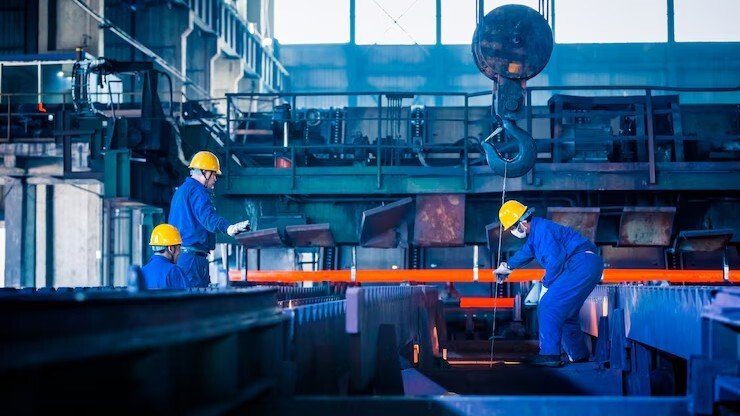
India’s manufacturing sector experienced a slowdown in May 2025, reaching a three-month low due to supply chain disruptions and rising input costs. Despite this, the sector remains a key driver of economic growth, with efforts underway to address challenges and sustain momentum.
India’s manufacturing sector, a critical component of its economy, saw its growth rate decline to a three-month low in May 2025, according to the Purchasing Managers’ Index (PMI). The PMI dropped to 56.5 from 58.2 in April, signaling slower expansion due to global supply chain issues and increased costs for raw materials like steel and energy. While still above the 50-mark indicating growth, the slowdown reflects vulnerabilities in the sector’s recovery post-pandemic.
Key industries, including electronics, automobiles, and textiles, reported challenges in securing raw materials due to global trade disruptions. The Russia-Ukraine conflict and logistical bottlenecks have driven up costs, squeezing profit margins for manufacturers. Domestic demand remains strong, supported by government infrastructure projects and consumer spending, but export orders have weakened due to global economic uncertainties.
Government initiatives like Make in India and the Production Linked Incentive scheme continue to bolster the sector, attracting investments in semiconductors, pharmaceuticals, and renewable energy components. In 2024, manufacturing contributed 17% to India’s GDP, with electronics production alone growing by 20%. However, the sector faces structural challenges, including outdated infrastructure, labor shortages, and regulatory complexities, which hamper efficiency.
Efforts to address these issues include investments in digital manufacturing and automation, which improve productivity and reduce reliance on manual labor. The government is also expanding industrial corridors and logistics networks to streamline supply chains. For instance, the Delhi-Mumbai Industrial Corridor is expected to enhance connectivity and reduce transportation costs. Additionally, skill development programs are training workers for advanced manufacturing roles.
The slowdown highlights the need for resilience in the face of global economic headwinds. India’s focus on self-reliance through initiatives like Atmanirbhar Bharat aims to reduce dependency on imported inputs, but achieving this will require time and investment. The sector’s long-term outlook remains positive, with projections suggesting manufacturing could contribute 20% to GDP by 2030 if reforms continue.
Conclusion
India’s manufacturing sector faced a slowdown in May 2025 due to supply chain issues and rising costs, but government policies and domestic demand provide a foundation for recovery. Addressing structural challenges will be critical to sustaining growth and achieving economic goals.
What's Your Reaction?