India has become one of the fastest-growing renewable energy markets, increasing its installed renewable capacity from 57 GW in 2014 to around 180 GW by early 2025. Driven by ambitious goals—such as achieving 500 GW of non-fossil fuel capacity by 2030—India's growth is fueled by strong government support, private sector investment, and international collaboration. Solar and wind energy lead the transition, supported by incentives like the PLI scheme and viability gap funding. However, challenges like land acquisition, payment delays by DISCOMs, and inadequate grid infrastructure persist. Initiatives like the Green Energy Corridor and the National Green Hydrogen Mission aim to overcome these barriers and solidify India’s position as a global clean energy leader.
Introduction
India has emerged as one of the fastest-growing renewable energy markets globally. Over the past decade, the country has more than tripled its renewable energy capacity, signaling a robust shift toward a low-carbon economy. With an ambitious target of 500 GW of non-fossil fuel capacity by 2030, India is positioning itself as a global leader in the transition to sustainable energy.
India's renewable energy journey has been characterized by aggressive capacity expansion, strong policy support, and significant private sector participation. As of early 2025, India’s total installed renewable energy capacity — including solar, wind, biomass, and small hydro — stands at approximately 180 GW, not counting large hydroelectric power. This is a significant leap from about 57 GW in 2014.
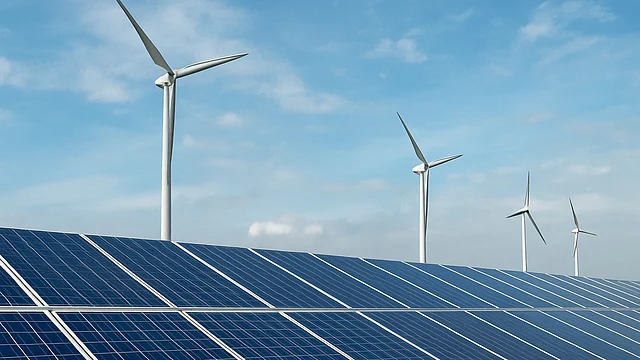
Solar energy has seen the most dramatic growth. The country has gone from less than 3 GW of installed solar capacity a decade ago to more than 110 GW. Wind energy capacity has more than doubled, reaching over 45 GW. The government has promoted these developments through a range of incentives, including viability gap funding, production-linked incentives, and reverse auctions for project allocations.
Central to this growth is India’s pledge under the Paris Agreement and its revised Nationally Determined Contributions (NDCs). India aims to have 50% of its electricity from non-fossil sources by 2030 and to reduce its emission intensity by 45% from 2005 levels. These goals align with the push toward a 500 GW renewable capacity target, which includes 280 GW from solar and 140 GW from wind.
The development of large-scale solar parks, hybrid projects, floating solar plants, and decentralized rooftop installations has broadened the renewable landscape. States like Gujarat, Rajasthan, Tamil Nadu, and Karnataka have become renewable energy hubs, attracting domestic and international investments.
India’s commitment to self-reliance in energy is evident in its push for domestic manufacturing. The Production Linked Incentive (PLI) scheme for solar module manufacturing is expected to help achieve 100 GW of annual module production capacity by 2030, significantly reducing import dependence on China.
Despite this success, several challenges persist. Land acquisition for utility-scale projects remains a complex issue. Additionally, many projects suffer from delayed payments by distribution companies (DISCOMs), discouraging further private investments. Energy storage, crucial for addressing the intermittency of renewables, is still in its infancy, and policy clarity on storage tariffs and procurement is limited.
Moreover, there is concern over the uneven pace of growth across states and the need for better coordination in grid integration. The lack of infrastructure to transport electricity from resource-rich regions to high-demand centers remains a bottleneck, often resulting in curtailments or underutilization of installed capacity.
To address these issues, the government has rolled out the Green Energy Corridor project, aiming to create transmission systems dedicated to renewable energy evacuation. In addition, recent policy developments like the Renewable Energy Development Act and the National Green Hydrogen Mission are aimed at creating synergies across clean energy technologies.
Internationally, India is also playing a leading role through platforms like the International Solar Alliance (ISA) and the Global Bioenergy Partnership. These platforms facilitate collaboration on technology, investment, and policy among developing and developed nations.
Conclusion
India’s renewable energy sector has transformed significantly over the past decade, demonstrating that rapid and large-scale clean energy transitions are feasible. With an ambitious 500 GW target by 2030, the country is well on its way to decarbonizing its energy sector. However, to stay on track, it must address grid infrastructure, regulatory clarity, and financial sustainability. Long-term planning, technology innovation, and global cooperation will be critical to sustaining this growth and achieving climate goals.
Source:Business Outlook
What's Your Reaction?