


India expands its recycling network to 3,236 plants, strengthening waste management and green infrastructure.
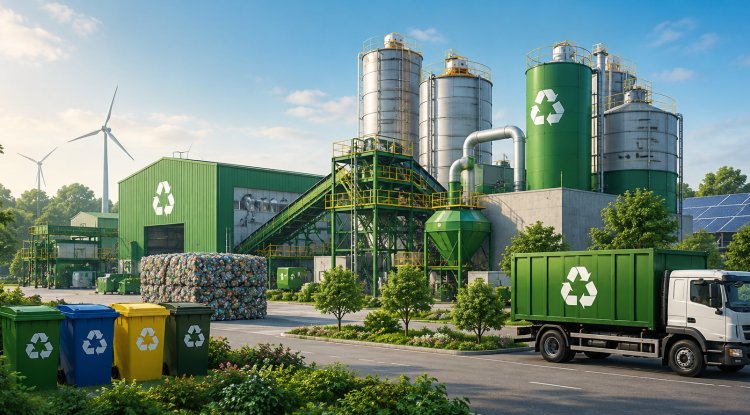
Think back to 2019. For a vast majority of urban and rural communities across India—especially local sanitation workers, neighbourhood ragpickers, or municipal bodies—managing the mounting tide of daily garbage was an uphill battle. One major festival or a rapid burst of urban expansion could completely overwhelm open landfills and disrupt entire local ecosystems. Earlier, systematic municipal waste recycling was generally a privilege for selected smart cities or highly localised commercial hubs, leaving approximately 80% of urban centres completely exposed to worsening environmental hazards.
The latest Sustainable Development Goals (SDG) tracking data tells a completely different story. As shown in the above graph, India's environmental safety net has fundamentally transformed. In less than a decade, the total number of operational waste recycling plants installed across the country has surged from 829 in 2019–20, up to 2,057 in 2022–2023, and skyrocketed to 3,236 by 2025–26.
This massive, rapid increase has drawn widespread global attention. International climate bodies have called it one of the fastest expansions of circular economy infrastructure in modern history, reflecting a strong expansion in waste management and recycling systems. This heavy lifting was anchored by a robust digital monitoring framework and strict policy targets that corporate houses and cities now navigate daily. By linking formal recycling units, credit trading platforms, and extended producer responsibility rules, the system managed to bypass old bottlenecks. Instead of scrap rotting away in toxic dumps, commercial-grade garbage now flows directly into high-tech processing units.
On the ground, this transformation is driven by a handful of mega-schemes that target the basic anxieties of municipal sanitation. A major contributor to this progress is the Swachh Bharat Mission (Urban & Gramin) 2.0. Under this initiative, hundreds of cities receive dedicated funding to build material recovery facilities. At a time when global climate pressures have made municipal budgets tight, this has anchored regional waste processing for millions of households. The Smart Cities Mission acts as another anchor, deploying over a thousand advanced automation systems across waste collection centres to optimise daily processing capacities.
Apart from these flagship frameworks, a network of specialised portals has registered thousands of private recycling enterprises, giving informal waste workers a recognised identity and a steady income stream within the formal green economy. Notably, plastic recycling clusters make up a huge chunk of these registrations, opening doors to critical public subsidies and financial incentives. Strict eco-laws have also placed recycling mandates on manufacturing industries, offering a vital regulatory safety net against raw pollution.
The tangible impact of these interventions is visible in India's cleanliness metrics, with millions of tons of waste successfully diverted from overflowing dumping grounds over the period. However, the job is only partially done. Roughly a portion of tier-3 towns and rural clusters are still outside this modern processing umbrella. The next phase of this sustainable journey will require seamless integration between state-specific pollution boards and central monitoring databases, alongside deeper outreach to small-scale scrap dealers. With policymakers now aiming to cross even higher installation milestones, the goal is clear: ensuring that no Indian community is left to handle a waste crisis entirely on its own.
What's Your Reaction?

















