IUCN Congress 2025 to Drive Global Climate and Conservation Policy
The IUCN World Conservation Congress 2025 in Abu Dhabi will bring together over 10,000 global stakeholders to advance nature conservation and climate action. Focused on equity, innovation, and sustainable development, the Congress will influence policies and funding to tackle biodiversity loss and climate challenges.
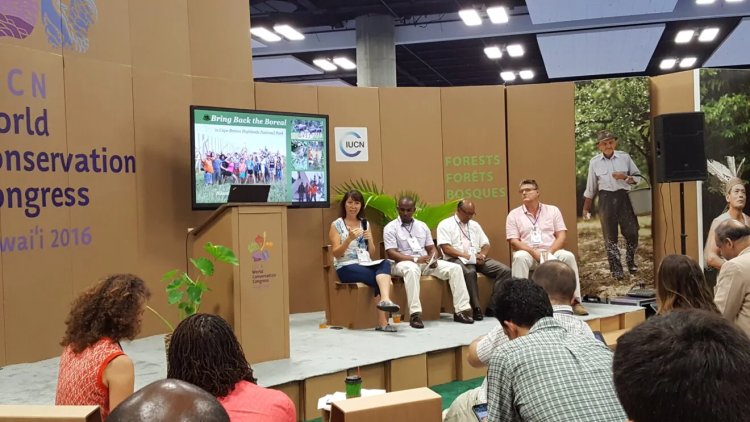
The 2025 IUCN World Conservation Congress will take place between October 9 and 15 in Abu Dhabi, United Arab Emirates. It is being hosted by the International Union for Conservation of Nature (IUCN) and will welcome over 10,000 individuals including government officials, conservationists, business executives, Indigenous leaders, scientists, and youth organizations. The Congress takes place every four years and is the world's largest conservation event to focus on conservation, biodiversity, climate action, and sustainable development.
2025 Congress is the period of maximum urgency in which the present moment is the moment to act on the position of environment degradation, loss of biodiversity, and aggravating impacts of climate change. Paris Agreement and UN Sustainable Development Goals (SDGs) have five years left to meet the goals, and the conference has been perceived as a chance to link international action, scientific research, and implementation on the ground level.
The representatives will collaborate to discover new strategies and partnerships for the benefit of nature and for a more sustainable world. Congress is structured around five themes that each respond to a key challenge in the global struggle to preserve the environment and include sustainability in social and economic life.
The subject of "Scaling Up Resilient Conservation Action" revolves around scaling up the scale of conservation action as well as its intensity. The deliberations will involve actions to preserve more terrestrial and marine ecosystems, more against human interventions and growing pressures from climate change. Efforts will be put in place for embracing resilience in natural environments so that they can still enjoy vital services such as water filtration, carbon sequestration, and habitat provision.
The second one, "Reducing Climate Overshoot Risks," acknowledges the threat of the world briefly exceeding 1.5°C of warming, the safety top number cited by scientists. Overshoot possibilities increase the likelihood of destructive weather, sea-level rise, and disruption of ecosystems. World leaders will debate how to reduce the number of and intensity of overshoots, through emission cuts, carbon capture and storage, and natural solutions.
The third thematic theme, "Delivering on Equity," is the value of equity in environmental policy. Incorporation of indigenous knowledge, host population safeguard against negative impacts, and conservation dividends to mankind will be driving negotiations. Such policies which concede vulnerable communities or fail to account for cultures will be stunted, in participatory involvement in environmental decision-making.
The fourth, "Transitioning to Nature-Positive Economies and Societies," is an appeal to change the way the world's economies operate. It aims to bring on practices that heal, and not harm, nature. It entails the change of agriculture, infrastructure, and finance to favor biodiversity and reduce carbon. The vision is the embedding of sustainability in country and company planning.
The final theme, "Disruptive Innovation and Leadership for Conservation," will concentrate on local leadership, innovation in environmental technology, and data science. Such examples include monitoring biodiversity with AI, carbon-negative building products, and restoration at large scales. All of these are leading towards accelerating conservation objectives and delivering actionable and scalable options for places.
The Congress will not only produce policy discussions but also deliver difficult commitments and deals. Previous installments of the event had governments and organizations across the globe adopt global movements and also design conservation tools. This year, 2025, new resolutions, commitment of funds, and conservation targets are expected, shaping policy globally and additional investment in climate resilience.
Openness and environmental stewardship will also be among the concerns. The results in Congress can affect business reporting on the environment, government policy regarding climate change, and borderless conservation financing. The quantitative impact on biodiversity and climate goals from the contribution of cities, private sector organizations, and public sector organizations will be analyzed.
The Congress will also influence product design, land use planning, and consumer behavior. Estimated to have one million species threatened with extinction, according to the UN, the Congress will lead the international charge for boosting action and awareness toward stopping biodiversity loss. Conservation of ecosystems directly affects climate resilience, access to clean water, and food security, and therefore conservation is at the heart of human and environmental development interventions.
IUCN also committed to making the event itself as sustainable as possible. Learning from experience in previous Congresses that had been hosted in Hawaii and Marseille, the 2025 Congress will include best practice on sustainable events management such as energy use, waste minimization, sustainable procurement, and low-carbon mobility.
The Congress occurs against the background of mounting climatic crises and environmental stresses, and these have affected countries on every continent. Climatic disasters such as droughts, floods, fires, and record heatwaves have intensified in frequency and magnitude. The Congress is therefore world best practice for good integrated environmental practice and for durable solutions.
The choices made during the IUCN World Conservation Congress 2025 will have an impact not just on conservation groups and scientists but also on other broader areas such as agriculture, urbanization, and international trade. It is perhaps the one platform where science, political commitment, and local action can converge to influence decision-making on international environmental policy.
By bringing together global stakeholders, the IUCN aims to ensure that the Congress makes global in extent, operational, and appropriate recommendations. The conference will establish the direction for the ten-year conservation and environmental policymaking, and cause a global response to some of the world's most important challenges.
Source:
Jamie D'Souza, The IUCN World Conservation Congress 2025, Published on 9 July 2025, Image: Wikimedia Commons
What's Your Reaction?