


Kazam-AEEE report highlights gaps in home EV charging and calls for safer EV-ready residential infrastructure.
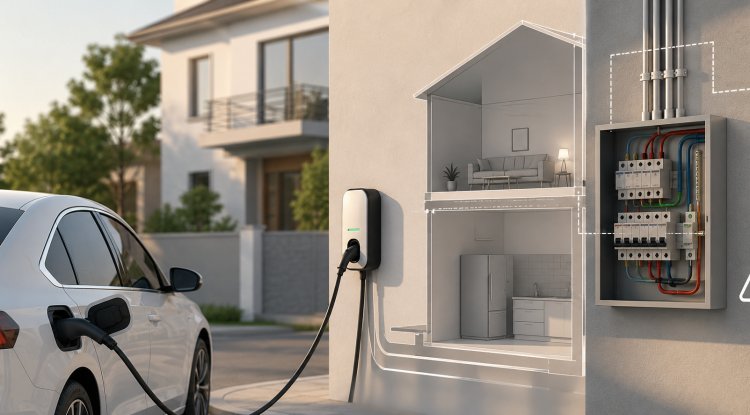
NVEsolution, the EV charging and energy management company, along with Alliance for an Energy Efficient Economy (AEEE) launched a report discussing the lack of EV charging infrastructure, NVEV adoption, home charging solutions, EV infrastructure in India, and sustainable mobility in residential areas. The report, titled “The Net-Zero Transition Starts at Home: Enabling EV-Ready Residences in India”, highlighted that residential charging stations will be instrumental in facilitating India's move towards electric mobility.
The report was unveiled at India Habitat Centre along with the dignitaries from the government, power companies and the EV ecosystem such as Bureau of Energy Efficiency (BEE), Central Electricity Authority (CEA), BSES, and All India Discoms Association. These were obtained from Kazam's database of over 80,000 residential chargers installed, survey with EV technicians, and interviews with EV consumers from more than 5,000 pin codes.
Residential charging presents itself as a major hurdle to India's EV transition.In India, one of the primary challenges is residential charging.
It added that unlike many global markets, India's EV market is more towards light EVs—electric two wheelers and three wheelers—than to large vehicles. These segments represented almost 90% of EVs sold in 2025, and are increasingly applied to personal transportation, commercial transportation, and last-mile services.
The study revealed, however, that there is a substantial population that is still not able to access formal residential charging stations. Many EV users charged at home overnight, so the report noted challenges to the preparedness of residential buildings and electricity systems to accommodate growing EV charging demand.
Overnight charging of EVs puts a strain on residential grids.
Overnight charging of 4-6 hours was listed as a growing challenge for residential electricity systems in the report. The current residential grid could also be pushed to its limits as more EVs are connected as they charge for long periods, as this has not been a factor that the grid was initially designed for.
Electrical safety issues identified in the assessment were: Overheating of standard domestic sockets, melting of connections with continuous load, voltage fluctuations triggering the charger disconnection and poor earthing system. The potential for these issues as risks to the reliability and safety of residential EV charging were emphasized.
Infrastructure for apartments is still a problem for EV users.
The report estimated that in India, approximately 70-75% of urban households reside in apartments/multi-family buildings, posing further difficulties in EV charging installation. Charging access remains a challenge despite the fact that issues like limited parking spaces, approval delays and concerns from housing societies and landlords continue to impact.
In response to these challenges, Kazam and AEEE brainstormed during a multi-stakeholder roundtable with government officials, utilities, EV manufacturers, and real estate developers such as Lodha Group and RMZ Corp., about what the EV-Ready Residences Framework should look like.
New framework for making residential buildings 'EV ready'
The suggested approach is on aspects of enhancing the residential readiness by having adequate electricity load capacity, separate charging circuits, legal metering system, correct earthing, appropriate wiring standards, safe installation practices, and consumer awareness.
According to the organisations, the framework is designed to help the homebuyer, the housing society, the developer and the resident determine if a property can accommodate safe and reliable EV charging, with the assistance of BEE, the framework will be based on the creation of standardised guidelines.
Kazam also launched an EV-readiness online quiz to assess the charging readiness of their respective homes and request for professional assessments if necessary for people who are thinking of buying an EV.
The affordability of EVs and gig economy is tied to home charging.Affordability of EVs and gig economy are tied to home charging.
The report also shone a light on the significant contribution of residential charging to India's burgeoning gig economy, which is expected to have 23.5 million gig workers by 2030. The results indicate that delivery workers and commercial EV users who rely on public charging stations could incur greater expenses and lost productivity compared to those who charge at home.
Accessible home charging is crucial to lowering operating costs for workers who rely on EVs, as public charging may cost the users three to four times more per unit of electricity than home charging, the report said.
The industry is seeking to integrate EV readiness into urban planning.The industry is urging integration of EV readiness into urban planning.
Residential EV readiness must be a part of the building planning and approval processes, not an extra feature, Akshay Shekhar, Co-founder and CEO, Kazam, said. He noted that charging infrastructure should be a part of residential development projects such as redevelopment and affordable housing.
Although EV adoption has grown, Sumedh Agarwal, Director, Smart and Resilient Power and Mobility, AEEE pointed out that residential infrastructure is still to be prepared for this transition on a large scale. He pointed out that level 2 access at the vehicle owner's home is directly impacting the economics of delivery partner ownership, commercial drivers and small entrepreneurs.
The next steps of EV growth in India will rely on further development of the residential charging infrastructure, enhanced safety measures, and the ability of homes and urban infrastructure to handle the growing needs for electric mobility, concluded the report.
What's Your Reaction?

















