Lloyds and Wildfarmed launch a fund to help UK farmers adopt regenerative practices and strengthen resilience.
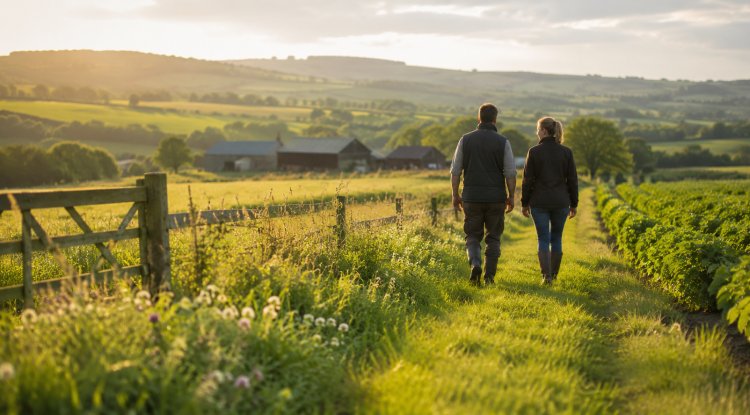
The Food & Nature Resilience Fund is a new initiative from Lloyds Banking Group in collaboration with regenerative agriculture company Wildfarmed to help UK farmers transition to more sustainable farming methods. The goal is to speed up the transition to regenerative agriculture, enhance biodiversity, soil health, water quality and carbon reduction, and maintain the commercial viability of farming. The announcement follows the increasing emphasis on regenerative agriculture, sustainable farming, biodiversity, soil health and carbon reduction as key drivers to support the resilience of UK's agriculture.
Fund aims to support farming to be a source of nature positive.
The newly established Food & Nature Resilience Fund aims to support farmers to implement regenerative practices without removing productive land from food production. Lloyds Banking Group and Wildfarmed said it aims to develop a financial model that incentivises farmers to provide environmental benefits without compromising food production. The programme reflects the growing interest in regenerative agriculture, sustainable farming, biodiversity, soil health and carbon reduction, as governments, businesses and financial institutions are looking for solutions to environmental problems associated with agriculture.
Regenerative Agriculture is concerned with farming practices which restore ecosystems without compromising agricultural productivity. Some of these practices are soil protection, no-tillage, plant species diversification, soil fertility improvement, year-round ground cover, greenhouse gas reductions, and biodiversity protection. There are many reasons why people believe regenerative agriculture is both the right way to improve long-term farm resilience and to assist with climate and nature objectives.
Financial constraints continue to be a big problem
Lloyds Banking Group found financial constraints remain one of the main challenges for farmers wanting to switch to regenerative farming methods. The partners cited research that indicated 92% of farmers named financial restraints as the biggest barrier to regenerative practices.
The companies said the fund aims to tackle this issue by establishing mechanisms to mitigate economic risks of shifting farming systems. The strategy seeks to increase the availability of funding for farmers in the UK by promoting more broader investment from organisations that have indirect benefits from improving the health of ecosystems.
Lloyds also covered more economic issues that relate to environmental degradation. However, if this biodiversity loss and nature degradation are not tackled properly, the bank said research indicated the UK would see the gross domestic product (GDP) decline by around 12% over the next decade.
Collaborating outside of the farm.
There has been participation from organisations outside the traditional agricultural supply chains, joining the Food & Nature Resilience Fund. Some of the initial investors are water companies Severn Trent Water and Affinity Water, and global commercial insurance company AXA XL. Lloyds and Wildfarmed stated that more investors are planned to enter into the project in the future.
The partners shared that healthy landscapes, water quality and resilient ecosystems are good for businesses across sectors, from banking to insurance and utilities to other industries. The fund aims to establish a new investment framework where more entities can participate in the fund than are food production companies, thereby lowering the pressure on individual farmers while enhancing the environment.
This partnership could enable the companies to facilitate the spread of regenerative farming in larger regions of agricultural land, and share the cost among organisations that also stand to gain from better nature, the companies said.
Lloyds emphasizes resilience in the long term
Agriculture Sustainability Director, Lloyds Banking Group, Ben Makowiecki, commented that it gathers organisations who have a shared interest in resilient farming systems, healthy soils, clean water and thriving ecosystems.
Business collaboration could accelerate the rate of regenerative agriculture on the UK's land, as well as help to create a more sustainable financial framework for farmers during the transition process, he said.
Lloyds is committed to building environmental resilience through the strengthening of natural ecosystems, which will not only improve environmental goals, but also enhance food production and rural economies in the long-term.
Wildfarmed is dedicated to regenerative practices
Wildfarmed was established in 2018 by Andy Cato, George Lamb and Edd Lees who are working through a network of British farmers to champion regenerative agriculture. The company promotes the adoption of techniques that reduce soil disturbance, soil cover and grow a diverse crop.
Wildfarmed says that these practices result in healthier soil, better biodiversity, lower water pollution, carbon reductions and productive farmland. The company sees regenerative agriculture as a viable method that will enable the environmental restoration and sustainable production of quality food.
Nature recovery and food production, hand-in-hand
Wildfarmed Co-founder Andy Cato explained that environmental restoration and food production have been seen as conflicting goals. In the past, farmers have been dealing with payment systems that have forced them to make choices between food production and environmental services," he said.
Resilient food systems require productive farmland that also benefits healthy ecosystems," Cato said. The partnership is a significant step to developing a financial incentive to encourage farmers to achieve food production AND nature recovery – not two separate goals – he added.
Lloyds Banking Group and Wildfarmed are working together to promote the uptake of regenerative agriculture with economic returns across the UK through the Food & Nature Resilience Fund. The project aims to show how biodiversity, soil health and farm resilience can be enhanced, while continuing to produce food, through working together between farmers, business and investment.
What's Your Reaction?