Bela Gram in Bhandara district became Maharashtra’s first net-zero panchayat through strong local leadership, clean energy use, waste management reforms and community participation.
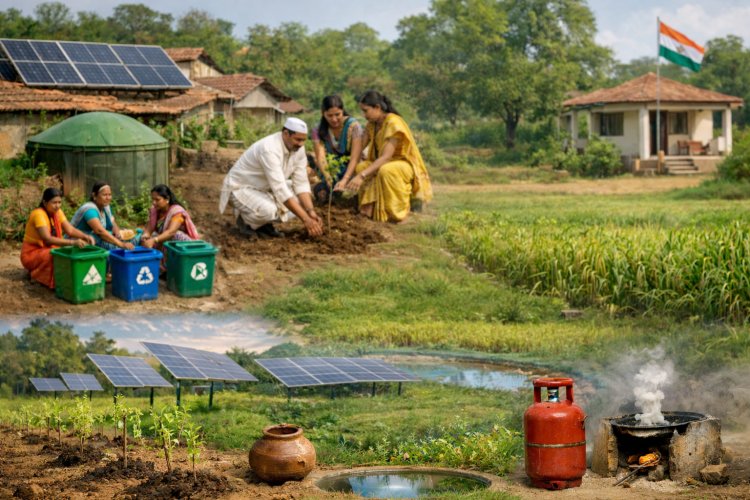
A small village in bhandara district called Belar Gram has became Maharashtra’s first net-zero panchayat. The village has reduced and managed its carbon emissions through measures like tree plantation, clean energy use and waste management. The village has achieved the status of the first net-zero panchayat in the state.
This was brought about by the initiative of the village sarpanch, Sharada Gaydhane. She explained that climate change is not a notion but a reality that people experience every day, through the crops that farmers are growing, the water that they are harvesting, and their health. The actual work of climate change should be done in the village, when the panchayat takes the initiative and the people participate, according to sarpanch.
During her tenure, Bela Gram saw the planting of more than 90,000 trees in weddings and festivals, which turned social gatherings into tree-planting activities. The village promoted the use of LPG connections in place of traditional smoky chulhas, thus reducing air pollution inside homes. Solar panels were provided in homes, anganwadis, and the Panchayat office to promote the use of clean energy. The panchayat also initiated door-to-door segregation of waste and successfully banned single-use plastic in the village.
The waste management system was improved by making door-to-door segregation of waste compulsory. Organic waste was diverted to composting, and recyclables were collected on a systematic basis. The strict ban on single use plastics was also enforced not just recommended, which result in cleaner public spaces and reduced long term waste problems.
The village included water saving work in its main development plan instead of treating it as a small side of the project such as improved rainwater harvesting and proper management of groundwater resources, were also said to be incorporated into the village development plan. Initiatives were made consistent with overall rural development programs, ensuring that they are financially sustainable rather than dependent on a single grant.
For this work, Bela Gram was awarded the Rashtriya Panchayat Puraskar in 2024 and is now the first net-zero village in Maharashtra. Gaydhane, who has been a two-time elected Sarpanch and has won the Vasundhara Award, strongly stated that with proper planning, waste can be converted into a resource.
This was highlighted in a session named “From the Frontline: Panchayats Leading India’s Climate Change” at the Mumbai Climate Week 2026. This session included representatives from six States, namely Karnataka, Kerala, Bihar, Jharkhand, and Odisha, who shared instances of climate change action in their villages.
According to Arindam Banerjee, the Co-founder and Partner of the Policy & Development Advisory Group (PDAG), such experiences bring to light the social and economic realities of a community and the solutions that can be implemented on the ground. Banerjee also believes that the upcoming global climate change meetings, such as COP33, to be held in India, will help to bring about a collective platform for action by 2028.
What's Your Reaction?