Twelve launches a U.S. facility producing aviation fuel from captured CO2 and renewable electricity.
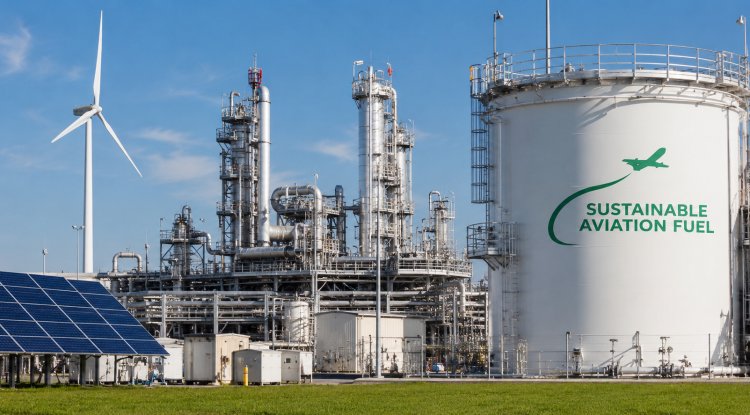
California-based carbon transformation company Twelve has launched AirPlant One, the first facility in the United States that produces E-Jet fuel, a power-to-liquid sustainable aviation fuel made from captured carbon dioxide and renewable electricity. This development is an important step for the growing sustainable aviation fuel industry as airlines and governments look for ways to reduce emissions from air travel.
The facility, located in Moses Lake, Washington, converts captured CO2, water, and renewable energy into aviation fuel that can be used in existing aircraft without any modifications. This project illustrates the rising interest in sustainable aviation fuel, carbon capture technology, renewable electricity, low-carbon aviation, and emissions reduction as vital methods for decarbonizing the aviation sector.
Commercial Production Begins at AirPlant One
Founded in 2015, Twelve makes fuels, chemicals, and materials by using captured carbon dioxide as a feedstock. The company’s production process combines CO2 and water with renewable power to create hydrocarbon molecules that can substitute traditional fossil-based products.
According to the company, AirPlant One is already producing jet fuel that meets certification standards set by ASTM International. This compliance allows the fuel to be used in commercial aircraft and existing airport infrastructure without needing technical changes to engines, fuel systems, or operational procedures.
The company stated that fuel from the facility is being delivered for commercial aviation use. Alaska Airlines plans to start regular domestic flights using E-Jet fuel produced at the plant, marking one of the first commercial uses of power-to-liquid aviation fuel in the United States.
Microsoft and Alaska Airlines Back Project
Microsoft and Alaska Airlines supported the development of AirPlant One, committing in 2022 to purchase fuel produced by the facility. Both companies also invested in Twelve through the Microsoft Climate Innovation Fund and Alaska Star Ventures.
Representatives from both organizations attended the ribbon-cutting ceremony for the facility’s opening. Microsoft stated its investment aims to promote the scaling of new energy solutions and aid in the long-term development of lower-carbon aviation fuel supplies.
The involvement of major corporate partners shows the growing interest from technology companies and airlines in fostering alternative fuel sources that can help tackle aviation-related emissions while keeping current transportation networks unchanged.
Alternative to Bio-Based SAF
Unlike many existing sustainable aviation fuel pathways that depend on agricultural feedstocks like used cooking oil, crop residues, or dedicated energy crops, Twelve’s E-Jet fuel is created from captured carbon dioxide and renewable electricity.
The company claims its eManufacturing platform generates synthetic jet fuel that is chemically identical to conventional aviation fuel. This similarity allows the product to serve as a direct replacement while potentially avoiding some issues related to land use and the availability of feedstocks linked to bio-based alternatives.
Twelve estimates that its sustainable aviation fuel could reduce lifecycle greenhouse gas emissions by up to 90 percent compared to conventional jet fuel, depending on the source of electricity and carbon dioxide used during production.
Industry observers consider power-to-liquid fuels a promising solution for cutting emissions in sectors that are hard to electrify directly, especially long-haul aviation, where battery-powered aircraft still face significant technological challenges.
Economic and Industrial Benefits
Twelve also pointed out several economic benefits tied to its production model. Since the process mostly relies on electricity, water, and captured carbon dioxide, the company suggests it may offer more stable input costs compared to fuel paths based on agricultural commodities.
Potential advantages include lower land and water needs, a more diverse fuel supply chain, better energy security, and support for domestic manufacturing and job creation.
Alaska Airlines mentioned that this project shows how cooperation between technology developers, investors, and airlines can speed up the commercialization of sustainable aviation fuels while bolstering industrial capacity and creating jobs.
Production of E-Naphtha Expands Product Portfolio
In addition to aviation fuel, AirPlant One also produces E-Naphtha, a synthetic chemical feedstock made from captured carbon dioxide, water, and renewable energy. The company notes that this product is chemically the same as conventional naphtha and can be used in making plastics, packaging materials, solvents, and synthetic fibers.
Twelve describes E-Naphtha as part of a larger group of eChemicals focused on replacing fossil-based feedstocks with products derived from renewable electricity and captured carbon. The company believes these materials could help create more resilient supply chains and provide manufacturers with different sources of industrial raw materials.
Chief Executive Officer and co-founder Nicholas Flanders shared that the company’s long-term vision is to show that fuels and chemicals can be produced using renewable electricity and carbon captured from the atmosphere. The launch of AirPlant One is a significant commercial milestone toward that goal and shows increasing momentum for synthetic fuels in the global shift to lower-carbon energy systems.
What's Your Reaction?