Data, technology, and new financing models are reshaping how the Ganga and surrounding ecosystems are restored and managed.
A digital twin of the Ganga has been sanctioned under the Centre of Excellence at IIT Delhi to support data-driven decision-making for the National Mission for Clean Ganga and other government agencies. The project focuses on hydrological modelling, groundwater stress assessment, hotspot identification, scenario analysis, and basin-level monitoring. Artificial intelligence, mathematical simulations, and planning tools are included in the project framework.
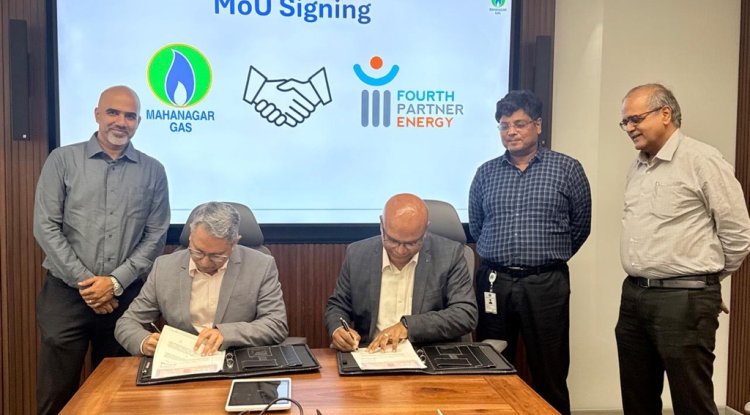
Hybrid annuity public-private partnership (PPP) projects under the National Mission for Clean Ganga apply a financing method that links payments to actual sewage treatment plant (STP) performance. A project for interception, diversion and sewage treatment for pollution abatement of the Mahananda River in Siliguri Municipal Town, West Bengal has been approved at an estimated cost of Rs 361.86 crore under the hybrid annuity PPP model.
Earlier PPP arrangements showed limited focus on operation and maintenance (O&M), as monthly payments during O&M were small compared to construction-stage payouts. This sometimes led to weak compliance and inconsistent operational performance.
To address this, a revised financing structure defers a substantial portion of construction payments to the O&M phase. Under the model, the government pays 40% of the capital cost during construction. The remaining 60% plus interest is released as annuity payments over a 15-year O&M period. Payments are tied to performance, assessed against Key Performance Indicators (KPIs) defined in the agreement. Payments are made only when the required standards are met. No user charges or tariffs are collected; the entire project cost is funded by the Government and provided to the State Government as grant-in-aid.
A study has been approved to understand how fast glacier melts in parts of Uttarakhand. The National Institute of Hydrology will set up a system that can track glacier changes in real time across the Bhagirathi and Alaknanda basins including glacier regions such as Gangotri, Satopanth, Khatling, Pindar, and Chorabari. The study involves glacier mass-balance assessment, melt-runoff analysis, and evaluation of climate-change impacts using satellite data, field measurements, and SPHY modelling. A Web-GIS dashboard for NMCG will be developed to compile and display the collected data. The study aims to assess glacier response to rising temperatures and associated risks.
What's Your Reaction?