Innovative concrete-free and modular wind turbine technologies could reduce installation challenges and accelerate sustainable renewable energy expansion worldwide.
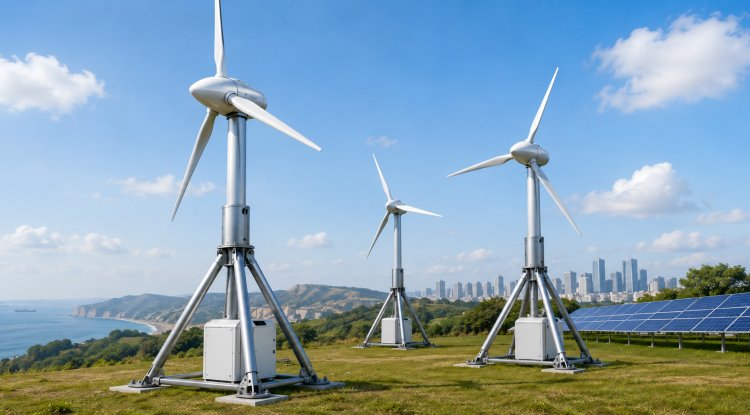
The wind energy sector is developing a new type of turbine technology that can reduce the need for traditional concrete foundations and make renewable energy projects easier, quicker and more sustainable to build. These concrete-free wind turbines are being designed to overcome common challenges in traditional wind projects, such as high construction costs, transportation issues and the environmental impact of using large amounts of concrete.
Standard wind turbines, however, need a concrete foundation due to the weight and size of the structure, which is especially true for utility-scale systems. Such foundations may consume considerable amounts of natural resources and require the use of bulky construction equipment and complicated engineering works. Although this method helped to promote the global development of wind energy, there are attempts to find some other solutions.
New designs using modular structure have been designed to circumvent these problems. While traditional turbine designs use big parts that need special machinery to assemble, the modular design of wind energy makes it possible to manufacture wind turbines in small parts and assemble them near the site of the installation. This may help wind energy to become more feasible in remote areas where assembling traditional turbines is difficult.
This technology would also help in extending the scope of renewable energy through wind in non-conventional forms of wind farms. Turbines which are compact and flexible enough might offer some prospects for generating renewable energy in industrial, urban as well as coastal settings where space is not abundant. This would help in increasing the pace of renewable energy projects in countries around the world.
Innovation within the wind industry comes also in the form of developing recyclable components of turbines. For example, the blades of the wind turbines have never been easy to recycle due to the fact that they were made of very complicated materials meant to ensure strength. However, today there is an increased focus on developing such components that can be easily recycled.
The incorporation of foundation structures without the use of concrete, combined with modular assembly methods and recycling of materials, might serve as the basis for a sustainable system for wind power generation. This innovation falls under the umbrella of circular economy trends, where the infrastructure used for renewable energy production can be sustainably managed after use.
Experts believe these emerging technologies could complement traditional wind farms rather than replace them completely. Large-scale turbines will likely remain essential for meeting rising global electricity demand, but innovative designs could expand the role of wind energy by enabling installations in locations previously considered unsuitable.
As countries continue to increase renewable energy capacity and reduce carbon emissions, next-generation wind turbine technologies could play an important role in making clean energy infrastructure more flexible, cost-effective and environmentally responsible.
What's Your Reaction?