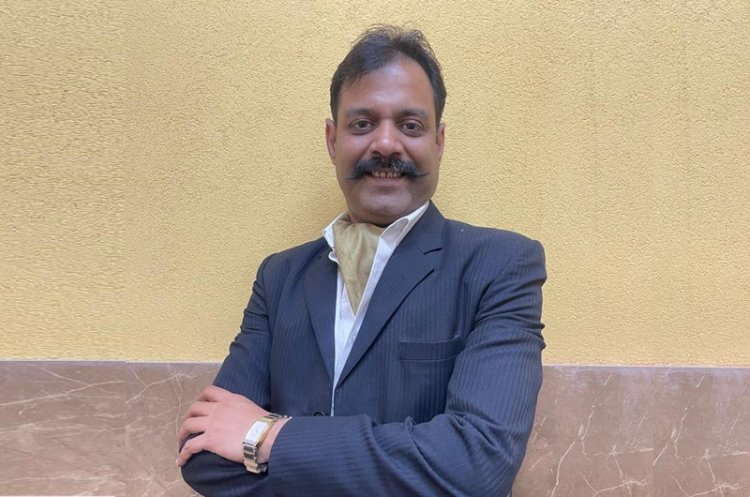
Prerrit Mansingh, Secretary of Aayom Welfare Society, speaks about the organisation’s 150-year legacy of service, its volunteer-driven model, and why real impact doesn’t need visibility
The story of the Aayom Welfare Society does not start in 2006, the year it was officially registered. It begins more than 150 years ago in Fatehpur district, in the home of Rai Bahadur Ishwar Sahai. Long before words like “sustainability,” “empowerment,” and “community development” became popular, his family was already doing this kind of work quietly and sincerely, without seeking any attention or recognition.
The legacy was carried forward across generations of the Mansingh family through sustained work in agriculture and community service. Rai Bahadur Ishwar Sahai laid the foundation with pioneering efforts in co-operative banking for the ease of farmers, agriculture, cattle breeding, and scientific methods, transforming lands and livelihoods in and around Fatehpur. Rai Sahab/Padam Shri Bishan Mansingh built on his groundwork through decades of leadership across the state, agriculture, horticulture, and rural development. Harihar Mansingh followed the same path through his involvement in agriculture and community work, the family was known for. Over the years, Kayastha Ratan Sharat Mansingh and his son, Prerrit Mansingh, carried the legacy forward, while evolving with changing needs for the community. Their work is based on the simple idea: upliftment should be a way of life, not a headline.
The Birth of a Formal Identity
By the early 2000s, the family was involved in different kinds of social work. Some worked in agriculture, some in community support, and others focused on environmental work. But the efforts were scattered. In 2005, during a family discussion, a young member, Prerrit Mansingh, suggested something none of the elders had considered: “Why not work under one name?”
What began as a child’s casual observation became a turning point. By early 2006, the family agreed to consolidate their long-standing social work under a formal structure. And so, on 8 February 2006, the Aayom Welfare Society was registered. The founders, Shri Sharat Mansingh and Smt Poonam Mansingh, carried forward the values their ancestors had lived by. Today, their son, Prerrit Mansingh, under their leadership and mentorship of Shri Bharat Mansingh and Shri Rajat Mansingh, represents the fifth generation continuing that legacy.
A Movement Built on Volunteers, Not Employees
Registration did not change the family’s fundamental philosophy. The organisation decides to work in a challenging way. They did not hire any paid employees and relied entirely only on volunteers to run all work. Over the years, more and more people joined them, and this group grew to more than 10,000 people across India. The style of working has always been humble: go wherever people need help, do the work sincerely without expecting applause.
One part of Aayom’s story unfolded in the lanes of Tripura, where women learned to drive and gained the confidence to step into roles previously denied to them. Similar initiatives have taken shape across the country. In Assam, water hyacinth, which is often treated as waste, was transformed into bags and home décor. In Banaras, women were trained to make Rudraksha malas. In Madhya Pradesh, papad-making and food processing opened new livelihood opportunities. In Agra, crochet workshops brought together women who had never stitched before. These examples reflect just a few of the many community-led initiatives Aayom has carried out across different regions of India.
Inside correctional facilities, inmates, both men and women, sit behind sewing machines, behind printing screens, or learn to weave fabric. Aayom Welfare society calls this initiative “Next Innings” because for many, this training is a chance to rebuild their lives after release. The organisation not only trains them but also places them in captive units where they have a chance to start fresh without judgment.
Breaking Taboos and Creating Awareness
Another chapter of the story unfolded around menstrual hygiene. Years before the topic became widely discussed, they were already running their “Snap the Taboo” campaign. They spread the clear message: talking about menstruation must be mainstream. On World Menstrual Hygiene Day, 2022, they achieved something extraordinary. In just one day, they conducted 238 events in 56 locations, in 28 states and 2 Union Territories, in 13 regional languages, and reached more than 2.8 lakh women - no celebrity, no big companies, no marketing, just volunteers, doing the work because they truly believed it was needed.
Sustainability Before It Became a Trend
Environmental sustainability was always woven into the family’s values, long before it became a global priority. Their plantation efforts resulted in more than 4.5 lakh trees, most of which survived because Aayom believed planting was not the achievement; nurturing was. Their work expanded into waste management, where segregation drives, awareness programs, and recycling became central. They eventually built an entire furniture line, “Space Solved”, using plastic waste instead of wood. With “The Fibre Story”, they experimented with banana fibre, at a time when almost no one in India was exploring it. And now, the list of fabrics adds a lot more than banana fibre.
During the COVID-19 lockdown, they saw a difficult situation. People without Aadhaar or ration cards were being denied food. Aayom’s volunteers saw this repeatedly while distributing dry rations. Instead of accepting the situation, they filed a petition in the Supreme Court asking for universal access to the Public Distribution System. After multiple submissions and rejections, the petition was accepted. The resulting order impacted more than 80 crore people, ensuring no one would be deprived of food. And as of now, this order will benefit people till 2029. It remains one of the most significant outcomes of Aayom’s advocacy work.
Through all of this, Aayom Welfare Society faced obstacles typical of small NGOs. Outdated government portals, complicated certification processes, CSR funding focused more on visibility than impact, high costs of handmade products and the stigma faced by rehabilitated inmates all these challenges formed the backdrop of their work. Yet the organisation never shifted its approach. Visibility was not the goal. Their work often happened with no camera, no press, and no publicity.
A Legacy That Lives Forward
For the family, the work has always been about carrying their values forward. From the agricultural fields of their ancestors to the villages, jails, workshops and disaster zones where they work today, their approach has stayed the same: create long-term solutions, teach people useful skills, protect the environment, and do the right thing even when no one is watching.
Today, as Aayom Welfare Society completes almost 20 years since it was registered, the NGO is not something new; it is simply the latest chapter of a much older family tradition. Its impact across health, environment, education, animal welfare, road safety, employment, along with women empowerment, menstrual hygiene awareness, sustainability, skill development, disaster relief, and policy change, all stem from this long history. The story continues through thousands of volunteers and is guided by the family’s belief that real change happens quietly, steadily, and with true purpose.
What's Your Reaction?