The world's first deep-sea mining test on the Blake Plateau still shows visible damage after 50 years, raising global concerns as commercial mining plans intensify. This article covers environmental risks, biodiversity loss, carbon impact, and international legal debates.
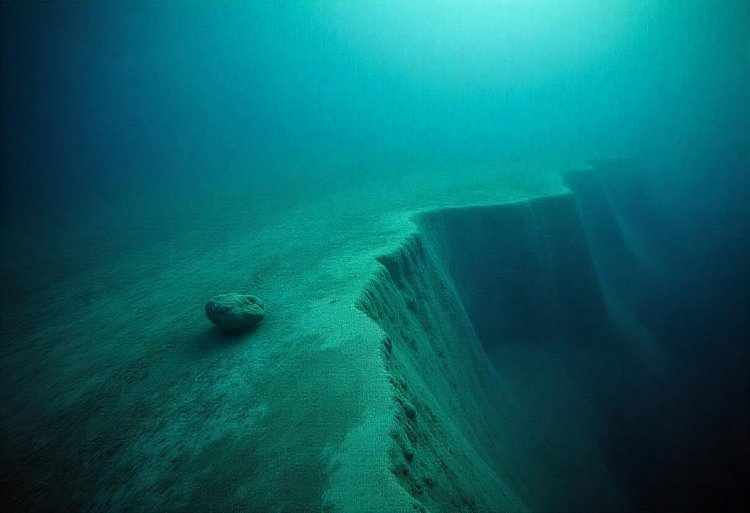
It is half a century since the first deep-sea mining pilot trial was conducted outside the east coast of the United States, with lasting damage on the seafloor. It was the American company Deepsea Ventures that drilled on the Blake Plateau off North Carolina back in 1970, this being a mountain range at a deep-sea level. Using a vacuum-like machine, the operation mined 60,000 nodules that were loaded with manganese, nickel, and cobalt for the purpose of establishing whether they are commercially valuable to the mining industries. Currently, although the test never evolved into commercial-scale mining, the legacy of the pilot still endures and raises troubling questions about the long-term environmental impact of deep-sea mining.
The Blake Plateau is a biologically rich and complicated region of the deep sea with strange marine animals such as squids, sea slugs, anglerfish, and giant mussels. But some parts of this ecosystem remain barren, with dredge lines stretching over 43 kilometers where there is no diversity. Those wounds are the lingering trace of that first mining test. In contrast, adjacent unmined areas are rich and biologically active, revealing the dramatic contrast between ocean health and a preview of what open seabed mining might destroy on a massive scale.
The 1970s mining effort was abandoned, though, and deep-sea mining has resurfaced in popularity. An executive order in April of 2025 was passed in the United States to expedite exploration and development of strategic minerals offshore. Companies such as The Metals Company and Impossible Metals are already looking to receive permits to begin commercial deep-sea mining at sites such as the Clarion-Clipperton Zone of the Pacific Ocean and off American Samoa. They are rich with rare-earth elements needed for batteries, electronics, medical equipment, and defense systems. The Clarion-Clipperton Zone alone has been estimated to contain more cobalt, nickel, and manganese than all the currently known land-based deposits put together.
While corporations insist that their current technology is less invasive and sustainable than traditional methods, studies show the environmental risks remain high. Simulation tests in similar regions show disturbed areas dating back to the late 1980s are still a long way from full recovery even after 26 years. These environments, with their crucial microbial communities, show slow recolonization and gradual loss of diversity. In addition, newer research published in 2025 confirms these concerns by showing that damage to the environment from even low-level tests persists for decades.
Above the seabed, the larger ocean ecosystem is also at risk. Mining produces plumes of sediment and discharges wastewater, upsetting life in the deep and mid-ocean environments. The plumes will interfere with feeding, reproduction, communication, and respiration of marine life, and could interfere with natural carbon sequestration processes. The contribution of species in these areas has been estimated to sequester as much as six gigatons of carbon every year — about 14% of manmade emissions — that will be lost if mining is allowed. Other calculations put releases from each square kilometer of seabed mined at over 170 tonnes of carbon annually.
The Blake Plateau itself is home to the world's biggest deep-sea coral reef system, extending over 500 kilometers in length and made up of tens of thousands of coral mounds. More than 5,000 new species previously unknown to science have been found in such deep-sea habitats, demonstrating further the richness of biodiversity and scientific significance of such regions. Medicinal finds have also been reported in deep-sea creatures, indicating that future medical breakthroughs are potentially going to go unreported before they are even discovered should mining continue unimpeded.
Fishing economies, particularly small developing states, may also be affected. Migration routes of tuna in the Pacific overlap with potential areas of sediment plumes. Around 10% of catches of tuna in some regions would be sourced from areas under risk from deep-sea mining. This would carry significant economic impacts, particularly for the global South.
Internationally, ocean mining is governed by the UN Convention on the Law of the Sea (UNCLOS) over international seas. However, the US has not ratified the treaty, and in doing so, may leave the door open to legal loopholes. Nevertheless, the International Seabed Authority (ISA) cautioned that handing out licenses outside of national oceanic jurisdictions would be against international agreements.
Scientific professionals still demand more robust protections. While some studies — including some partially sponsored by mining corporations — indicate sediment plumes could be small, the view is still that more information is necessary. Numerous researchers and policymakers support imposing a moratorium on commercial deep-sea mining until better research determines the risks. More than 900 scientists have already signed a letter calling for suspension of development to prevent irreparable harm.
Even after decades, the Blake Plateau remains scarred, a reminder of what one trial can do to a complex ecosystem. With deep-sea mining becoming a reality in many parts of the globe, the lessons from this half-century-old trial are more relevant than ever. The need to balance extraction of resources with protection of the environment is urgent, particularly because scientific knowledge about the deep ocean is still incomplete.
Source/Credits:
BBC Future, Sofia Quaglia; National Oceanic and Atmospheric Administration (NOAA); US Geological Survey (USGS); Ocean Conservancy
What's Your Reaction?