Real Estate Goes Green: Builders Embrace Climate-conscious Development
From greener township layouts to eco-conscious construction practices, the sector is showing a deeper commitment to reducing environmental impact
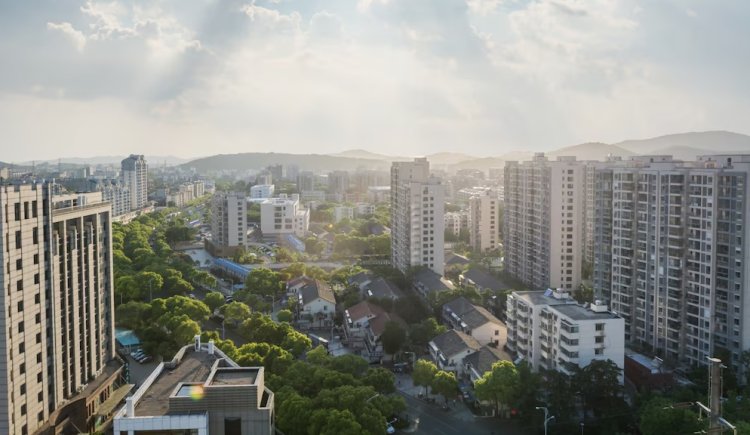
This World Environment Day, real estate companies across India are putting the spotlight on their sustainability efforts. From greener township layouts to eco-conscious construction practices, the sector is showing a deeper commitment to reducing environmental impact.
In Pune, Duville Estates is rethinking township planning by incorporating river-facing green design. This approach not only preserves the surrounding natural habitat but also enhances residents’ access to open, breathable spaces—an increasingly important feature in urban developments.
Kalpataru Group has gone a step further by weaving sustainability into every layer of its operations. “It’s not just about following regulations—it’s about changing how we build in response to the planet’s needs,” says Lalitkumar Tiwari, President – EHS & Chief Sustainability Officer. The group has maintained carbon neutrality for Scope 1 and 2 emissions across its international Transmission and Distribution businesses, including those in Sweden, Norway, Brazil, and SAARC countries. It also recently installed a 3 MWp solar plant at Uniara to reduce its carbon footprint.
Beyond infrastructure, Kalpataru is investing in reforestation through its ‘SAVIOUR’ CSR programme, with over 35,000 saplings planted in Odisha to revive forest land and support biodiversity. In urban India, the NaMo Grand Central Park in Thane—developed by Kalpataru and now managed by the city’s municipal corporation—is a shining example of how real estate can help bring nature back into cities.
In Panchkula, Trident Realty is seeing a clear shift in buyer preferences. “Green homes aren’t just a trend anymore—they’re becoming the standard,” says CEO Parvinder Singh. He points out that homebuyers are actively looking for energy-efficient buildings, lower utility bills, and better air quality, especially in Tier 2 cities where infrastructure is expanding and air remains relatively clean.
“There’s a clear shift in what people are looking for,” says Aditya Kushwaha, CEO and Director at Axis Ecorp. “It’s not just about the size of the home or the view anymore. Buyers today care about whether their homes respect the environment. At Axis, we treat nature as part of the living experience—not just the backdrop. Our projects are designed to blend in with the landscape, not bulldoze over it.”
For larger cities, where growth is rapid and resources are stretched, sustainability is becoming a necessity. “Urban India is expanding fast—by 2036, we are looking at over 600 million people living in cities,” says Mohit Goel, Managing Director at Omaxe Ltd. “That kind of growth can’t be sustained unless it’s done thoughtfully. We’re designing our buildings to consume less power, less water, and to be in tune with their surroundings. It’s not just about following green building norms—it’s about building for the long term.”
This mindset is taking root beyond the metros too. “Sustainability isn’t a marketing add-on anymore,” says Amrita Gupta, Director at Manglam Group. “Even in Tier 2 and Tier 3 cities, we’re seeing buyers ask tough questions—about energy efficiency, about water use, about air quality. For us, that’s a good thing. It’s pushing the industry to move beyond lip service and actually build with care. Real change starts with real decisions—at the design table, on the construction site, and in the communities we create.”
From design to delivery, these efforts signal a long-term change in how developers are approaching growth.
What's Your Reaction?