A new CPCB report highlights widespread river pollution, treatment-plant compliance gaps, and the need for stronger state-level action.
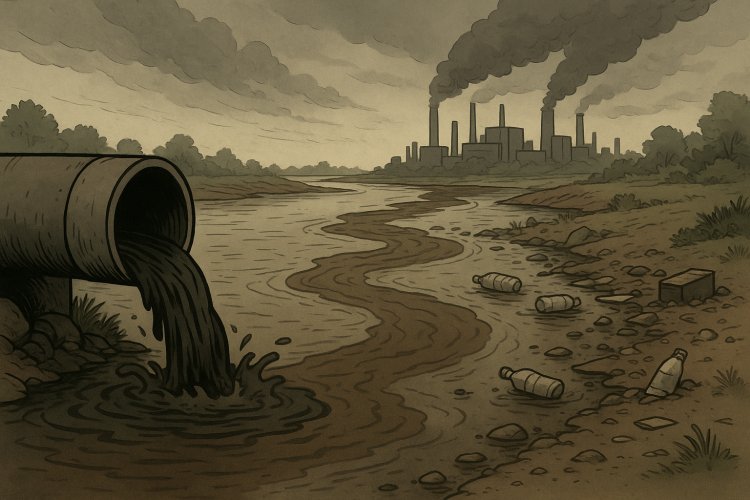
Cleaning and rejuvenation are an ongoing process mainly handled by States, Union Territories (UTs) and Urban Local Bodies, to ensure that sewage and industrial effluents are treated to prescribed norms before discharging into the rivers and other water bodies.
Central Support Through Namami Gange and NRCP
For conservation of rivers, the Ministry of Jal Shakti provides financial and technical assistance for abatement of pollution in stretches of the rivers in the country through “Namami Gange” for the rivers in Ganga basin, and Centrally Sponsored Schemes of National River Conservation Plan (NRCP) for other rivers Basins.
Under the Environment (Protection) Act, 1986 and the Water (Prevention & Control of Pollution) Act, 1974, States/UTs, local bodies and industrial units are required to install sewage and effluent treatment plants and comply with norms. CPCB, State Pollution Control Boards and Pollution Control Committees monitor compliance and act against violators.
As per CPCB, there are total of 4,493 industries under Grossly Polluting Industries (GPIs). Out of which, 3633 number of industries were operational, and 860 industries had closed down on their own. Amongst the operational industries, 3031 industries were reported to be complying with the environmental standards, while show-cause notices issued to 572 industries, closure directions issued to 29 non-complying industries and direction issued to 1.
Polluted River Stretches Identified by CPCB
The CPCB’s 2025 report on Polluted River Stretches (PRSs) identified 296 polluted stretches across 271 rivers in 32 States and UTs, based on assessments of 623 rivers. States/UTs must prepare action plans for restoring these stretches and may submit proposals for central support depending on pollution severity.
River Water Quality and Household Drinking Water Access
CPCB classifies river water quality based on intended use, such as Class A for drinking water (after disinfection) and Class B for outdoor bathing. According to the Jal Jeevan Mission portal, 12.51 crore rural households have been provided tap-water connections, covering 81% of rural households.
The Ministry has stated that no scientific study is currently being conducted on health hazards faced by local communities due to contaminated river water.
Initiatives Under the National Mission for Clean Ganga
Jalaj Centres have been established to support community participation through models such as livelihood centres and awareness points. Ganga Praharis trained local volunteers, support activities related to biodiversity and river cleanliness. The Namami Gange programme was recognised as a UN World Restoration Flagship initiative for efforts to address riverine environmental degradation.
Nationwide Campaigns on River and Water Conservation
The Ganga Utsav is conducted annually to promote river conservation and public awareness. Additional nationwide initiatives under the Swachh Bharat Mission focus on river cleanliness, sanitation and solid waste management.
Jal Shakti Abhiyan: Catch the Rain
JSA: CTR is conducted annually for water conservation, revival of water bodies and community involvement. To further strengthen these efforts, the “Jal Sanchay Jan Bhagidhari” initiative was launched in Surat, Gujarat in September 2024 to promote groundwater recharge and rainwater harvesting, reporting positive outcomes.
What's Your Reaction?