Community-led forest restoration is emerging as an effective climate solution, helping protect biodiversity, restore degraded land and strengthen local livelihoods.
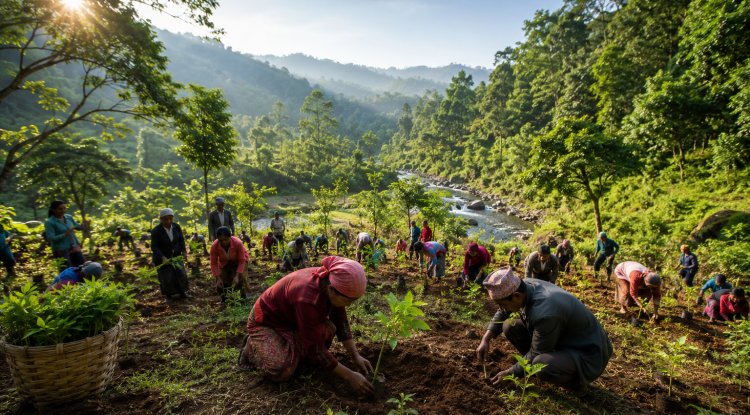
While global climate negotiations remain centred on targets and timelines, stories of forest restoration have emerged from the grassroots, driven by communities rather than governments and organisations.
There is an increased body of evidence that secured rights to land and forests lead to natural restoration. Its recent report, "The Tenure Facility Insights," indicates that community-led forest governance as one of the most successful approaches for reducing deforestation and restoring degraded land. In Africa, Asia and Latin America, reforestation is happening where communities are being given ownership and control over their forests.
Similar patterns can be seen in areas where common forest land is secured under village institutions and tribal communities in India. This is not tree-planting for the sake of posterity: it’s the restoration of ecosystems through the reintroduction of natural species, the conservation of water supplies, and regulation of sustainable harvesting within these communities. This leads to improved biodiversity, better groundwater recharge, and greater resilience to climate change such as heatwaves and rain variations.
Countries like Guatemala and Nepal provide compelling examples of this approach. Community forest concessions have demonstrated lower rates of deforestation at a lower rate than strictly protected areas, on average, in the Maya Biosphere Reserve, Guatemala. The community forestry programme has helped restore millions of hectares of land and enhance rural livelihoods in Nepal.
The difference in all of these initiatives is that they are owned. When forests are viewed as livelihood assets linked to food and income, their protection goes beyond regulatory enforcement and rests on shared responsibility. Land tenure reform is not only a social justice issue, but it's also a climate solution that makes a difference, says the Tenure Facility.
These villages are a powerful reminder that climate action is ultimately local, and that climate threats are not abating because policies are in existence. Meaningful environmental change often happens when local communities are trusted to lead. Sometimes the most effective climate action begins at the grassroots level.
What's Your Reaction?